Healthcare Facility Mold Remediation Services in Albuquerque
Finding mold in a healthcare facility can feel alarming and urgent. It threatens patient trust, raises compliance concerns, and puts pressure on administrators to act fast. Mold Removal Albuquerque provides licensed, healthcare-focused healthcare facility mold remediation for clinics, medical offices, urgent care centers, dental practices, surgery centers, dialysis facilities, and more. We eliminate mold safely and thoroughly using EPA- and IICRC-informed procedures designed to protect patient health and indoor air quality.
Call 505-359-5669 now or use our contact form to schedule a healthcare mold assessment for your Albuquerque facility.
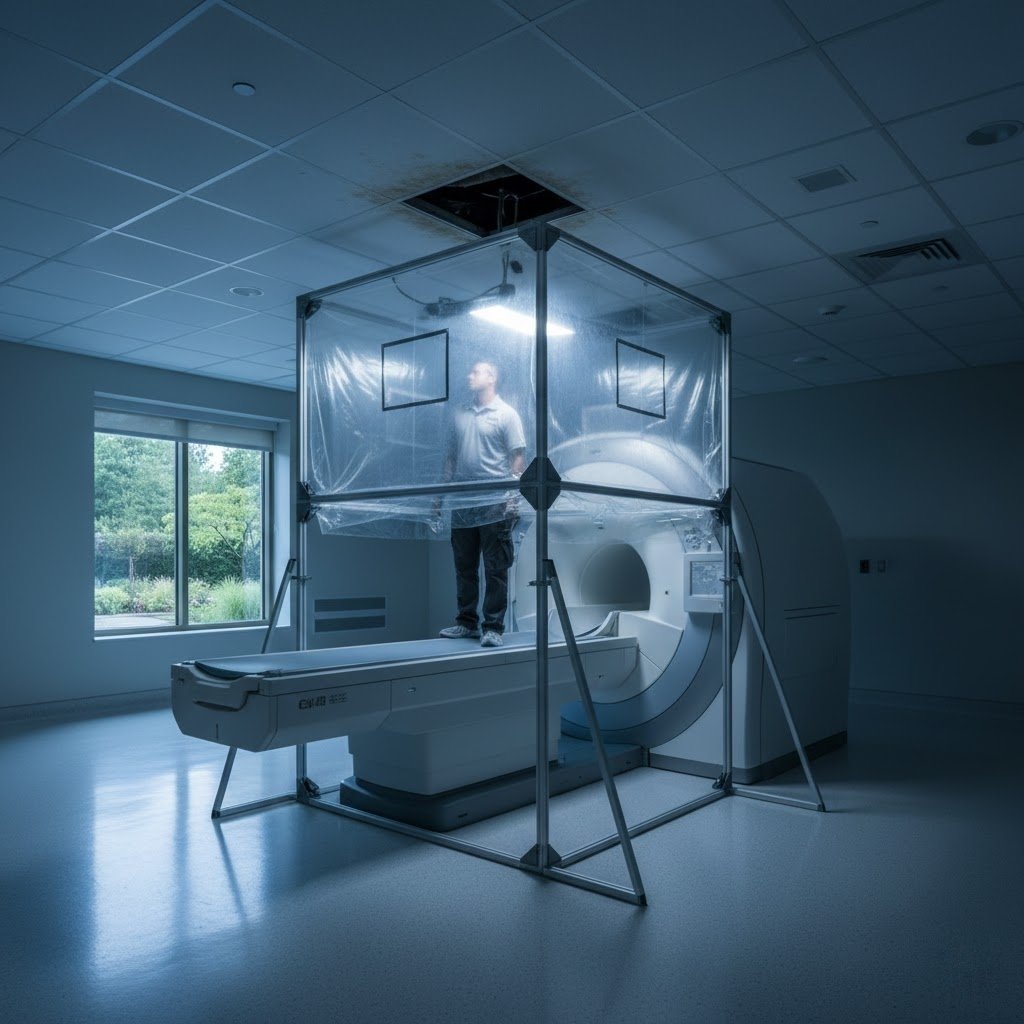
How much does Healthcare Facility Mold Remediation cost in Albuquerque?
Healthcare facility mold remediation in Albuquerque typically ranges from $1,500 to $20,000+, depending on facility size, contamination level, affected rooms, and HVAC involvement. Costs vary between a small medical suite in Nob Hill and a multi-tenant medical building in Uptown or Northeast Heights. A site inspection is always required for an accurate quote. Call 505-359-5669 for a customized estimate.
Why Healthcare Facility Mold Remediation Matters
Healthcare facility mold remediation protects your clinic by removing harmful colonies and stopping moisture-driven regrowth that endangers patients and staff. Mold in exam rooms, waiting areas, dental operatories, and treatment suites can release spores into the air, reducing indoor air quality and increasing contamination risk for vulnerable populations. This matters because patients with asthma, COPD, cancer, or weakened immune systems are more susceptible to respiratory irritation, infections, and slower recovery when exposed to poor air quality. When you address mold correctly, you reduce liability exposure, protect your license, and maintain trust with patients who expect a safe clinical environment.
For example, a small roof leak over a family practice in Downtown Albuquerque led to discolored ceiling tiles and musty odors in a pediatric exam room; once we remediated under IICRC S520 principles and corrected moisture levels with HEPA filtration and dehumidifiers, complaints stopped and staff felt confident welcoming families back into that space. If you manage a healthcare facility in the Albuquerque area and suspect mold, call 505-359-5669 to schedule a patient-safe remediation assessment.
Types of Healthcare Facilities We Serve
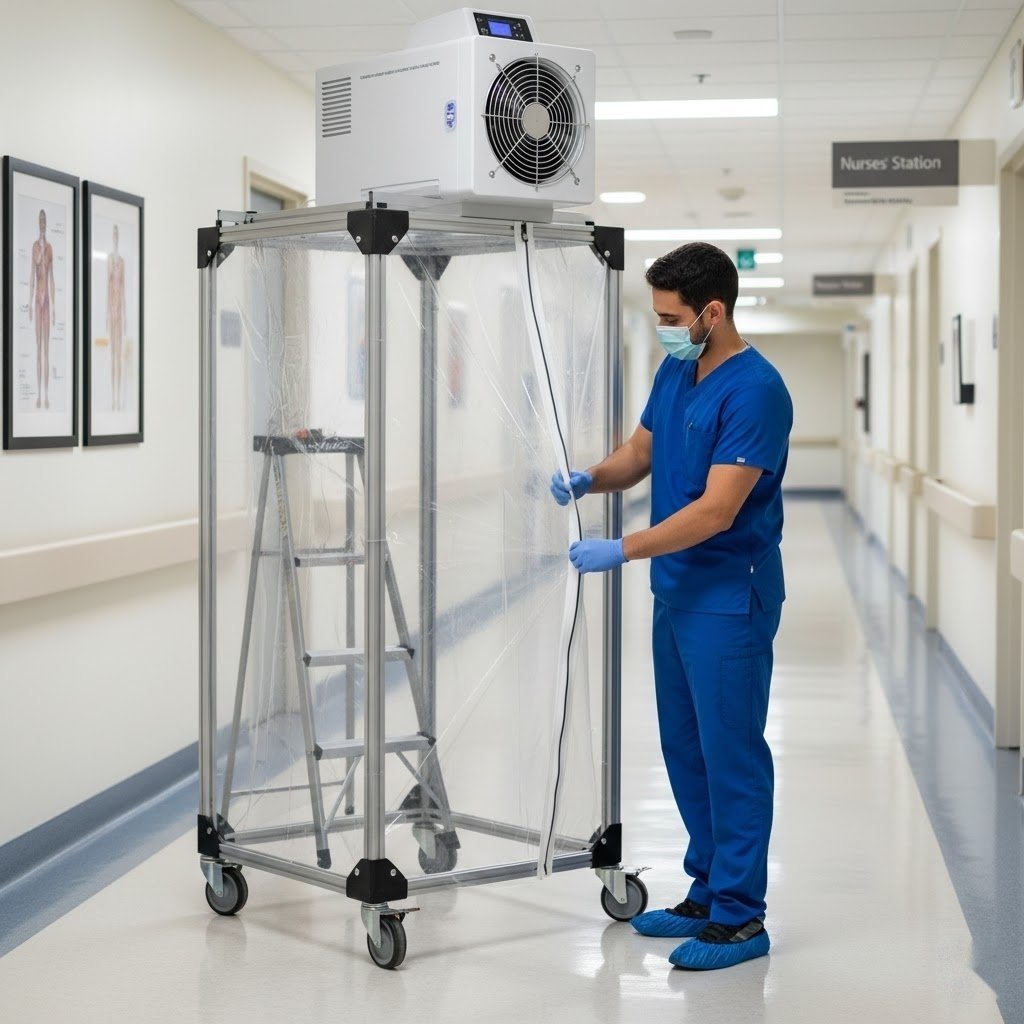
Healthcare facility mold remediation covers a broad range of outpatient settings so your entire care network stays safe and compliant. We treat mold in stand-alone medical offices, multi-tenant medical office buildings, and clinic spaces integrated into retail plazas across Albuquerque. This matters because each facility type—family practice, urgent care, dialysis center, or imaging suite—has different moisture sources, air handling units, and patient risk levels that demand adjusted protocols and equipment. By matching our HEPA vacuums, negative air machines, and containment style to your environment, we minimize downtime and protect exam rooms, treatment bays, and waiting rooms from recontamination.
We regularly remediate mold in family practice and internal medicine clinics, specialty offices such as cardiology or oncology, dental and orthodontic practices, urgent care centers, ambulatory surgery centers, dialysis and infusion clinics, imaging centers, and rehab or physical therapy facilities throughout areas like Northeast Heights, Uptown, and Westside corridors. Having a partner that understands both EPA mold guidance and the realities of outpatient operations lets you keep more rooms online while we work. To find out how we can adapt remediation to your specific facility type, call 505-359-5669 or request a clinic walkthrough today.
Causes of Mold in Albuquerque Healthcare Facilities
Healthcare facility mold remediation starts by recognizing that mold develops when moisture reaches porous surfaces such as drywall, ceiling tiles, insulation, or flooring in high-use clinical areas. In Albuquerque clinics and medical offices, that moisture commonly comes from roof leaks over medical office buildings, plumbing leaks at exam sinks and restrooms, condensation on HVAC components, and humidity imbalances in internal treatment rooms with limited ventilation. This matters because if you only clean the visible stain on a ceiling tile without repairing the flashing, condensate line, or plumbing line behind it, spores can quickly return and potentially spread through shared walls and ductwork.
We often see mold form around supply and return vents over exam tables, behind built-in casework in dental operatories, under vinyl flooring near restrooms, or inside wall cavities in rehab gyms when monsoon storms exploit weaknesses in flat roofs. In one multi-tenant medical building near Downtown, a single leaking lab sink line caused mold to track along a shared wall into an adjacent neurology suite. By using moisture mapping, thermal imaging, and IICRC-informed mold inspection methods, we traced the full path and protected both practices. If your healthcare facility has recurring staining, odors, or dampness, call 505-359-5669 so we can identify the true source before it affects more rooms.
Signs of Mold in Medical Offices & Clinics
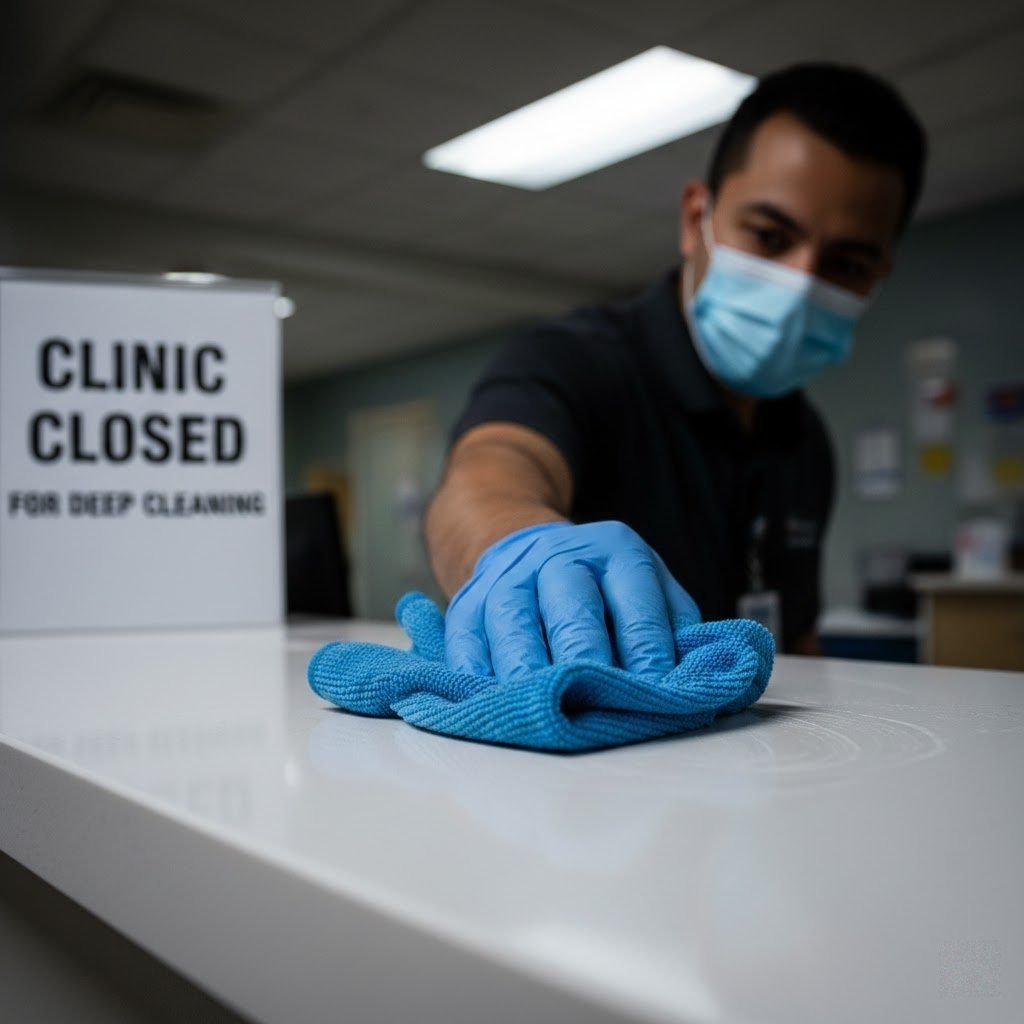
Most mold problems in healthcare facilities reveal themselves through visible growth, odors, or health symptoms before structural issues appear. You may notice stained or sagging ceiling tiles in a waiting room, discolored drywall behind an exam room sink, or darkened caulk lines around a staff restroom that suggest elevated moisture levels. This matters because early detection keeps spores from migrating into air handling units (AHUs), ductwork, or adjacent suites, where remediation becomes more complex and may affect more exam rooms and treatment zones. Patients and staff might report musty smells, headaches, coughing, or aggravated allergies, especially around vents or in closed rooms without windows.
Hidden mold signs in clinics can include soft spots in wallboard, persistent “cleaning chemical plus musty” odors even after environmental services have mopped, or repeated ceiling tile staining in the same location despite replacement. In one urgent care near Nob Hill, employees complained of throat irritation at the triage desk; inspection revealed mold above a return grille where condensation and dust had created a perfect substrate. If you see or smell any of these symptoms in your medical office, call 505-359-5669 for an inspection before patients start questioning the safety of your facility.
Our Healthcare-Specific Mold Remediation Process
Professional healthcare facility mold remediation follows a strict, certified process to contain, mold removal, and prevent mold while respecting clinic schedules and patient needs. We begin with a detailed facility assessment where we walk the space with your clinic manager or facility manager, identify patient-care versus administrative areas, and perform moisture mapping in exam rooms, corridors, restrooms, and staff areas. This matters because distinguishing clinical zones from back-of-house space allows us to prioritize high-risk locations, set up appropriate containment, and coordinate with you to limit disruption to providers and patients.
After assessment, we design containment using zipper walls, plastic barriers, and negative air machines fitted with HEPA filters to keep spores out of operable rooms and hallways. We shut down or isolate HVAC zones where needed, inspect ductwork, and work with your mechanical team or vendor on any AHU-related issues. During removal, we use HEPA vacuums, antimicrobial cleaning agents appropriate for healthcare environments, and OSHA-compliant PPE to safely treat walls, ceilings, casework exteriors, and floor surfaces. When structural mold is present behind drywall, ceiling systems, or in mechanical rooms, we remove affected building materials, treat studs and framing, and dispose of debris according to IICRC S520 principles. We finish with moisture source correction, restoration using clinic-suitable materials (ceiling tiles, mold-resistant drywall, antimicrobial paints), and final post-remediation verification with moisture readings and, when requested, IAQ testing. To schedule a step-by-step healthcare remediation plan tailored to your facility, call 505-359-5669 or submit a service request.
Types of Mold Found in Healthcare Facilities
Healthcare facility mold remediation must account for different types of mold that behave in unique ways in clinical environments. Common indoor molds include allergenic species like Cladosporium and Penicillium, opportunistic varieties such as Aspergillus, and moisture-driven molds like Stachybotrys chartarum (often called “black mold”) in persistently damp areas. This matters because some patients—especially those in oncology clinics, infusion centers, or pulmonary practices—may be more sensitive to certain spores, making indoor air quality a key part of risk management. Recognizing the mold profile and the moisture level behind it helps us choose the right remediation intensity and drying strategy.
In a small dialysis clinic, for example, we discovered Aspergillus-type growth behind ceiling tiles above the treatment floor where humidity and mechanical room conditions interacted; we implemented extended HEPA air filtration and targeted cleaning to protect immunocompromised patients. While visual identification guides practical decisions, we can integrate third-party testing when your facility’s policies or risk team requires lab confirmation. If you need mold removed with sensitivity to patient conditions and regulatory expectations, call 505-359-5669 for a healthcare-aware remediation plan.
Residential vs Commercial vs Healthcare/Industrial Remediation
Residential vs commercial vs healthcare/industrial mold remediation differ in risks, requirements, containment scale, and documentation, and healthcare facility mold remediation sits closer to industrial-level standards. Residential work focuses on family health and structure, while general commercial jobs emphasize business continuity and occupant comfort; healthcare cases add patient vulnerability, elevated indoor air quality expectations, and closer alignment with infection-control principles. This matters because clinics and medical offices may require negative pressure containment, HEPA filtration, and more detailed documentation than a typical office, even if the square footage is similar.
In healthcare settings, we deploy larger negative air machines, more robust PPE, and stricter traffic control around containment than in a small home or standard office. We also coordinate with clinic management in Albuquerque’s medical corridors to schedule remediation after-hours or on weekends, reducing downtime for procedures or appointments. Documentation for healthcare projects typically includes scope descriptions, moisture logs, photo records, and post-remediation verification reports suitable for property owners, risk managers, and insurers. If you need a remediation company that understands how healthcare differs from basic commercial work, call 505-359-5669 to discuss your facility’s requirements.
Preventing Mold in Healthcare Facilities
Effective healthcare facility mold remediation includes prevention strategies that protect your building, staff, and patients long after the project ends. Prevention focuses on ventilation, humidity control, leak detection, and rapid response protocols, because mold develops when moisture reaches porous surfaces such as ceiling tiles, drywall, insulation, or flooring. This matters in clinics and medical offices where exam rooms have high turnover, restrooms and handwashing stations see constant use, and older building envelopes in areas like Downtown Albuquerque may lack modern moisture barriers. When you improve ventilation, maintain HVAC condensate lines, and fix minor leaks promptly, you reduce contamination risk and protect indoor air quality.
Practical steps include scheduling routine roof and plumbing inspections, keeping relative humidity in most interior spaces within a controlled range, checking around windows and storefront entrances after monsoon storms, and training staff to report signs like musty odors or stains right away. For a multi-tenant medical office building, we recommended a quarterly ceiling tile inspection and condensate pan check that cut surprise mold incidents by catching moisture problems early. If you want a customized prevention plan for your healthcare facility, call 505-359-5669 and ask about our proactive moisture and mold prevention consultations.
Protecting Patients, Staff & Operations During Remediation
Healthcare facility mold remediation must protect patients, staff, and operations while work is underway. We coordinate with your administrators to identify which rooms can be taken offline, which need temporary relocation, and which areas must remain fully operational, such as triage zones or essential imaging suites. This matters because closing an entire clinic is rarely practical, yet allowing uncontained work near vulnerable patients is not acceptable from a safety or risk standpoint. By using targeted containment, HEPA-filtered negative air, and clear access pathways, we maintain safe circulation and minimize disruption.
For example, in an urgent care center in the Northeast Heights, we isolated two exam rooms and a hallway corner while maintaining safe routes to the lobby and remaining treatment rooms, scheduling noisier work after-hours and on weekends. PPE protocols for our technicians, combined with infection-control–style containment and communication with your team, reassure patients and staff that safety is being prioritized. If you need to address mold without shutting down your healthcare facility, call 505-359-5669 to plan a phased, low-disruption remediation project.
Why Choose Mold Removal Albuquerque for Healthcare Facilities
Healthcare facility mold remediation with Mold Removal Albuquerque gives you a local partner that understands both technical standards and Albuquerque’s climate and building challenges. We bring experience with medical offices, clinics, and outpatient facilities, along with equipment like HEPA air scrubbers, negative air machines, moisture meters, and thermal imaging cameras that allow us to identify and treat contamination precisely. This matters because you need a contractor who respects patient privacy, infection-control considerations, and the expectations of medical leadership and insurers—not just someone who “cleans up stains.”
Our team follows guidance informed by IICRC S520 principles, uses OSHA-compliant PPE, and provides thorough documentation of findings, actions, and verification for property owners and managers throughout the Albuquerque area. We understand the flat roofs, older medical buildings, and strip-mall clinics common in neighborhoods like Uptown, Nob Hill, and Westside, where monsoon leaks and swamp coolers can complicate moisture control. Quick response times and clear communication keep you informed and help you explain remediation steps to stakeholders, including risk managers and corporate office teams. To work with a remediation provider that treats your healthcare facility with the care it deserves, call 505-359-5669 or request a consultation online today.
Localization: Healthcare Mold Issues Across Albuquerque Neighborhoods
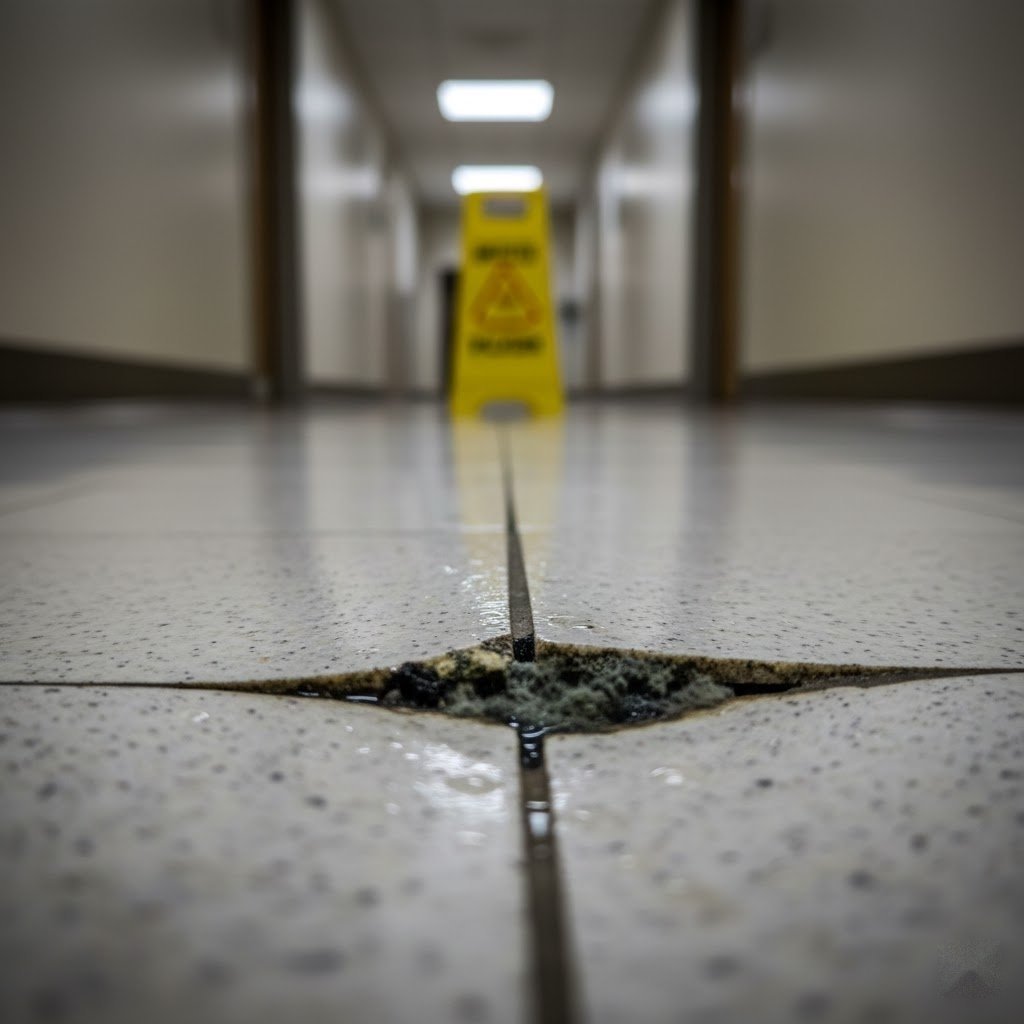
Healthcare facility mold remediation in Albuquerque must account for local building styles, climate patterns, and leak trends across different neighborhoods. In Downtown Albuquerque, many medical offices occupy older multi-story buildings and remodeled spaces where flat roofs, aging plumbing, and older HVAC systems can create hidden moisture near ceiling tiles and wall cavities. This matters because monsoon storms can overwhelm older roof systems, causing slow leaks above exam rooms and waiting areas that only show up as stains weeks later.
In areas like Nob Hill and the University corridor, small clinics and dental practices may sit in converted houses or older strip centers, where swamp coolers and mixed-construction walls can trap humidity and dust. Uptown and Northeast Heights medical buildings often have larger HVAC systems and multi-tenant layouts that require careful coordination with property management when we set up containment and negative air machines. On the Westside and in Paradise Hills, one-story medical and rehab facilities can be vulnerable to ponding on broad flat roofs and to wind-driven rain near entrances. Wherever your clinic or medical office sits in the Albuquerque area, call 505-359-5669 so we can design a mold remediation plan that reflects your building’s real-world conditions.
Serving healthcare facilities across the Albuquerque area, from Downtown clinics near major medical corridors to specialty offices in Uptown and Northeast Heights.
FAQ: Healthcare Facility Mold Remediation
Mold in healthcare facilities is usually caused by roof leaks, plumbing leaks at sinks or restrooms, HVAC condensation, or humidity imbalances around exam rooms and waiting areas. Addressing these moisture sources quickly protects patients and staff. Call 505-359-5669 if you suspect moisture problems in your clinic.
Yes, mold can be especially risky for patients with asthma, COPD, cancer, or weakened immune systems because spores can irritate airways and worsen symptoms. Maintaining clean indoor air quality supports better outcomes. Schedule an assessment at 505-359-5669 to protect vulnerable patients.
Professionals remove mold in healthcare facilities by inspecting, setting up HEPA-filtered containment, safely removing affected materials, cleaning surfaces, correcting moisture issues, and verifying results with moisture readings and optional IAQ testing. Contact us to walk through this process for your facility.
Not always. With proper containment and scheduling, many clinics keep parts of the facility open while targeted areas are offline. Safety and patient risk determine the approach. Call 505-359-5669 to plan a phased project for your clinic.
Yes, if mold forms around coils, condensate pans, or nearby building materials, spores can move through ductwork. Inspecting AHUs and vents is critical in larger medical office buildings. Ask about HVAC-related inspections when you book your remediation.
Project duration depends on contamination size, room count, and moisture repairs, but many clinic projects range from a single day for a small area to several days or weeks for larger suites. We can provide a timeline estimate after an on-site visit.
Yes, we provide written documentation of findings, remediation steps, moisture readings, and verification results suitable for property owners, managers, and insurers. Let us know what level of reporting your organization requires when you call.
EEAT: Experience, Expertise, Authoritativeness & Trustworthiness
Healthcare facility mold remediation requires proven experience, clear procedures, and transparent reporting. Mold Removal Albuquerque has years of experience serving medical offices and clinics throughout the Albuquerque area, responding quickly when monsoon storms or mechanical failures create moisture issues in exam rooms, waiting areas, or staff spaces. This matters because healthcare decision-makers must choose vendors who understand the difference between standard commercial cleanup and patient-sensitive environments.
Our team follows guidance informed by IICRC S520 for mold remediation, references EPA best practices for mold cleanup, and adheres to OSHA safety expectations for worker protection and containment. We track metrics such as average response time, moisture reduction levels, and the number of completed healthcare facility projects to continuously refine our approach. By documenting each step, from moisture mapping to restoration, we help property owners and clinic managers demonstrate due diligence and care. If you need an experienced remediation partner that supports your compliance and risk objectives, call 505-359-5669 today.
Testimonials
Healthcare facility mold remediation is ultimately judged by patient comfort, staff confidence, and the absence of recurring moisture problems. Our healthcare clients report fresher indoor air, improved staff comfort, and fewer patient complaints once remediation and moisture correction are complete. This matters because even one musty waiting room or stained ceiling tile can undermine the confidence patients place in your medical practice.
Practice managers across medical offices, dental clinics, and urgent care centers in Albuquerque value our clear communication, respect for privacy, and willingness to work after-hours when necessary. They appreciate having a single point of contact who explains findings in plain language and coordinates with property management and mechanical vendors. If you want your teams and patients to feel the same peace of mind after remediation, call 505-359-5669 to schedule a consult.
Micro Case Study: Mold in a Multi-Suite Medical Office
A multi-tenant medical office building near Uptown discovered ceiling stains and odors across two suites after monsoon storms. We inspected, found roof and condensate issues, set up HEPA containment, removed moldy materials, corrected moisture, and restored finishes. The result: normal moisture levels, improved IAQ, and uninterrupted patient scheduling in adjacent suites.
Related Services & Internal Links
Healthcare facility mold remediation often connects to other specialized services that keep your properties safe. If you manage a broader portfolio, you may also need residential mold removal for staff housing, commercial mold removal for administrative offices, or hospital mold remediation for larger acute-care environments. Linking these services matters because it provides a clear path to comprehensive risk control across all your buildings.
From this page, visitors should easily navigate to other services and educational resources on your site so they can deepen their understanding of moisture control and mold prevention. Consider pairing this page with a blog on “Common Causes of Mold in Albuquerque Medical Offices” or “How to Prepare Your Clinic for Monsoon Season” to support proactive learning. To discuss healthcare facilities and other buildings under your care, call 505-359-5669 or reach out through our contact page.
Ready to Protect Your Healthcare Facility?
Healthcare facility mold remediation is not something to delay once you notice stains, odors, or patient complaints. Acting quickly keeps clinical areas safe, protects immunocompromised patients, limits structural damage, and demonstrates your commitment to quality care. This matters because your reputation and licensing are tied closely to the cleanliness and safety of your environment.
Whether you manage a single specialty clinic or multiple medical offices across the Albuquerque area, Mold Removal Albuquerque can inspect, contain, remove, and prevent mold with healthcare-appropriate procedures. We’ll coordinate with your schedule, your mechanical vendors, and your leadership team to deliver a clear, compliant solution. Call 505-359-5669 now or submit our online contact form to schedule your healthcare facility mold inspection and remediation plan.