Professional HVAC Mold Removal in Albuquerque
Finding mold or smelling musty air every time your HVAC turns on can make your whole home feel uncomfortable and unsafe. Mold inside air handlers, ducts, and coils spreads quickly through vents, affecting indoor air quality and coating surfaces with invisible spores. Mold Removal Albuquerque provides professional HVAC mold removal that targets your entire system—air handler, ducts, coils, and drain pans—so you breathe cleaner air again. We remove mold safely, correct moisture and airflow issues, and follow industry-informed procedures to protect both your HVAC equipment and your family.
How much does HVAC Mold Removal cost in Albuquerque?
HVAC mold removal in Albuquerque typically ranges from several hundred dollars for a small air handler and limited ductwork to several thousand for whole-home systems with extensive duct contamination and moisture repairs. Pricing depends on system size, access, contamination extent, and components involved in neighborhoods like Nob Hill and Westgate. An on-site inspection is required for an accurate quote.
What HVAC Mold Is and Why It Spreads So Quickly
HVAC mold removal protects your property by removing harmful colonies from air handlers, coils, and ducts and stopping moisture-driven regrowth throughout your system. Mold in HVAC equipment forms when dust, moisture, and organic particles accumulate on surfaces like evaporator coils, drain pans, and duct liners, creating a perfect environment for microbial growth. This matters because once mold establishes itself inside your HVAC, every heating or cooling cycle can push spores and fragments through supply vents into bedrooms, living rooms, and offices.
In Albuquerque homes and businesses across Downtown, Northeast Heights, and Paradise Hills, we often see mold on damp insulation inside supply trunks, on underserviced evaporator coils, and around plastic registers that stay slightly damp. Our technicians inspect the entire air path—from return grills through the blower compartment and coils, into ductwork and out supply vents—using flashlights, mirrors, cameras, and moisture meters to identify growth and high-humidity zones. This whole-system view benefits you because it prevents “spot cleaning” that leaves hidden contamination untouched.
A homeowner near the UNM Area, for example, called about a musty odor only in the back bedrooms; our inspection found mold on a section of lined duct, a dirty coil, and a partially clogged drain pan that was holding water. Comprehensive HVAC mold removal restored airflow, reduced odors, and made the AC feel fresher. If you want mold removed from the actual source instead of just masking smells, call 505-359-5669 to schedule a full HVAC mold assessment.
What Causes HVAC Mold in Albuquerque Properties
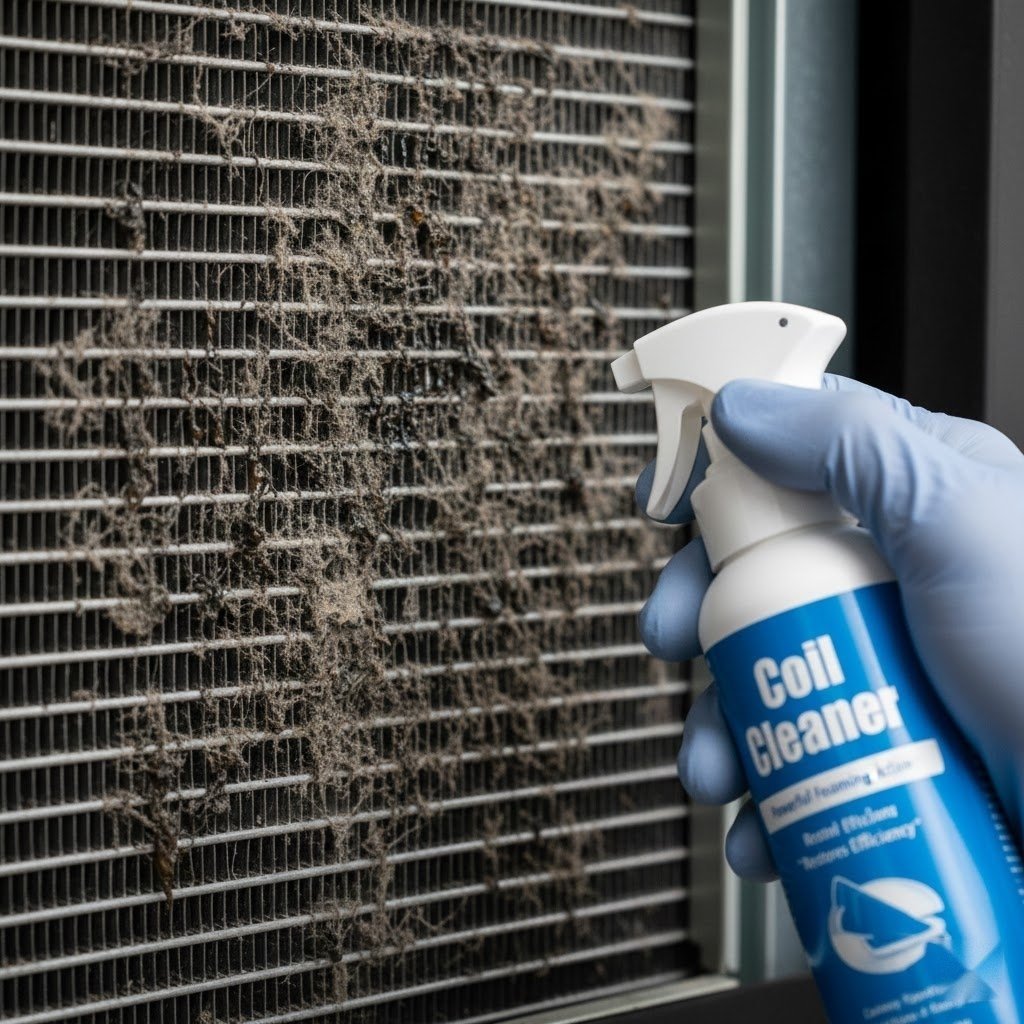
HVAC mold develops when moisture reaches internal components—like coils, drain pans, and duct surfaces—and stays long enough for spores to feed on dust and debris. In Albuquerque, common causes include swamp coolers adding high moisture, condensation on cold metal ducts, dirty evaporator coils, and clogged drain pans that hold water. This matters because these issues often remain hidden inside closets, attics, or crawl spaces, allowing mold to grow for months while you only notice a faint musty smell.
Homes in South Valley and Westgate with swamp coolers often show mold or mildew in ductwork that was never designed to handle constant moisture. Properties in Northeast Heights, Sandia Heights, and North Albuquerque Acres can experience condensation on uninsulated ducts running through hot attics, especially when cool air meets warm, humid air after monsoon storms. Older homes near Old Town and Downtown may have original metal ducts with poor sealing and thick dust layers, giving spores plenty of material to colonize when humidity rises.
Leaking or rusted drain pans under evaporator coils, blocked condensate lines, and short-cycling AC systems that never run long enough to drain properly all increase moisture levels in the air handler. When this moisture combines with dust on coils and blower wheels, microbial growth accelerates. By identifying exactly which moisture and airflow issues are present in your system, our team can remove mold and drastically reduce the chances of it returning. If you suspect HVAC mold from swamp cooler use, condensation, or a musty air handler, call 505-359-5669 for a targeted inspection of your system.
Signs and Symptoms of Mold in Your HVAC System
Most HVAC mold problems reveal themselves through odors and comfort issues long before you ever see visible growth on vents or components. HVAC mold often shows up as a musty or “dirty sock” smell when the AC or heat first turns on, especially after the system sits off for a few hours. This matters because that odor usually indicates that air is passing over microbial growth on coils, drain pans, or duct liners and carrying those byproducts through your supply vents.
Other signs include dark or greenish dust-like buildup around vent registers, streaking on supply diffusers, or visible spots on the back of plastic grills. In homes and offices across Uptown, Mesa Del Sol, and Taylor Ranch, we’ve seen “ghosting” patterns where mold and dust collect around vents and nearby ceiling surfaces. Many Albuquerque homeowners also report that allergies, coughing, or sinus irritation worsen when the HVAC runs and improve when it’s off, even if the filter has been changed recently. While health symptoms can have many causes, they often prompt the mold inspection that finally reveals mold in ducts or air handlers.
Hot and cold spots in different rooms, combined with musty smells, can signal airflow imbalances and contaminated ducts. Excess dust on registers shortly after cleaning, condensation around supply vents, or visible moisture in the air handler closet are additional warning signs. If you notice any of these symptoms in your Albuquerque property—especially when combined with swamp cooler use or high indoor humidity—call 505-359-5669 to schedule an HVAC mold inspection and protect your indoor air.
Our Professional HVAC Mold Removal Process
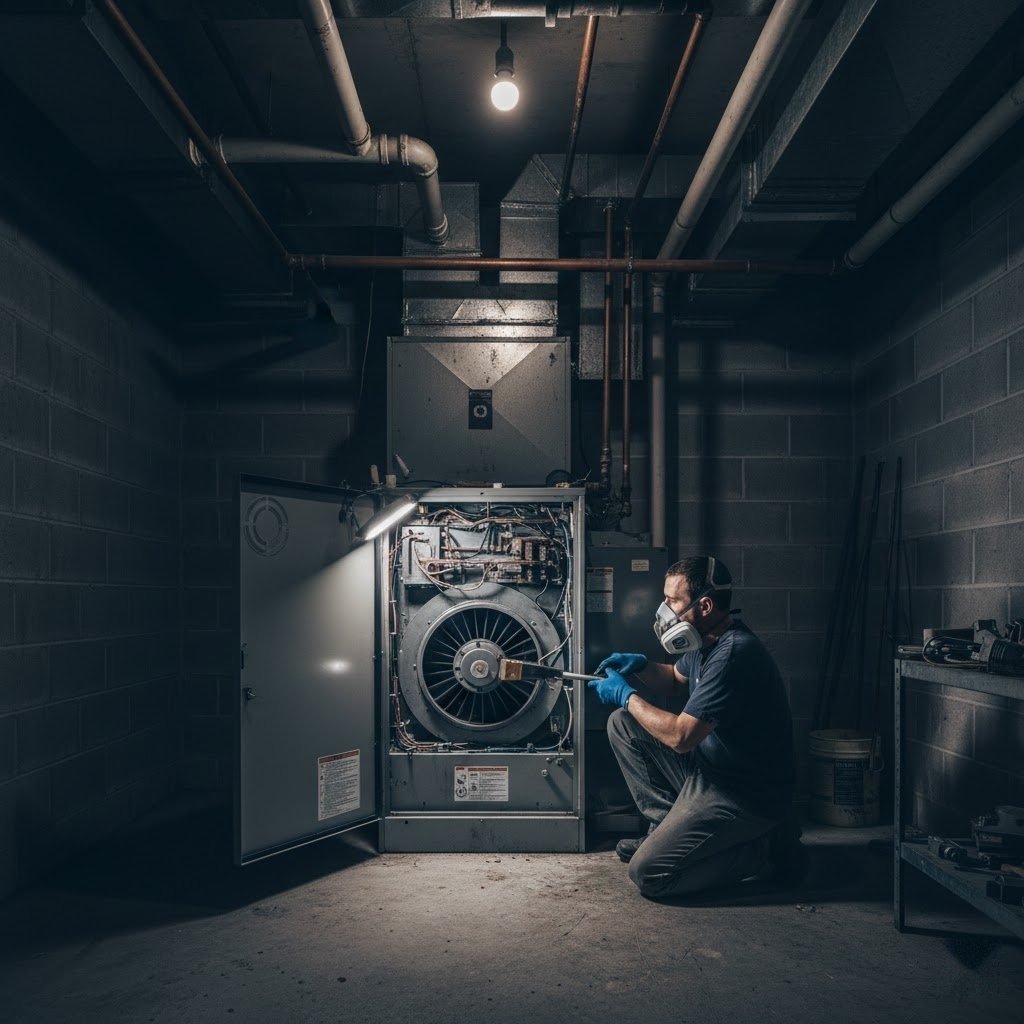
Professional HVAC Mold Removal follows a strict, system-wide process to inspect, contain, clean, and stabilize your air distribution network. We start with a comprehensive HVAC system inspection, examining the air handler, blower wheel, evaporator coil, drain pan, and accessible ductwork. We remove panels, look inside supply and return plenums, and assess ducts in attics, crawl spaces, or basements where applicable. This matters because mold can exist at multiple points in the system, and treating only one component—such as vents—won’t solve the problem.
Comprehensive System Inspection
We start with a comprehensive HVAC system inspection, examining the air handler, blower wheel, evaporator coil, drain pan, and accessible ductwork. We remove panels, look inside supply and return plenums, and assess ducts in attics, crawl spaces, or basements where applicable. This matters because mold can exist at multiple points in the system, and treating only one component—such as vents—won’t solve the problem.
Containment and Safety Measures
Once we identify where mold is present and which components are at risk, we set up containment and safety measures. Our technicians shut down the HVAC system to prevent further spread, use PPE such as respirators and protective suits, and may establish negative pressure with HEPA-filtered air machines. This level of containment benefits you by keeping your home or office cleaner and reducing cross-contamination.
Air Handler and Coil Cleaning
We focus on HVAC mold remediation for air handler components. We HEPA vacuum interior surfaces, then clean the blower wheel and housing. Evaporator coils are cleaned with appropriate, non-corrosive coil cleaners designed to lift biofilm and debris. Drain pans are scrubbed and sanitized, and blocked drain lines are cleared to restore proper drainage.
Duct Mold Remediation
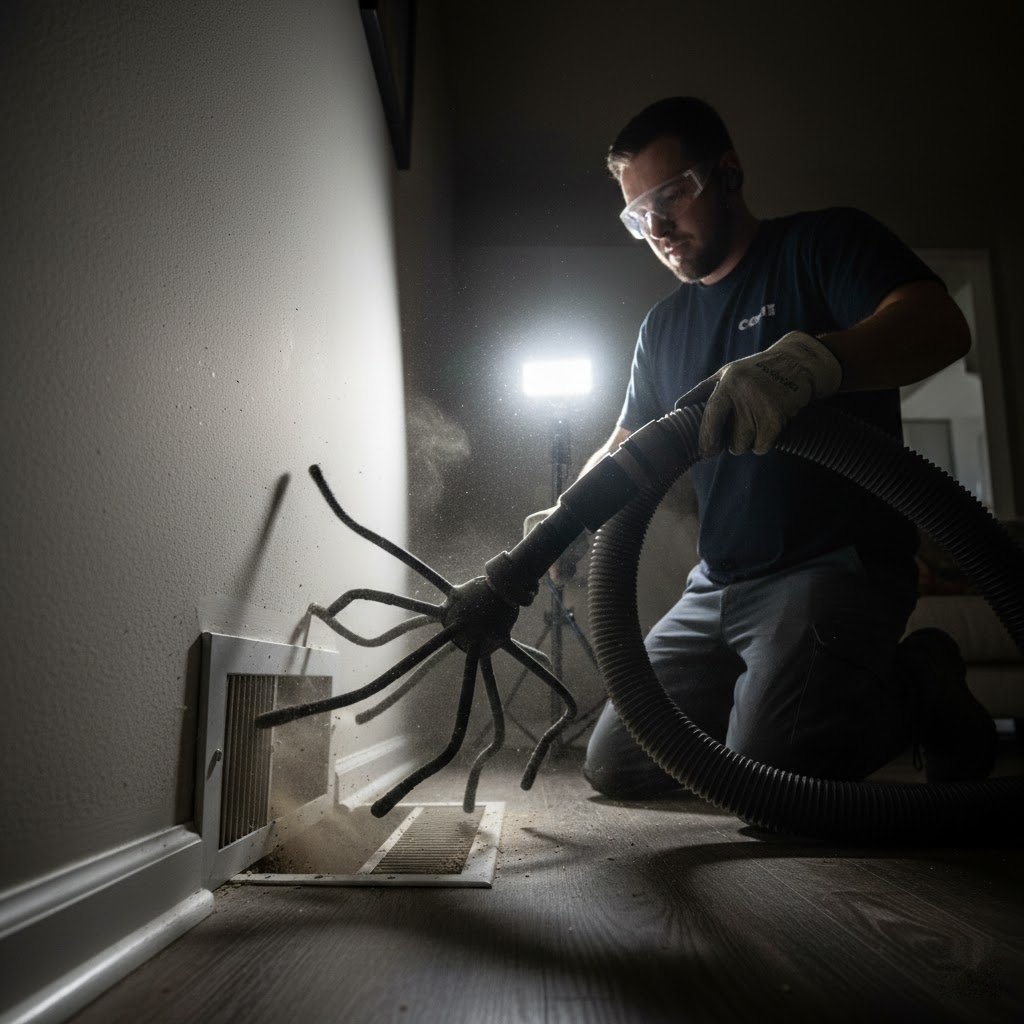
We use specialized tools such as HEPA-filtered brushing systems and air whips to dislodge and capture dust and growth from metal ducts. In cases where fiber-lined ducts are deeply colonized, we may recommend air duct mold removal or replacement. After cleaning, we apply EPA-registered disinfectants to treat surfaces that have hosted microbial growth.
Moisture and Humidity Correction
Moisture correction is crucial. We identify and recommend fixes for condensation problems, such as adding duct insulation, addressing draft issues, and correcting drain pans. In homes with swamp coolers, we help identify maintenance strategies to reduce excessive moisture in the ducts.
Optional IAQ Add-ons
Optional add-ons, such as UV-C light systems installed near coils, high-efficiency filtration options, whole-home dehumidifiers, and duct sealing, can further reduce the potential for mold regrowth. These technologies can complement a well-maintained HVAC system.
Verification and Verification
Finally, we perform a verification step: we visually confirm that no visible mold remains on accessible components, ensure the air handler and ducts are dry, and confirm that airflow is balanced and functioning properly. Where appropriate, we can coordinate optional air sampling with third-party professionals. If you want this level of detailed, system-wide HVAC mold removal in your Albuquerque property, call Mold Removal Albuquerque at 505-359-5669 to schedule service.
Mold in Air Ducts vs Mold in HVAC Components
HVAC mold removal works best when we clearly distinguish between mold in air ducts and mold in HVAC components like coils, drain pans, and blower assemblies. Mold in air ducts typically forms on dust-coated surfaces, duct liners, or internal insulation where moisture condenses or humid air passes for long periods. This matters because ducts carry air to every room, so contamination here can spread spores widely and leave dust-like residues around vents.
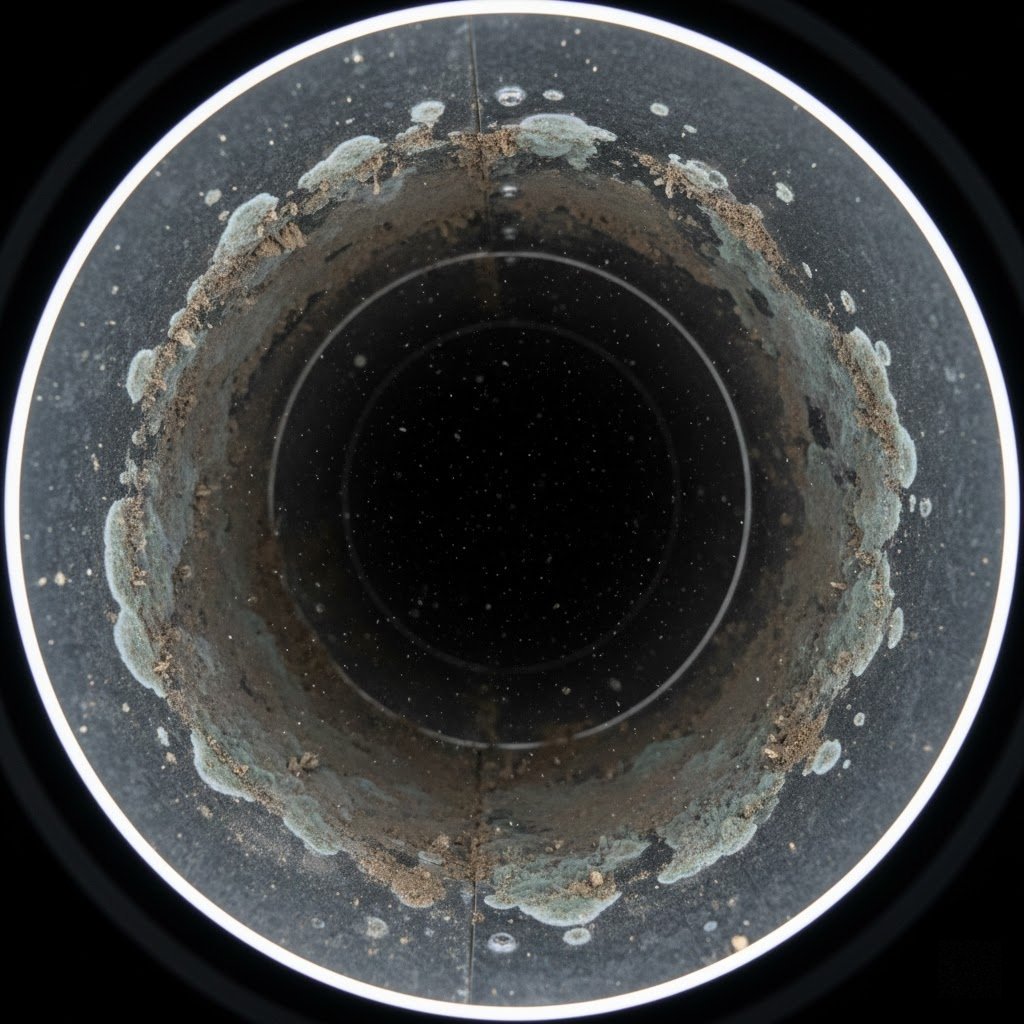
In Albuquerque homes across International District, Uptown, and Paradise Hills, we often find mold in ducts connected to older air handlers or swamp coolers where humidity has remained high. Metal ducts can usually be cleaned effectively using HEPA brushing and negative-pressure collection, while heavily colonized fiberglass duct liner may need to be removed and replaced. Mold in duct liners is particularly concerning because it can penetrate deeper into the material, making simple surface treatment ineffective.
Mold in HVAC components, by contrast, concentrates in the air handler around the evaporator coil, blower motor, and drain pan. These components see constant temperature swings, condensation, and dust buildup. If growth is not removed from these locations, new spores can quickly recolonize cleaned ducts. By identifying whether your primary contamination is in the ducts, the air handler, or both, Mold Removal Albuquerque designs a remediation plan that protects airflow, equipment efficiency, and indoor air quality. If you want a targeted strategy for your specific system layout, call 505-359-5669 to schedule a detailed inspection.
HVAC Mold Removal for Homes, Rentals, and Commercial Buildings
HVAC mold removal in Albuquerque needs to adapt to different risks, responsibilities, and system types across homes, rental units, and commercial buildings. Residential HVAC mold removal focuses on protecting families, improving comfort, and resolving musty odors from vents while minimizing disruption. This matters because homeowners in areas like Nob Hill, Ventana Ranch, and Mesa Del Sol often live in the property during service and need clear timelines, noise expectations, and room-access plans.
Rental properties and multi-unit buildings in South Valley, International District, and La Mesa / Trumbull Village require additional documentation and coordination with property managers, owners, and tenants. HVAC mold issues in shared duct systems or central air handlers can affect multiple units, raising concerns about liability and communication. We provide written findings, before-and-after photos of ducts and components, and clear recommendations for moisture control, helping managers demonstrate that indoor air quality issues are being addressed responsibly. Faster response times and phased scheduling help keep tenants comfortable while work progresses.
Small commercial buildings, offices, and light industrial spaces often have larger, more complex HVAC systems with rooftop units, multiple air handlers, or zone systems. In Downtown and Uptown commercial corridors, we may need to schedule work around business hours, protect sensitive equipment, and coordinate with building engineers. Our crews use appropriate PPE, follow safety protocols for roof and mechanical room access, and adapt cleaning techniques to match larger ducts, VAV boxes, and commercial-grade coils.
Across all property types, the core goals remain the same: identify contamination, contain the area, clean and treat all affected components, and correct moisture and airflow issues. If you manage or own any building in the Albuquerque area and suspect HVAC mold, call 505-359-5669 to discuss a remediation plan that fits your property’s size and usage.
HVAC Mold Prevention Tips for Albuquerque Homes and Businesses
HVAC mold prevention protects your investment by keeping moisture, dust, and humidity at levels where mold struggles to grow inside your system. The first step is to maintain clean, properly sized filters and change them on schedule so dust doesn’t accumulate excessively inside ducts and air handlers. This matters because dust acts like a buffet for microbial growth when combined with condensation and high humidity.
Next, we recommend routine evaporator coil and drain pan maintenance. Coils in Albuquerque homes from Downtown to Northeast Heights see heavy use in hot seasons, and dust plus condensation can form a sticky biofilm that traps contaminants. Cleaning coils and sanitizing drain pans on a schedule, while ensuring drain lines stay clear, reduces standing water and slime that feed mold. For homes using swamp coolers, carefully managing runtime and ventilation reduces excessive moisture entering duct systems.
Improving duct insulation and sealing also helps prevent condensation in hot attics and crawl spaces. Metal ducts running through unconditioned spaces in areas like Sandia Heights, North Albuquerque Acres, and Westgate often sweat when cold air passes through warm, humid environments. Sealing joints, insulating exposed ducts, and managing attic or crawl space humidity reduces this risk.
Finally, consider IAQ upgrades like higher-efficiency filters, properly installed UV-C lights near coils, and, in some cases, whole-home dehumidification. While these tools are not substitutes for cleaning and moisture control, they can complement a solid maintenance plan. After we complete HVAC mold removal, we provide a tailored prevention checklist for your system and neighborhood conditions. For a practical HVAC mold prevention plan in your Albuquerque property, call 505-359-5669 and ask for a maintenance-focused consultation.
Why Choose Mold Removal Albuquerque for HVAC Mold Removal
HVAC mold removal from Mold Removal Albuquerque delivers deep technical expertise in both mold remediation and HVAC system behavior, giving you a single team that understands airflow, condensation, and IAQ together. Our technicians know how evaporator coils, blower motors, drain pans, duct liners, and filters interact in the real-world systems found in Albuquerque homes and businesses. This matters because effective HVAC mold remediation requires treating both the microbiology and the mechanical engineering of your system.
We use professional-grade HEPA vacuums, negative-air machines, and EPA-registered products where appropriate to clean air handlers and ducts while protecting occupants. Our process is informed by widely recognized mold and HVAC cleaning guidance, adapted to the specific conditions in Albuquerque—such as monsoon humidity, older duct systems, and the unique moisture output of swamp coolers. Residents and managers from Old Town and Downtown to Uptown and Southeast Heights appreciate that we take time to explain what we’re doing in straightforward language, without unnecessary technical jargon.
You also benefit from clear documentation and practical recommendations. We provide photos of contaminated and cleaned components, highlight moisture and condensation problems, and outline step-by-step prevention measures you can actually follow. Whether you own a single-family home, manage apartments, or operate a small office, our focus is on long-term indoor air quality, not quick coverups.
Serving Albuquerque Neighborhoods with HVAC Mold Removal
HVAC mold problems show up differently across Albuquerque neighborhoods because of the mix of system types, building ages, and humidity patterns. In older areas around Downtown and Old Town, we often see legacy ductwork with accumulated dust and patchwork upgrades that create dead zones where moisture and mold can linger. Homes near UNM and Nob Hill frequently combine older structures with newer HVAC equipment, creating challenges at the connection points between old ducts and new air handlers.
In Northeast Heights, High Desert, and Sandia Heights, many homes rely on powerful central AC systems that run through very hot attics. When ducts in those attics lack proper insulation or sealing, condensation forms on cold metal surfaces, feeding mold in tight spaces above the ceiling. In Westgate, South Valley, and parts of Southwest Mesa, swamp coolers and combination systems can push high-moisture air into ducts that were never designed for constant humidity, creating perfect conditions for mold on liners and registers.
Neighborhoods like Ventana Ranch, Paradise Hills, and Mesa Del Sol often feature newer construction but may have complex duct layouts that create airflow imbalances and under-ventilated branches. Hot and cold spots, combined with elevated humidity in certain rooms, can signal mold in parts of the system that rarely get attention. Because Mold Removal Albuquerque has worked in all these areas, we understand the patterns and can quickly identify likely contamination and moisture sources.
HVAC mold removal and duct cleaning–remediation services across the greater Albuquerque area, from historic central neighborhoods to newer communities in Northeast Heights and beyond.
HVAC Mold Removal FAQs
HVAC mold can be concerning because spores and byproducts can be distributed throughout your home or office via vents. While sensitivity varies by person, addressing mold in air handlers and ducts helps protect indoor air quality and reduce musty odors.
HVAC mold can spread quickly once moisture and dust are present, especially on coils, drain pans, and duct liners. Each time the system runs, airflow can move spores to new surfaces, so early intervention helps limit contamination and cleanup scope.
Basic duct cleaning removes dust but may not fully address mold unless combined with targeted remediation. True HVAC mold removal includes cleaning coils, drain pans, air handlers, and ducts, plus moisture correction and, when appropriate, use of EPA-registered products.
A musty smell when your AC turns on often indicates microbial growth on coils, drain pans, or duct surfaces. Moisture and dust in those areas can feed mold and bacteria, and the blower then pushes those odors into your rooms.
Mold in vents can contribute to poor indoor air quality, which may aggravate allergies or sensitivities in some people. A professional inspection can determine the extent of contamination and outline a remediation plan to help improve air conditions.
UV lights near coils can help inhibit microbial growth on surfaces that stay cool and damp, especially when paired with proper cleaning and moisture control. They are best used as a supporting tool, not a replacement for thorough remediation.
Most residential HVAC mold remediation projects take from several hours to a couple of days, depending on system size, contamination extent, and access. Larger commercial systems or heavily contaminated ductwork may take longer.
Our Experience, Certifications, and Safety Practices
HVAC mold removal in Albuquerque requires a blend of mechanical know-how and mold remediation skill, and our team has years of experience working with local systems. We have remediated HVAC mold in everything from small homes near Old Town to multi-zone systems in offices around Uptown. This matters because each system type demands different tools, access methods, and safety considerations.
Our technicians use PPE such as respirators and protective suits, follow safety practices for electrical and mechanical work, and utilize HEPA-filtered vacuums and negative-air equipment when appropriate. We align our procedures with widely respected mold and HVAC cleaning standards and stay current with best practices in IAQ solutions. We also track response times, project counts, and client feedback so we can continually refine how we serve Albuquerque.
To work with a team that treats HVAC mold as both a technical and health-related priority, call 505-359-5669 and schedule your inspection.
Client Feedback on Our HVAC Mold Services
Homeowners and property managers across Albuquerque have trusted Mold Removal Albuquerque to solve stubborn HVAC mold and odor problems. A family in Northeast Heights described how “the musty smell that hit every time the AC started is gone,” after we cleaned coils, drain pans, and ducts and improved filtration. A property manager in South Valley appreciated that we “documented everything with photos and explained exactly which ducts and components were affected,” making owner decisions and tenant communication much easier.
A small office near Downtown reported that employees “felt the air was noticeably fresher and less dusty” after we remediated mold in a rooftop unit and sealed several leaking ducts. By combining mold removal, moisture correction, and airflow improvements, we help residents and businesses feel more confident in the air moving through their vents. If you want your HVAC system to smell clean and operate with healthier airflow, call 505-359-5669 today.
HVAC Mold Removal Micro Case Study
A homeowner in Ventana Ranch noticed a strong musty odor whenever the AC started and worsening allergies in one bedroom. We inspected, found mold on the evaporator coil, drain pan, and nearby duct liner, then cleaned, sanitized, and corrected drainage. Result: fresher air, reduced symptoms, and improved system performance.
Related Services and Helpful Resources
HVAC mold issues often overlap with other moisture and mold problems in the home, so many Albuquerque property owners benefit from a whole-house approach. Treating only the HVAC system without checking attics, crawl spaces, or basements can leave other contamination sources in place. This matters because spores and humidity move through the entire building, not just the ducts.
- General Mold Remediation for contamination on walls, ceilings, and building materials
- Attic Mold Removal for mold on roof sheathing and framing near duct runs
- Crawl Space Mold Removal for moisture and mold under the home that can influence ductwork
- Basement mold remediation where applicable
- Water Damage Cleanup for leaks that impact HVAC closets, mechanical rooms, or ducts
- Educational blog content on indoor air quality, filters, humidity control, and HVAC maintenance tips
- Contact page where you can request inspections, quotes, or second opinions on HVAC mold concerns
- Offers page highlighting any current savings on combined mold and IAQ services
To design a coordinated plan that protects your entire home or building, call 505-359-5669 or reach out through the contact page on our website.
Schedule Your HVAC Mold Inspection Today
HVAC mold will not go away on its own, and every heating or cooling cycle can spread spores and odors further through your vents. Professional HVAC mold removal from Mold Removal Albuquerque removes contamination from coils, drain pans, blowers, and ducts, then corrects moisture and airflow issues so your system runs cleaner and more efficiently. Acting now matters because early intervention can reduce cleaning scope, protect equipment, and improve indoor air quality for everyone in the building.
Whether you are dealing with a musty smell from vents, visible mold around registers, or suspected swamp cooler–related moisture, our team is ready to inspect, explain, and remediate. We serve homeowners, landlords, and businesses throughout the Albuquerque area, including Downtown, Old Town, Nob Hill, South Valley, Northeast Heights, and many surrounding neighborhoods.
Call 505-359-5669 today to schedule your HVAC mold inspection and take the first step toward cleaner air from every vent in your property.