School Mold Remediation in Albuquerque, NM
Finding mold in a school is stressful for administrators, teachers, facility managers, and parents who expect a safe, healthy learning environment. Mold spreads quickly through classrooms, ceiling tiles, restrooms, locker rooms, and HVAC systems—reducing air quality and causing health concerns for students and staff. Mold Removal Albuquerque provides certified school mold remediation across the Albuquerque area, protecting air quality and keeping learning spaces operational. We eliminate mold using EPA- and IICRC-aligned procedures built specifically for K–12 schools, charter schools, private schools, and early-learning centers. Call 505-359-5669 or use our contact page to schedule a school mold inspection today.
How much does School Mold Remediation cost in Albuquerque?
School mold remediation in Albuquerque typically ranges from $1,500–$6,500 for a single classroom to $10,000–$50,000+ for multi-room or building-wide contamination. Costs vary based on ceiling tile removal, HVAC involvement, structural damage, after-hours scheduling, and school size. Work in areas like Uptown and the Westside may require additional HVAC duct cleaning depending on system age. A full inspection is required for accurate pricing.
Why School Mold Remediation Matters
School mold remediation protects your educational environment by removing harmful mold colonies and preventing moisture-driven regrowth that can travel through ceilings, ductwork, hallways, and entire wings. Mold in schools matters more than in many other buildings because students—especially younger children—have more sensitive respiratory systems and developing immune systems. Protecting air quality directly supports student health, focus, and attendance. For example, in a Midtown Albuquerque elementary school, we found mold behind ceiling tiles after multiple asthma flare-ups among students in the same classroom. If you want to protect student wellness and prevent IAQ complaints, call 505-359-5669.
School mold remediation also prevents structural deterioration across classrooms, restrooms, locker rooms, and cafeterias. Moisture trapped in ceiling tiles, drywall, block walls, or insulation can cause hidden mold that spreads silently, eventually weakening materials, damaging mechanical rooms, and causing electrical risks. This matters because many Albuquerque schools have flat roofs that collect monsoon water, leading to widespread ceiling tile staining and mold growth if leaks go unaddressed. By using HEPA equipment, dehumidifiers, and moisture meters, Mold Removal Albuquerque identifies where mold is growing and stops structural decay before it expands. If you have recurring ceiling tile stains after storms, schedule an inspection immediately.
School mold remediation also protects district reputation and reduces liability. Parents expect transparency and safety; visible mold can lead to complaints, media attention, or even temporary school closures. Addressing mold quickly shows families you prioritize student health and comply with EPA guidelines and school health requirements. Ignoring moisture can result in costly emergency closures, postponed classes, and negative press—especially in older schools in the International District and Downtown. If you want to avoid closures and maintain parent trust, call 505-359-5669 for prompt school mold treatment.
Common Causes of Mold in Albuquerque Schools
Mold develops when moisture reaches porous surfaces such as ceiling tiles, drywall, block walls, or insulation, and Albuquerque’s school buildings present several moisture risks. Flat roof leaks are among the most common causes—especially during monsoon season—when water pools and infiltrates roof membranes. This matters because even small amounts of trapped moisture above ceiling grids can spread mold across multiple classrooms. At a Westside middle school, a single roof penetration caused mold in three adjacent classrooms. If your school has a flat roof and repeating leaks, contact us at 505-359-5669.
Old windows and building envelope failures also contribute to mold in schools. Many older Albuquerque schools have aging windows that allow water intrusion around frames, especially in windy storms. Moisture enters wall cavities, wets insulation, and causes mold behind chalkboards or in corner walls. This matters because these leaks often go unnoticed, and the first visible sign might be baseboard bubbling or odor. Schools in areas like Nob Hill, Old Town, and UNM neighborhoods often have mid-century buildings with deteriorating seals that allow moisture infiltration. Call 505-359-5669 if you see damp walls near windows after rain.
Plumbing leaks in restrooms, locker rooms, and cafeterias also create mold-prone environments. Ventilation in these spaces is often limited, causing humidity to accumulate from showers, sinks, or faulty fixtures. This matters because moisture can travel through tile grout, behind cinder block, or beneath flooring. At a Southeast Heights high school, moisture trapped beneath locker room flooring led to mold under benches and along walls. If restrooms or locker rooms smell musty, schedule a moisture assessment today.
HVAC condensation problems are another major cause. Albuquerque’s temperature swings mean rooftop units and ducts often sweat when cold air meets hot surfaces. Portable classrooms with limited ventilation can also trap humidity, allowing mold to grow beneath wall paneling or around windows. This matters because HVAC mold removal is critical to stop spores from spreading through entire wings. Schools in Central Albuquerque with older HVAC systems often report musty odors near vents. If your school has recurring HVAC condensation issues, call 505-359-5669 for an inspection.
Signs of Mold in School Buildings
Most mold problems reveal themselves through visible growth, odors, or building symptoms before structural issues appear. Musty odors in classrooms or hallways are often the first sign of mold behind ceiling tiles, inside ductwork, or within wall cavities. This matters because odors indicate volatile compounds from mold activity, signaling hidden moisture. We frequently inspect schools in the Northeast Heights after teachers report a persistent “old book smell” or “wet carpet smell.” If your classrooms smell musty, call 505-359-5669.
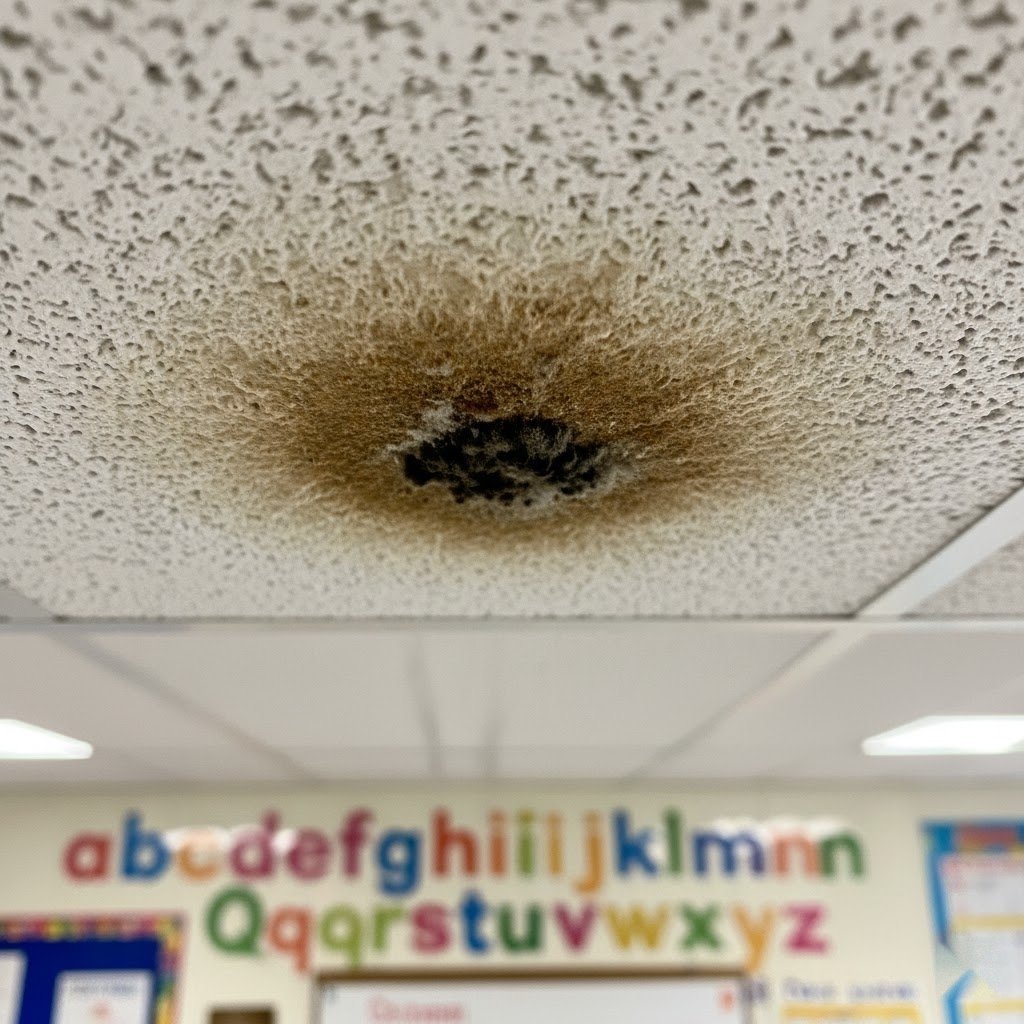
Stained or sagging ceiling tiles are another major warning sign. Water stains in classrooms often indicate roof leaks, HVAC condensation, or moisture above the ceiling grid that is feeding mold. This matters because contaminated tiles can release spores into classrooms when disturbed. At a Bernalillo County charter school, we replaced 200+ tiles affected by a roof drain failure. If ceiling tiles in your school are sagging or discolored, contact us immediately.
Visible mold on walls, windows, vents, or around flooring edges also signals a developing problem. Black or green patches may appear in portable classrooms, around windows, or near restrooms. This matters because surface mold usually means deeper moisture in the structure. Students may complain of itchy eyes, coughing, or headaches in these rooms. If you see visible mold anywhere in a school, call 505-359-5669 at once.
Increased asthma or allergy symptoms among students or staff may also indicate poor indoor air quality. Teachers might notice discomfort during certain periods or in specific rooms. This matters because children are highly sensitive to antigenic particles and mold spores. We’ve handled cases in Uptown where student absenteeism rose before mold was discovered behind library shelving. If health complaints are clustering, schedule an air quality testing focused inspection today.
Our School Mold Remediation Process
Professional school mold remediation follows a strict, certified process to contain, remove, and prevent mold while limiting disruption to instruction. This process ensures safe air quality, compliance with EPA and OSHA protocols, and alignment with administrative needs. If you need a school-safe remediation plan, call 505-359-5669.
School-Wide Mold Inspection & Moisture Mapping
School mold remediation begins with inspecting classrooms, restrooms, hallways, gyms, cafeterias, offices, libraries, and mechanical rooms. We check ceiling tiles, wall cavities, flooring edges, windows, and HVAC systems using moisture meters, HEPA-filtered vacuums, and thermal imaging when appropriate. This matters because moisture patterns in schools often follow roof drain lines, HVAC runs, or plumbing chases. In many areas like Westgate and Taylor Ranch, older campuses have aging roofs causing recurring stains.
Containment with Minimal Classroom Disruption
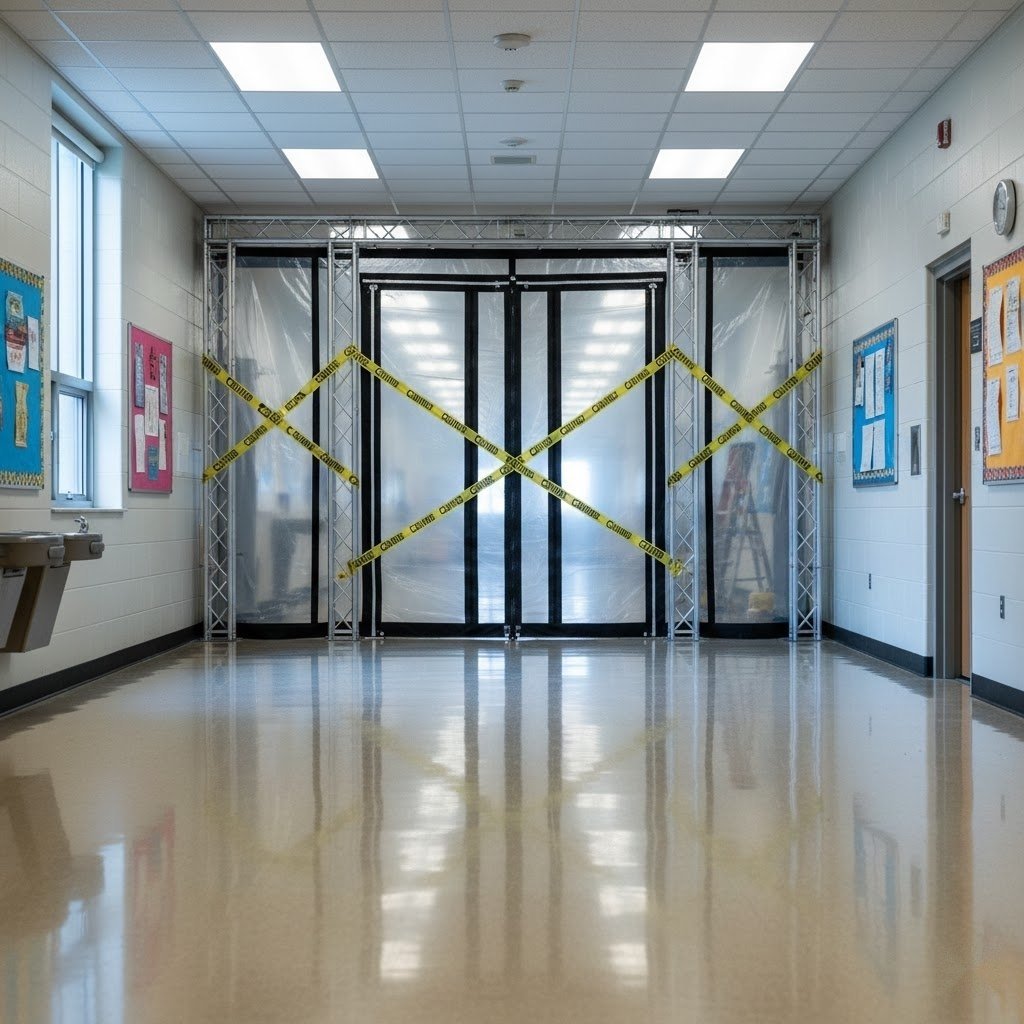
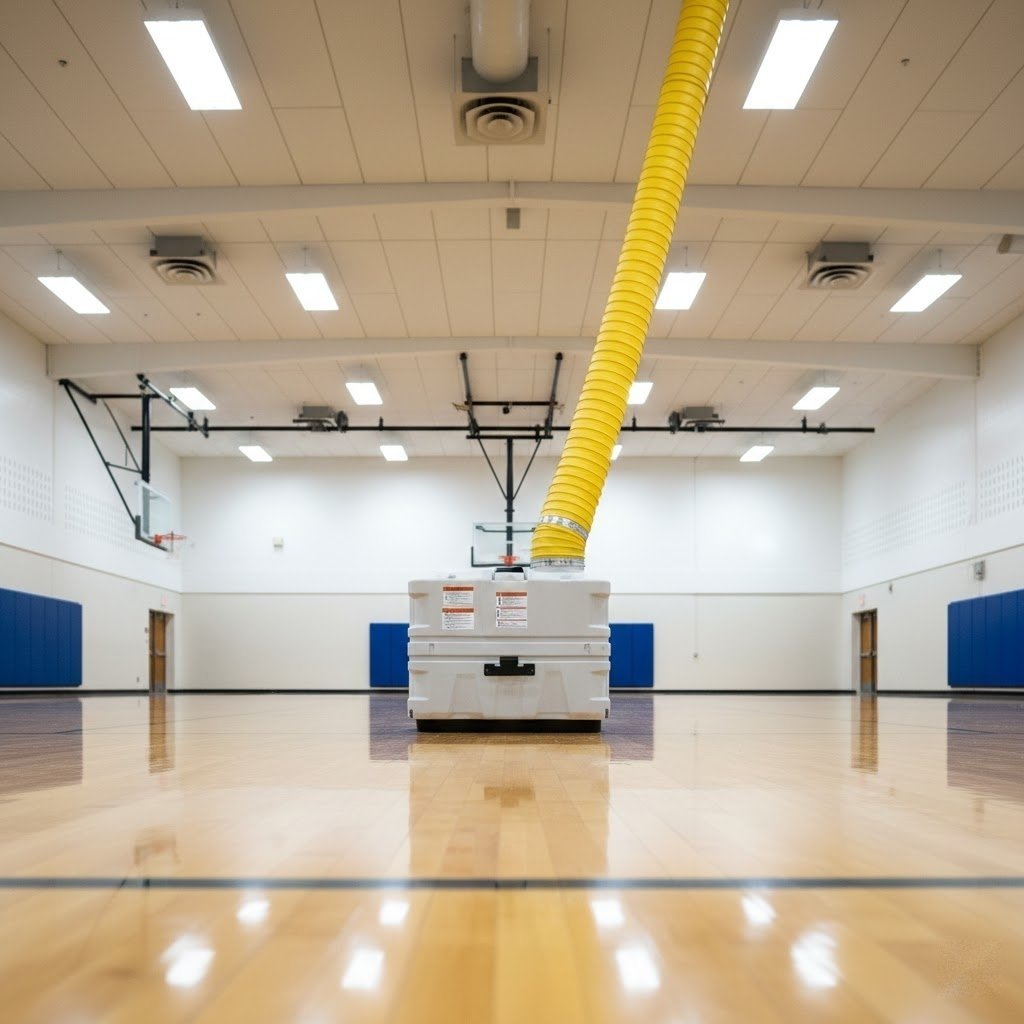
We isolate affected classrooms, hallways, or wings using barriers, floor protection, and HEPA negative air machines. This matters because containment prevents spores from spreading while allowing school operations to continue safely. We coordinate scheduling with administrators to perform work after-hours, on weekends, or during breaks whenever possible.
Surface & Structural Mold Removal
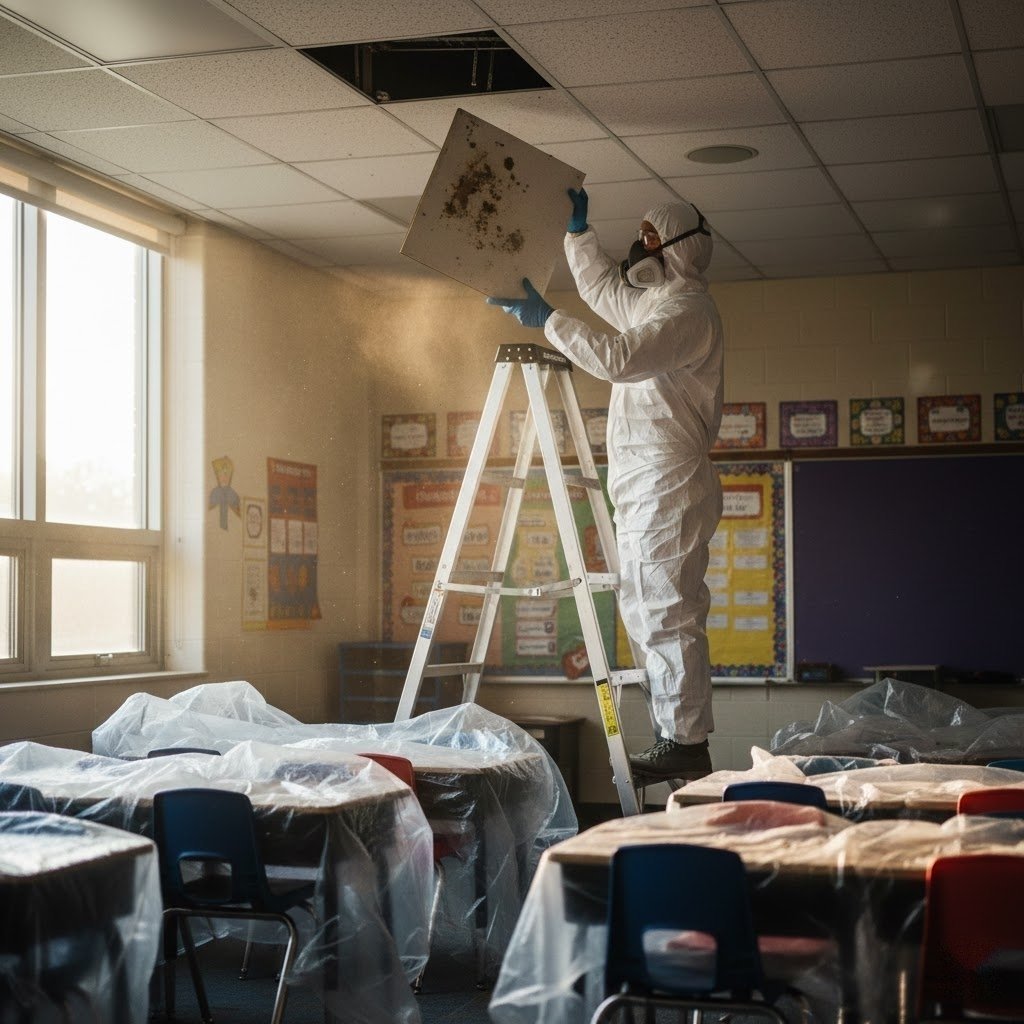
We remove contaminated ceiling tiles, HEPA vacuum surfaces, clean with EPA-approved antimicrobial agents, and remediate structural mold by removing affected drywall, insulation, or flooring. This matters because school environments require careful cleanup to protect students and prevent recurring contamination.
HVAC Cleaning & Mechanical Area Remediation
If HVAC systems show contamination or condensation issues, we clean vents, adjust drainage, and remediate mold near rooftop units or ducts.
Moisture Source Repair
We help identify and resolve roof leaks, plumbing failures, poor ventilation, window leaks, or drainage issues. Fixing moisture is essential to prevent recurring mold.
Restoration & Final Verification
We replace tiles, install new drywall, repaint with mold-resistant coatings, and verify moisture and cleanliness. Written clearance can be provided to administrators, districts, insurers, or parent communication channels.
Areas of a School We Commonly Treat
We treat classrooms, portable classrooms, hallways, restrooms, locker rooms, gymnasiums, cafeterias, kitchens, libraries, computer labs, offices, mechanical rooms, basements, and crawl spaces.
Minimizing Disruption to Students & Staff
We perform remediation after-hours, on weekends, or during school breaks whenever possible. Temporary class relocation plans, clear signage, safe walking paths, and communication support help maintain continuity.
Preventing Mold in Schools
Prevention includes roof inspections, HVAC maintenance, fast leak response, humidity control, and routine IAQ checks. We help districts build maintenance protocols to reduce future risk.
Why Choose Mold Removal Albuquerque
We understand school operations, district approvals, student safety, and Albuquerque’s building challenges. We use HEPA vacuums, negative air machines, EPA-approved products, OSHA-safe procedures, and provide clear communication for administrators and parents. Mold Removal Albuquerque has years of experience serving educational facilities across the Albuquerque area. Our technicians follow IICRC principles, EPA mold guidance, and OSHA safety practices. We provide fast response, detailed documentation, and IAQ-focused remediation.
Localized Expertise Across Albuquerque
We serve schools in Downtown, Northeast Heights, Nob Hill, International District, Westside, and beyond—each with unique building styles and leak patterns. Flat roofs, aging HVAC systems, and monsoon storms make mold common across educational campuses in these neighborhoods.
Serving schools and educational campuses throughout the Albuquerque area near landmarks such as Old Town, Uptown, and Central Avenue.
FAQs about School Mold Remediation
Yes. Significant mold or poor IAQ can force temporary closures for safety.
Single rooms may take 1–2 days; multiple rooms or wings may take several days or weeks.
Only if contamination affects large areas or if containment requires relocation.
Yes. We coordinate documentation for facility managers, districts, and insurers.
Fix leaks quickly, maintain HVAC systems, check ceiling tiles, and monitor humidity.
Testimonials
School administrators, facility directors, and teachers often praise our ability to work after-hours, protect student safety, communicate clearly, and prevent disruption to learning. Parents appreciate improved air quality and transparency.
Micro Case Study
A Midtown elementary school reported musty odors in two classrooms. We inspected ceiling cavities, found a roof drain leak, removed moldy tiles and drywall, treated framing, repaired the leak, and restored finishes. Air quality improved, odors vanished, and no classes were canceled.
Related services and helpful resources on this site
Related services to explore:
Plus:
- Visit the blog for IAQ tips
- Visit the contact page to schedule service
- Check special offers for district-wide projects
Ready to schedule school mold remediation in the Albuquerque area?
If your school shows musty odors, stained tiles, or student health complaints, act now to prevent closures and protect air quality. Mold Removal Albuquerque specializes in safe, fast school mold remediation aligned with district needs. Call 505-359-5669 or use our contact page to schedule your inspection today.