Professional Kitchen Mold Removal in Albuquerque
Finding mold in your kitchen can feel alarming because it’s growing in the same space where you cook, eat, and gather with family. Kitchen mold spreads quickly under sinks, behind cabinets, and near dishwashers and refrigerators whenever moisture and food residues are left undisturbed. Mold Removal Albuquerque provides professional kitchen mold removal for homes, rentals, and commercial kitchens across the Albuquerque area, combining moisture detection, structural remediation, and sanitation. We eliminate visible mold, fix the leaks and humidity issues behind it, and help protect your cabinets, walls, and indoor air.
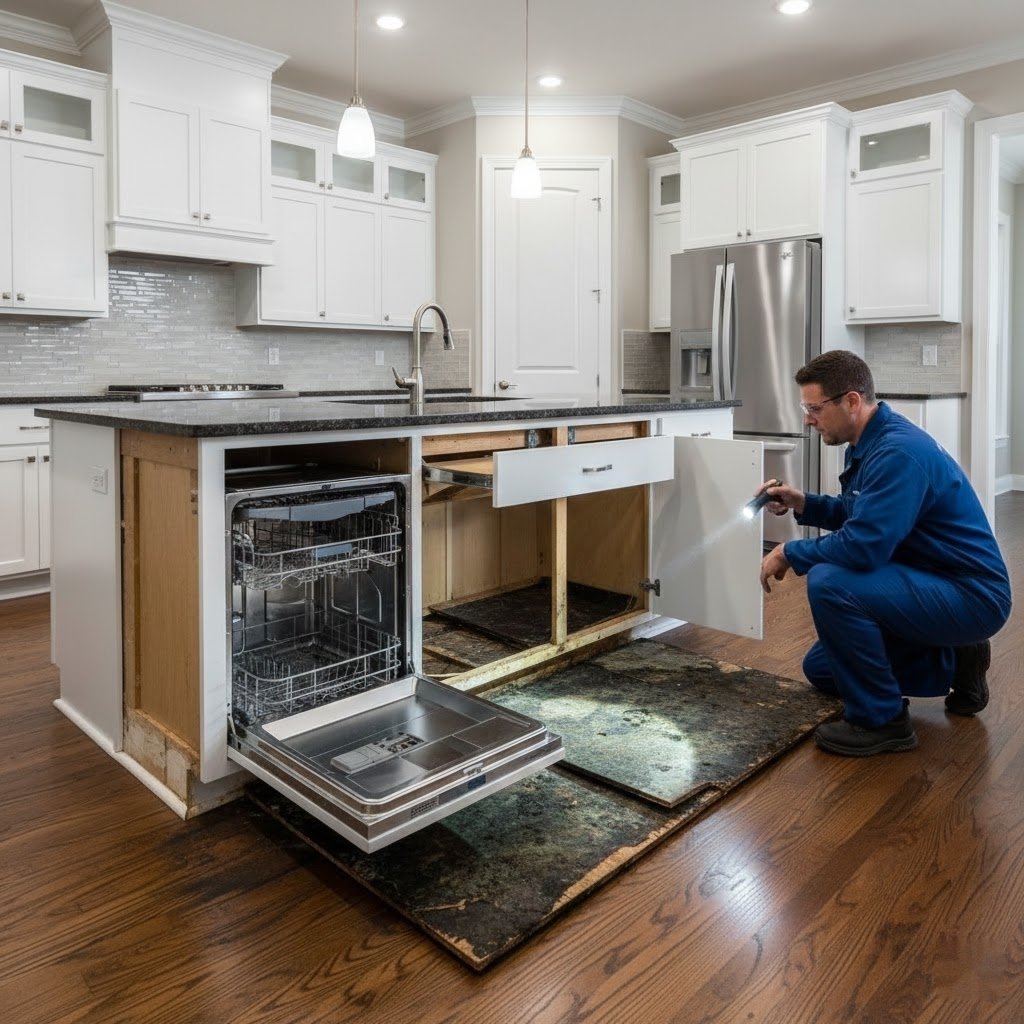
How much does Kitchen Mold Removal cost in Albuquerque?
Kitchen mold removal in Albuquerque typically ranges from lower-cost projects for light under-sink growth to higher investments when cabinets, drywall, or flooring must be removed and replaced. Pricing depends on contamination size, materials affected, and leak complexity in neighborhoods like Downtown and Northeast Heights. A detailed inspection is required for an accurate quote.
What Is Kitchen Mold and Where Does It Grow?
Kitchen mold removal protects your property by removing mold colonies from moisture-damaged materials and stopping regrowth in the room that handles the most water and food. Kitchen mold is a group of fungi that thrive on damp cabinet bases, drywall, subflooring, and even the dust and food particles that collect behind appliances. This matters because kitchens in Albuquerque—from older homes near Old Town to newer builds in Mesa Del Sol—often hide mold in dark, enclosed spaces where you rarely look.
Our technicians inspect the full kitchen envelope, including under-sink cabinets, toe-kick spaces, drywall behind the refrigerator and dishwasher, backsplashes, ceilings near vents, and flooring near appliances. We use moisture meters and, when useful, thermal imaging to identify areas where leaks from sink plumbing, dishwasher lines, or refrigerator water connections have soaked wall cavities or subfloors. Seeing both the visible mold and its hidden moisture footprint allows us to decide whether cleaning, material removal, or full structural remediation is required.
When kitchen mold removal is done thoroughly, you gain a safer, cleaner environment where cooking and food preparation feel more comfortable. For example, a family in Nob Hill discovered a musty odor under their sink; once we opened the cabinet, removed moldy particleboard, cleaned the wall framing, and repaired the slow drain leak, both the smell and the recurring cabinet stains disappeared. If you want similar peace of mind around your food and dishes, call 505-359-5669 to schedule a kitchen mold assessment.
Why Kitchen Mold Removal Matters
Kitchen mold removal protects both health and structure by eliminating microbial growth in one of the most frequently used rooms in your property. Mold in cabinets, walls, or around appliances can release spores into the air you breathe while cooking and can quietly weaken materials like MDF, plywood, and drywall. This matters because even small, unnoticed leaks in homes across Uptown, High Desert, and Ventana Ranch can create mold pockets that spread beyond the original damp spot.
We treat the kitchen as a complete moisture system, not just a collection of stained surfaces. Our team inspects plumbing under the sink, dishwasher hookups, refrigerator water and ice lines, and nearby walls and ceilings for signs of moisture intrusion. Using HEPA vacuums, EPA-registered antimicrobial products, and proper PPE, we remove mold while controlling dust and protecting indoor air quality. When needed, we coordinate repairs to plumbing components so that wet cabinets and walls can truly dry instead of becoming moldy again.
Addressing kitchen mold early can prevent larger repairs like full cabinet replacement or subfloor reconstruction. The micro-benefit for you is lower long-term cost and less disruption to an essential room. We’ve seen small leaks in Downtown condos turn into damaged flooring within weeks, while early intervention in Northeast Heights homes kept repairs limited to a single cabinet base. If you want to stop kitchen mold before it spreads, call 505-359-5669 and let us evaluate your situation.
Causes of Kitchen Mold in Albuquerque
Kitchen mold develops when moisture reaches porous surfaces such as cabinet bases, drywall, or subflooring and stays there long enough for spores to colonize. In Albuquerque kitchens, the most common triggers are leaking sink plumbing, dishwasher and refrigerator line failures, steam from cooking without adequate ventilation, and water from spills or minor flooding that doesn’t dry quickly. This matters because even a modern kitchen in Sandia Heights or an older one in South Valley can develop mold if water has an easy path into hidden spaces.
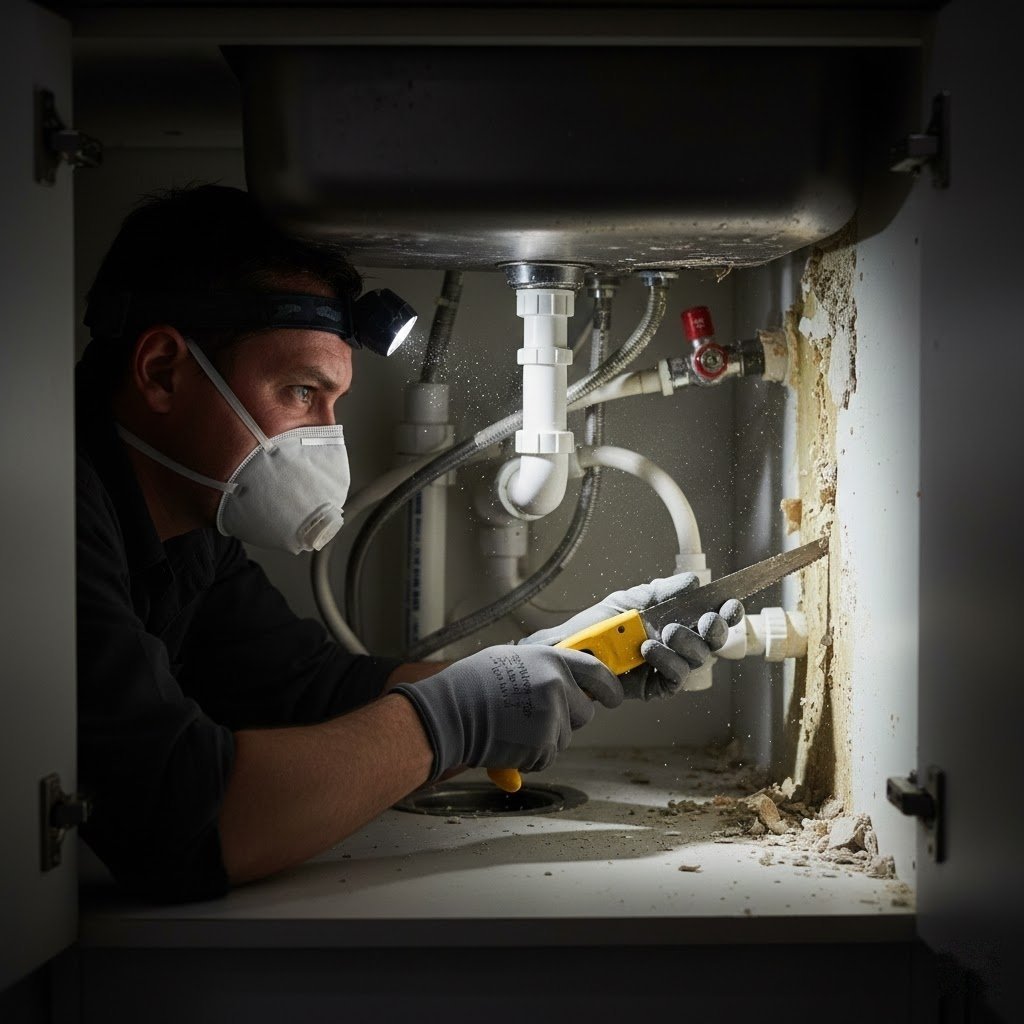
Under-sink cabinets are frequent problem spots. Small drips from supply lines, loose P-traps, or failing seals around sink drains can keep particleboard or plywood damp for days, feeding mold growth on the underside of the countertop and the back wall. Dishwashers can leak around door gaskets, drain hoses, or supply lines, soaking toe-kicks and flooring; refrigerator water and ice-maker lines can leak slowly behind the appliance, leaving mold where you rarely look. In areas like Westgate, Southwest Mesa, and La Mesa / Trumbull Village, we often see mold where steam from cooking or boiling condenses on cooler walls and ceilings near windows, especially when range hoods are under-powered or unused.
Albuquerque’s environment adds special risk factors. Hard water can create mineral buildup that leads to tiny plumbing leaks, monsoon humidity can temporarily raise indoor moisture levels, and swamp coolers can increase background humidity in kitchens with limited airflow. Over time, these conditions give mold everything it needs: moisture, food sources like dust and cooking residues, and dark crevices behind cabinets and appliances. If you want us to identify which of these causes is driving mold in your kitchen, call 505-359-5669 for a targeted leak and moisture diagnosis.
Signs You Have Kitchen Mold
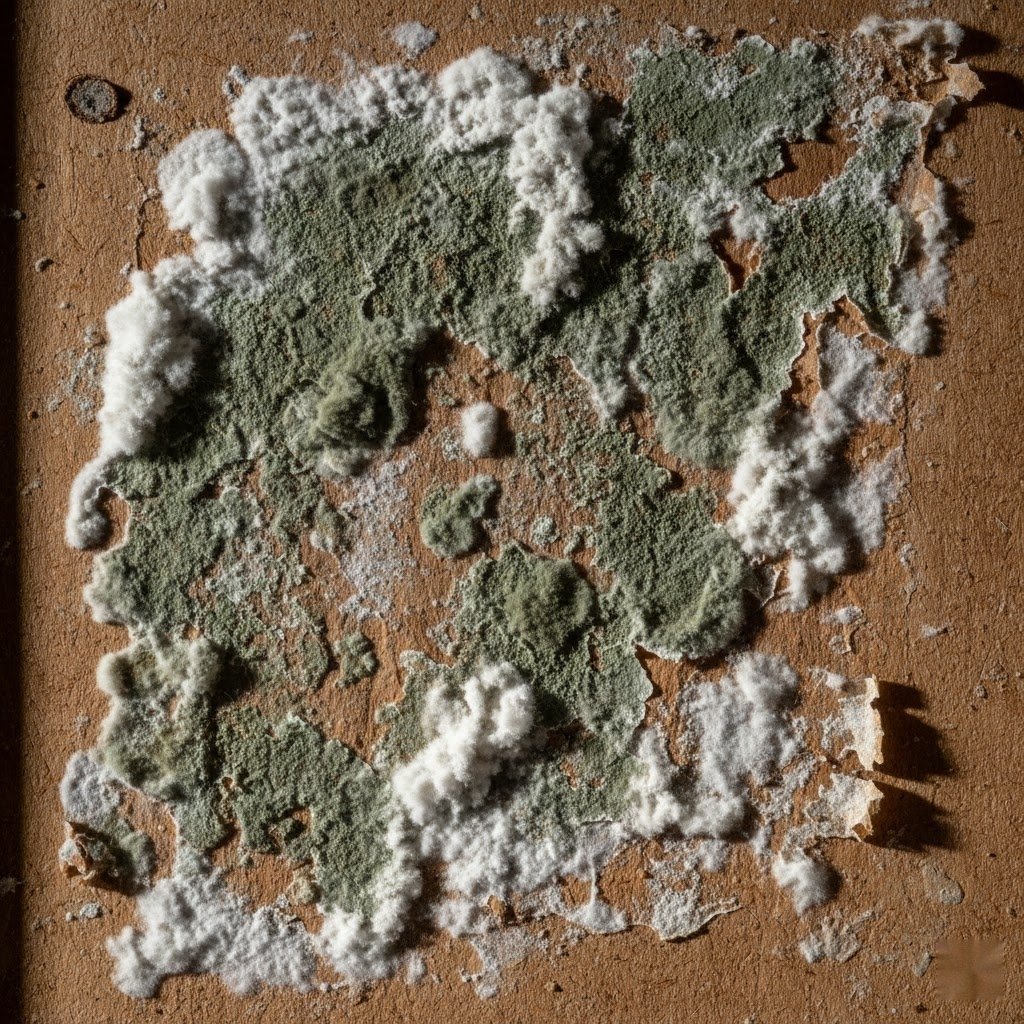
Most mold problems reveal themselves through visible growth, odors, or health symptoms before major structural damage appears. You may see dark or fuzzy spots on the back wall of the sink cabinet, staining on the cabinet floor, or discoloration on drywall near the dishwasher or refrigerator. This matters because these small visual clues often point to deeper, hidden moisture problems that standard surface cleaning will not resolve.
A persistent musty smell near the sink or dishwasher in homes across Mesa Del Sol, Taylor Ranch, and Downtown is a common warning sign. Swollen cabinet bases, soft toe-kicks, or bubbling laminate can indicate that water has soaked particleboard or MDF long enough for mold to flourish. Peeling paint or yellowish staining on kitchen walls, ceilings, or around windows may signal condensation or past leaks. In some cases, you might notice warped flooring near appliances or along base cabinets, suggesting that moisture reached the subfloor.
Residents in Northeast Heights, Paradise Hills, and International District sometimes report more sneezing or throat irritation when spending time in the kitchen, especially while using hot water or running the dishwasher, which can help release spores or odors. While symptoms alone aren’t proof, coupled with visual and odor clues they strongly support a professional inspection. The micro-benefit of paying attention to these early signs is catching mold when repairs are smaller and less disruptive. If you’re noticing any of these symptoms in your kitchen, call 505-359-5669 to book a thorough investigation.
Our Professional Kitchen Mold Removal Process
Professional Kitchen Mold Removal follows a strict, certified-minded process to contain, remove, and prevent mold in your kitchen.
Inspection and Moisture Mapping
We begin with a detailed inspection using moisture meters and, when appropriate, thermal imaging to map leaks from sink plumbing, dishwashers, and refrigerator lines. We inspect under-sink cabinets, behind appliances, along baseboards, and in adjacent walls and ceilings to define the full extent of moisture and mold. This matters because a clear scope lets us design a plan that removes contaminated materials and fixes the source, not just the stains.
Containment and Safety
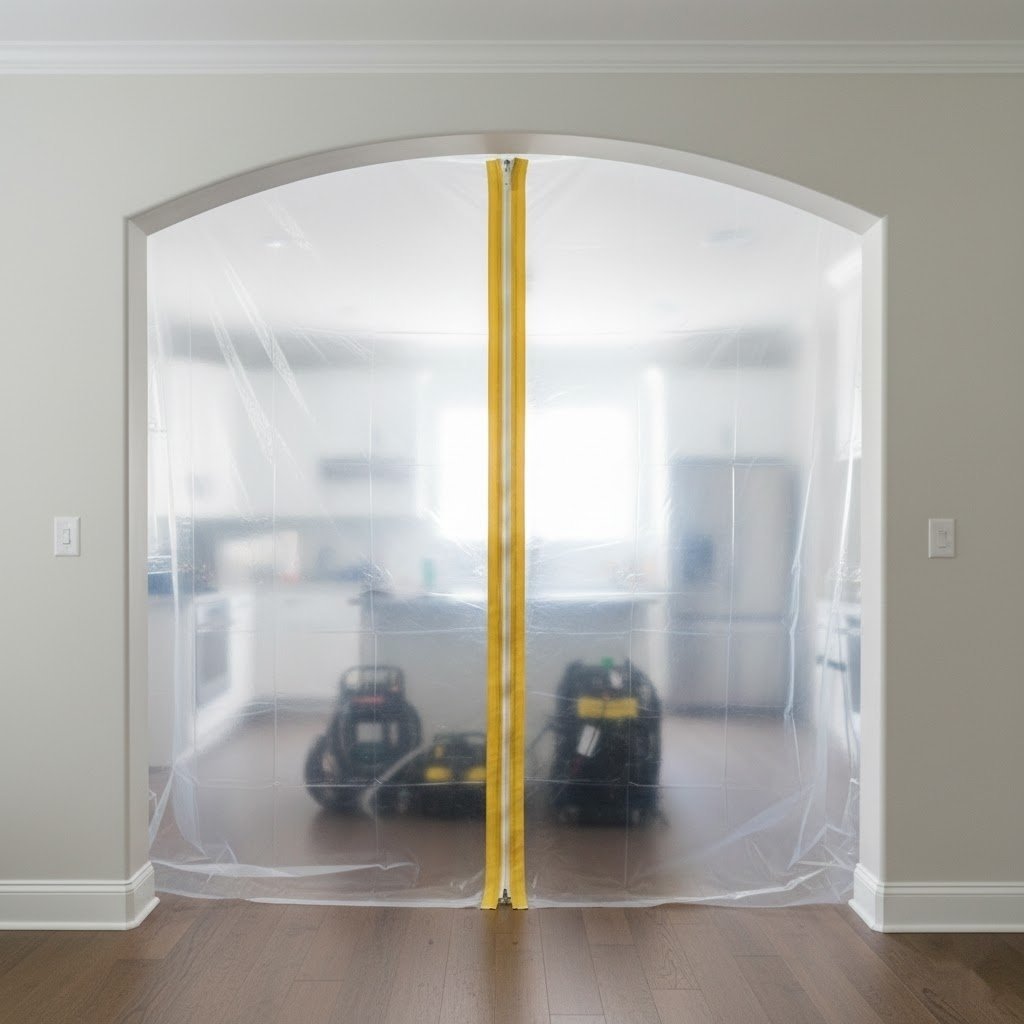
Next, we establish containment to protect the rest of your home. For larger projects in homes across Old Town, Uptown, and North Albuquerque Acres, we isolate the kitchen using plastic barriers and may deploy HEPA-filtered negative air machines to maintain airflow out of the work zone. Our technicians wear PPE—respirators, gloves, and protective suits—to manage spores safely.
Removal and Cleaning Procedures
Removal and cleaning are tailored to what we find. For surface-level mold, we use HEPA vacuuming followed by careful scrubbing with antimicrobial solutions. When cabinets, backing, or drywall are visibly damaged or deeply contaminated, we remove the affected sections to expose the underlying studs and subfloor. We then clean structural elements with HEPA brushing and EPA-registered antimicrobial treatments so they can dry properly.
Moisture Correction and Repairs
At the same time, we work to correct moisture sources. We coordinate repairs to leaking sink drain lines, loose supply hoses, failing dishwasher or refrigerator lines, and gaps around sinks that allow water to run under the rim. In properties across South Valley and Westgate, we often see missing or failing caulk where water pools around sinks or countertops, so we recommend proper resealing. If cooking steam contributes to problems, we suggest ventilation improvements.
Verification and Restoration
Finally, we verify success. We confirm that visible mold is removed, surfaces are dry, and moisture readings have returned to normal ranges. When new materials are installed—such as mold-resistant drywall, upgraded cabinets, or fresh paint—we ensure the space is ready for safe, everyday kitchen use. The micro-benefit to you is a kitchen that not only looks clean but is structurally sound and healthier over the long term. To put this level of process to work in your home, call 505-359-5669.
Hidden Kitchen Mold Behind Cabinets and Appliances
Hidden kitchen mold behind cabinets and appliances forms when leaks and moisture collect in spaces you rarely see or clean. Mold often develops behind dishwashers, refrigerators, and sink bases when small leaks persist, or when steam and condensation repeatedly contact cooler surfaces behind backsplashes or baseboards. This matters because kitchens in Downtown lofts, Nob Hill bungalows, and Northeast Heights homes can look fine on the surface while mold thrives in the shadows.
We frequently find mold behind dishwashers where door gaskets leak or drain hoses drip onto the subfloor, leaving dark staining and a musty smell that escapes only when the unit runs. Behind refrigerators, leaks from ice-maker lines or condensation from clogged defrost drains can soak drywall and base plates. Under and behind cabinets, gaps in sink caulking or improperly sealed penetrations for pipes can let water migrate along walls and under flooring. In areas like Ventana Ranch and Paradise Hills, we also see mold where cooking moisture and inadequate ventilation cause repeated condensation behind cabinets on exterior walls.
Detecting these hidden issues requires more than a quick glance. Our team uses moisture meters along cabinet bases, thermal imaging to spot temperature differences from damp materials, and careful removal of toe-kicks or small sections of backsplash to peer behind finished surfaces. If we confirm hidden mold, we design a contained removal plan that may include temporarily removing cabinets or appliances to access affected materials. The micro-benefit for you is catching concealed mold before it rots subfloors or spreads to adjoining rooms. If you suspect hidden mold due to odors or warped materials, call 505-359-5669 and ask for a behind-cabinet and appliance mold inspection.
Residential vs Commercial Kitchen Mold Removal
Kitchen mold removal differs significantly between residential kitchens and commercial or shared kitchens, so we adjust our approach for each environment. In homes around High Desert, Tanoan, and Mesa Del Sol, residential kitchens often have fewer appliances but more varied cabinet materials like MDF, plywood, and decorative finishes. This matters because homeowners usually want to preserve as much of the original design as possible while still removing mold safely.
For residential projects, we focus on maintaining family routines and protecting nearby spaces. We schedule work to minimize time without cooking or sink access, use containment to isolate the affected area, and bring right-sized HEPA equipment that fits smaller rooms. Documentation typically focuses on clear explanations, photos, and repair recommendations that homeowners can share with insurers or contractors. Because children and pets often share these spaces, we pay close attention to PPE, airflow direction, and cleanup quality.
Commercial kitchens, restaurant prep areas, and shared breakrooms near Midtown / EDo, Downtown, and industrial corridors introduce different requirements. These spaces may feature stainless surfaces but also complex plumbing, floor drains, and concealed chases where mold can form. Food safety and regulatory expectations make speed and thoroughness critical. We may need larger containment setups, more powerful dehumidifiers, and a more detailed documentation trail for health and safety records. In some cases, we coordinate work after hours or in phases so businesses can keep critical operations running.
In both residential and commercial settings, the core steps—inspection, containment, removal, cleaning, and moisture correction—stay the same, but the risks, equipment scale, and documentation depth change. The micro-benefit of choosing a company that understands both sides is a smoother project with fewer surprises. Whether your mold problem is under a home sink or behind a commercial dishwasher, call 505-359-5669 and tell us what type of kitchen you’re dealing with so we can plan accordingly.
Kitchen Mold Prevention Tips from Local Specialists
Kitchen mold prevention relies on leak control, good ventilation, and smart housekeeping habits that keep moisture from lingering in dark corners. Improving plumbing reliability is the first priority: checking under-sink connections regularly, inspecting dishwasher and refrigerator lines, and replacing aging hoses before they fail can stop many mold problems before they start. This matters because homes in Old Town, South Valley, and La Mesa / Trumbull Village often have older plumbing that benefits from proactive maintenance.
Ventilation also plays a major role. Running a range hood while cooking and for a short time afterward helps remove steam and combustion moisture that would otherwise condense on cooler walls and cabinets. In neighborhoods like International District and Southeast Heights, where some kitchens lack robust fans, adding or upgrading ventilation can dramatically lower mold risk. Keeping window frames and sills clean and sealed helps prevent condensation from settling into surrounding walls.
Good daily habits add another layer of protection. Wiping up spills around the sink, stove, and dishwasher promptly, avoiding long-term storage of damp items under the sink, and not overloading cabinets to the point where air cannot circulate all reduce hidden dampness. Periodically pulling appliances forward to clean and inspect behind them can reveal small leaks early. In homes using swamp coolers, monitoring indoor humidity and opening windows when conditions outside are drier can help balance moisture.
The micro-benefit of these habits is a kitchen that stays solid, odor-free, and easier to keep clean. After each remediation project, we share a customized prevention checklist based on your kitchen layout, plumbing, and neighborhood moisture patterns. If you’d like a professional to walk through prevention strategies tailored to your home, call 505-359-5669 and request a kitchen mold prevention consult.
Why Choose Mold Removal Albuquerque for Kitchen Mold Removal
Kitchen Mold Removal with Mold Removal Albuquerque gives you a team that understands plumbing, cabinetry, and building science as well as mold. We know how under-sink basins, dishwasher hookups, refrigerator lines, and exterior walls come together in Albuquerque’s housing stock, and we design our remediation plans to address all those intersections. This matters because long-term success requires more than spraying cleaner on visible mold—it requires solving the moisture pathways in your specific kitchen.
Our technicians use professional tools like moisture meters, HEPA vacuums, and EPA-registered antimicrobial products, and we align our work with recognized mold-removal principles informed by IICRC guidance. Properties across Downtown, Uptown, Ventana Ranch, and Paradise Hills benefit from our experience with both sudden leaks and long-term slow drips. We also understand local nuances such as hard-water scaling on fixtures, monsoon-season spikes in humidity, and the way swamp coolers can change moisture levels in kitchens.
You also gain a partner who communicates clearly and respectfully. We walk you through our findings, show photos of hidden mold and moisture damage, and provide step-by-step recommendations for remediation and restoration. Whether you are a homeowner, landlord, or facility manager, we tailor our documentation to your needs, from simple summaries to detailed reports. The micro-benefit is confidence: you’ll know what happened, what we did, and how to prevent it from happening again.
Kitchen Mold in Albuquerque Neighborhoods
Kitchen mold appears differently across Albuquerque neighborhoods because building ages, plumbing systems, and cooling methods vary. In older central areas near Downtown and Old Town, we often see mold under sinks and behind cabinets where original plumbing has been patched multiple times and older cast-iron or galvanized components are still in place. This matters because even tiny weeps from aging fittings can keep cabinet bases damp.
In Northeast Heights, High Desert, and Sandia Heights, larger open-concept kitchens with islands and multiple sinks may hide leaks in long supply runs, island drains, or refrigerator lines that pass through walls and floors. Homes in Westgate, Southwest Mesa, and South Valley more often combine compact kitchens with swamp coolers, which can raise indoor humidity and slow drying when small leaks occur. In developing areas like Mesa Del Sol and newer parts of Ventana Ranch, we sometimes find mold where modern dishwashers or refrigerators were installed with lines that weren’t secured or protected adequately.
Because we serve the full Albuquerque area, including neighborhoods like Nob Hill, Taylor Ranch, North Albuquerque Acres, and International District, we’ve seen patterns in how kitchen mold typically forms in each type of construction. The micro-benefit for you is faster diagnosis and more precise remediation. If your kitchen sits in any of these areas—or anywhere in the metro—and you suspect mold, call 505-359-5669 so we can bring neighborhood-specific experience to your project.
Kitchen Mold Removal FAQs
Kitchen mold can affect indoor air quality and may pose health concerns for some people, especially when it grows near air intakes or food-preparation areas. Removing it professionally and controlling moisture reduces exposure and helps protect both people and materials.
We remove and dispose of cabinets that are heavily contaminated or structurally damaged by water and mold. When possible, we save undamaged sections, but we never leave moldy cabinet bases, toe-kicks, or backs that could restart the problem.
Yes. We inspect behind and beneath dishwashers, refrigerators, and nearby cabinetry when mold or moisture suggests hidden leaks. Accessing these spaces is critical to finding and removing hidden mold and preventing future damage.
Kitchen mold removal can range from a single day for small, localized problems to several days or more when cabinets, drywall, or flooring require removal, drying, and replacement. The exact timeline depends on damage extent and drying conditions.
Yes. Mold under the sink can spread along walls, into neighboring cabinets, and through air movement into nearby rooms if moisture continues. Addressing both the mold and the leak helps keep the problem from migrating further.
Fix leaks quickly, use range and exhaust ventilation, keep under-sink spaces organized and dry, replace aging hoses and lines, and occasionally pull appliances away from the wall for inspection and cleaning. These habits reduce moisture and food sources for mold.
Our Experience, Training, and Safety Practices
Kitchen mold removal in Albuquerque calls for careful work around plumbing, electrical outlets, and food-preparation surfaces, and our team brings extensive local experience to every job. We’ve remediated kitchens in older bungalows near Old Town, ranch homes in Northeast Heights, townhomes in Uptown, and rental units across the International District and South Valley. This matters because each style of kitchen hides moisture differently, and experience helps us find the real problem faster.
We rely on PPE—including respirators, gloves, and protective suits—to handle mold safely, and we use HEPA vacuums and air scrubbers to reduce airborne particles during removal. Our technicians are trained to protect adjacent rooms by setting up containment barriers and controlling airflow, which is especially important in open-concept layouts. We also follow sound safety practices when moving appliances, shutting off water, and managing electrical risks around wet areas.
To support reliable results, we track metrics like response time, drying days, and number of completed mold-removal projects in various parts of the city, using that experience to refine our methods. You benefit from a team that has seen many kitchen mold scenarios and knows what tends to work best in Albuquerque’s climate and construction styles.
What Our Kitchen Mold Clients Are Saying
Homeowners and property managers across the Albuquerque area have seen major improvements after professional kitchen mold removal. One family in Westgate described how the musty smell under their sink disappeared after we replaced a leaking drain assembly, removed moldy cabinet boards, and sanitized the wall. A landlord in Nob Hill shared that tenants stopped complaining about odors once mold behind a dishwasher was removed and the line properly secured.
In an Uptown condo, a recurring stain near the refrigerator turned out to be a slow ice-maker line leak; after we cleaned mold from the wall and subfloor and coordinated plumbing repairs, the flooring stayed flat and odor-free. These stories reflect what happens when thorough moisture diagnosis is combined with detailed remediation. If you’d like your kitchen to smell clean and feel solid again, call 505-359-5669 today.
Kitchen Mold Removal Micro Case Study
A homeowner in Northeast Heights noticed a musty smell and swollen cabinet floor under the kitchen sink. Our inspection found a slow leak at the garbage disposal and mold on the cabinet base and wall. We removed contaminated materials, cleaned and treated framing, repaired the plumbing, and installed new cabinet components. The kitchen now smells fresh, and moisture readings remain normal—call 505-359-5669 for similar results.
Related Services and Helpful Internal Resources
Kitchen mold often connects to moisture problems in other parts of the home, so combining services can provide better long-term protection. Treating only one room may leave other sources active. Linking related solutions strengthens your overall defense against mold and water damage. Helpful internal paths include:
- General Mold Remediation for mold on walls, ceilings, and structural elements beyond the kitchen
- Bathroom Mold Removal to address mold from showers, tubs, and fans that share plumbing or walls with the kitchen
- Attic Mold Removal when kitchen or range-hood vents terminate in the attic and cause roof sheathing mold
- Crawl Space Mold Removal for moisture below the kitchen that affects subfloors and plumbing penetrations
- HVAC and Air Duct Mold Removal if kitchen odors or humidity have impacted nearby ducts and vents
- Water Damage Cleanup after major kitchen leaks or supply-line failures
- Black Mold Removal for high-risk toxic contamination
- Contact page where you can request inspections, estimates, or follow-up consultations
If you’d like a coordinated plan that covers your kitchen and any connected moisture issues, call 505-359-5669 or connect through the contact page on our website.
Schedule Your Kitchen Mold Inspection Today
Kitchen mold tends to grow quietly in the dark spaces you rarely see, and waiting rarely makes the problem smaller. Professional Kitchen Mold Removal from Mold Removal Albuquerque eliminates mold under sinks, behind cabinets, and around dishwashers and refrigerators while fixing the leaks and humidity issues that caused it. Acting now matters because early intervention keeps repair areas smaller, protects cabinets and flooring, and restores your peace of mind around food and family.
Whether you’re dealing with a musty odor near the sink, warped cabinets by the dishwasher, or visible mold behind the refrigerator, our team is ready to inspect, explain, and remediate. We serve homeowners, landlords, and businesses throughout the Albuquerque area, from Old Town and Downtown to Mesa Del Sol, Ventana Ranch, and beyond.