Warehouse Mold Removal in Albuquerque, NM
Discovering mold in a warehouse or distribution center can put millions of dollars in inventory and tight shipping schedules at risk. Mold spreads across high-bay structures, pallets, and packaging faster than most facility teams expect. Mold Removal Albuquerque provides professional warehouse mold removal for industrial buildings throughout the Albuquerque area. We eliminate mold using EPA- and IICRC-informed procedures that protect inventory, maintain air quality, and help you keep operations moving with minimal downtime.
Call 505-359-5669 now or use the contact page to book a warehouse mold inspection.
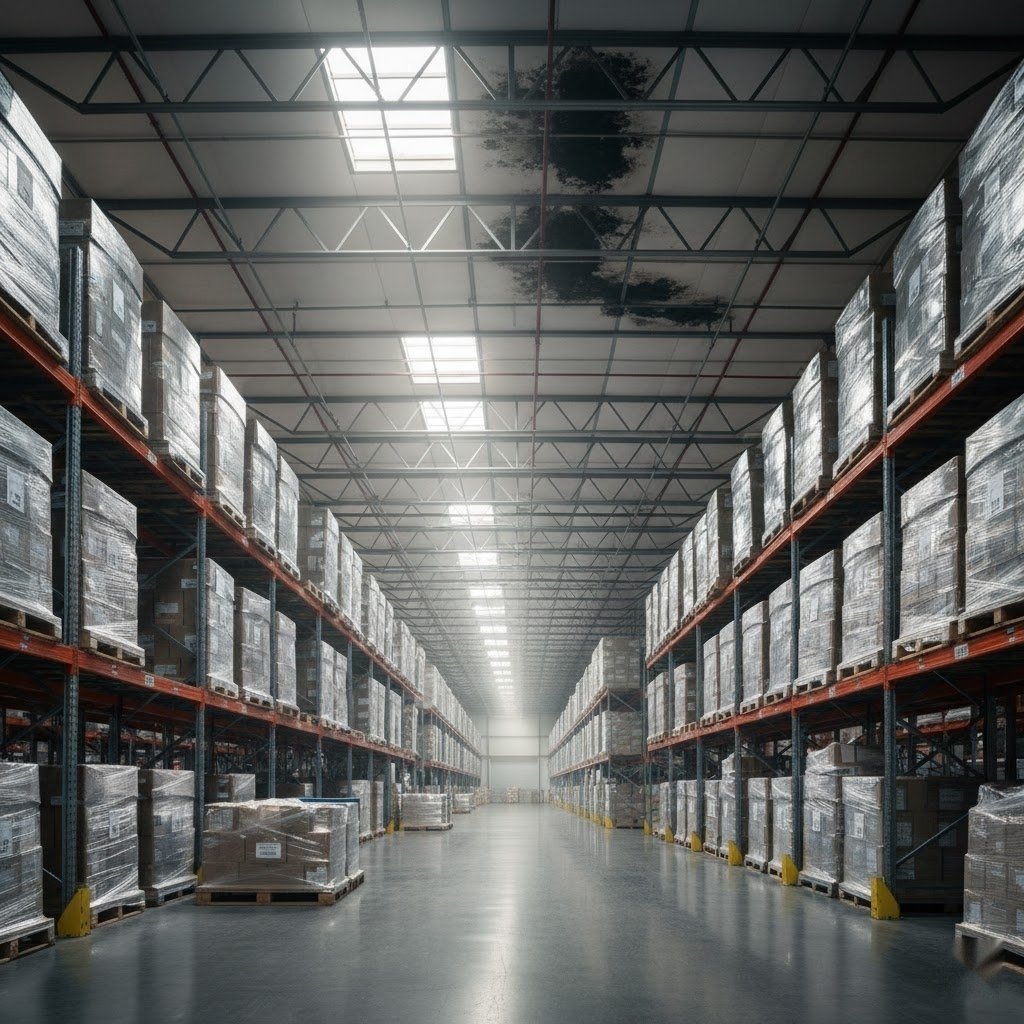
How much does Warehouse Mold Removal cost in Albuquerque?
Warehouse mold removal in Albuquerque typically ranges from $3,500–$15,000 for localized issues in a loading dock or small storage zone, and $15,000–$75,000+ for large industrial buildings, roof-deck contamination, or HVAC-wide issues. Pricing depends on square footage, ceiling height, inventory sensitivity, moisture repairs, shift scheduling, and zones (such as Downtown and the South Valley). A detailed inspection is required for an accurate quote.
Why Warehouse Mold Removal Matters for Your Facility
Warehouse mold removal protects your property by removing harmful mold colonies and stopping moisture-driven regrowth that can compromise inventory and infrastructure. In large industrial buildings, mold thrives on dust, cardboard, wood pallets, and damp concrete slabs, especially when roof leaks or HVAC humidity go unchecked. This matters because every hour mold remains active raises the risk of product damage, OSHA questions, and supply chain disruption. For example, a logistics operator near the South Valley discovered roof-leak mold on ceiling decking above racks that threatened a full shutdown. If you want to protect stock and keep freight moving, call 505-359-5669 for an industrial mold assessment.
Warehouse mold removal also protects worker health and air quality in busy spaces where employees are constantly on the move. Forklift drivers, pickers, packers, and office staff all breathe the same air circulating through high-volume HVAC units and ventilation systems. When mold colonizes roof decking, insulation, or ductwork, spores can distribute across the entire building and trigger allergies, irritation, and absenteeism. This matters because repeated employee complaints can escalate into safety investigations and lost productivity. One operation near Northwest Heights saw absentee rates fall once mold growth on concrete block walls and wooden pallets was remediated. If your team reports musty conditions or breathing issues, schedule a professional inspection.
Finally, warehouse mold removal protects the business itself from operational downtime and reputational damage with clients and auditors. Mold on packaging, racks, or pallets can be flagged during third-party inspections, quality audits, or customer site visits, especially for food, pharmaceuticals, or sensitive materials. This matters because a single failed audit or rejected shipment can cost far more than timely remediation. In Albuquerque’s industrial corridors around Downtown, Mesa Del Sol, and the Westside, we’ve helped facilities restore compliance before issues escalated. If you’re facing an audit or inspection and suspect mold, call 505-359-5669 to reduce your risk.
Causes of Mold in Albuquerque Warehouses
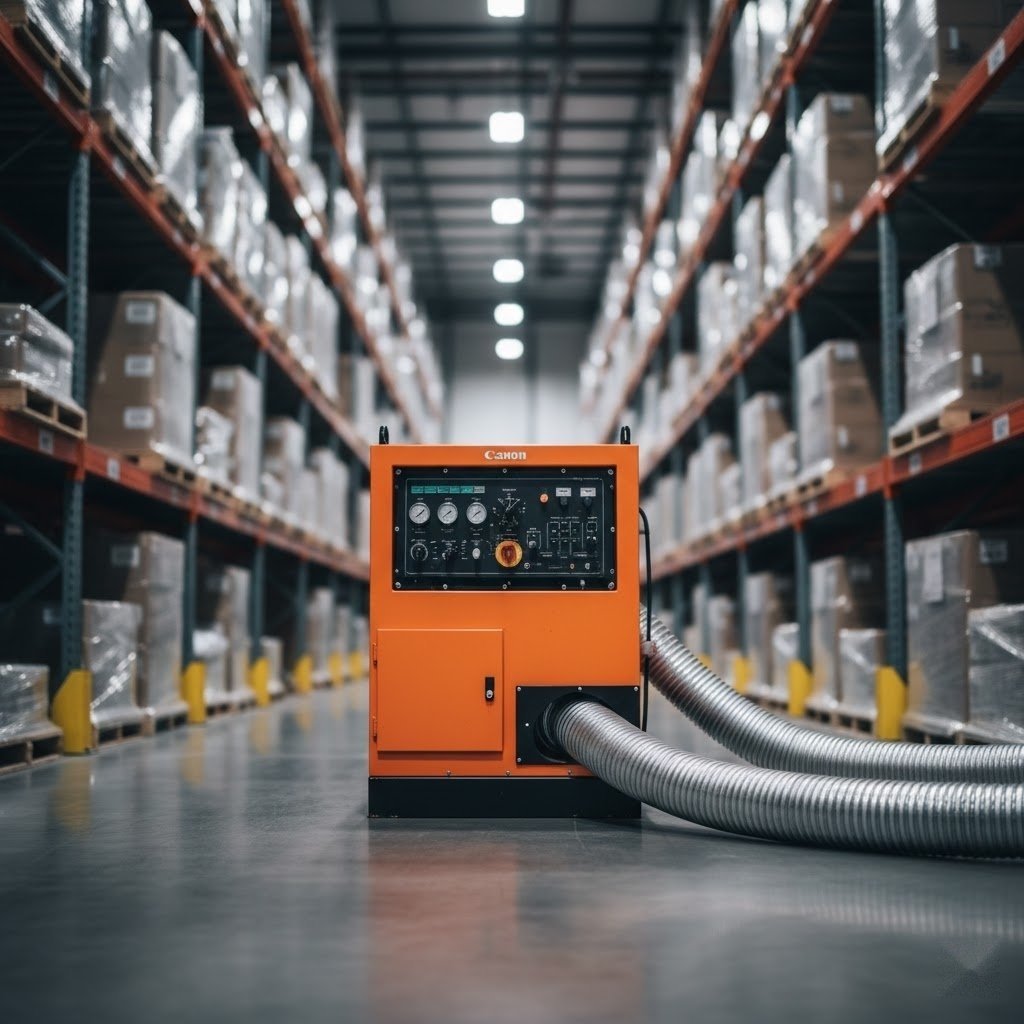
Mold develops when moisture reaches porous or dust-covered surfaces such as cardboard boxes, wooden pallets, insulation, and drywall office partitions, and warehouses present multiple pathways for that to happen. Large flat roofs, common in industrial areas from South Valley to Paradise Hills, often experience ponding water, seam failure, or flashing problems during monsoon storms. This matters because even small leaks across a wide roof can drip onto roof decking, insulation, and racks over time, leading to mold that workers may only notice as stains or odor. We’ve seen facilities in Westgate where a single roof penetration caused mold streaking across hundreds of square feet of ceiling panel. If your roof is older or has ponding after storms, call 505-359-5669 for a moisture mapping survey.
Slab moisture and water intrusion at loading docks are another major cause of mold in warehouses. Concrete slabs can wick moisture from the ground or retain water from cleaning, spills, or flood events, especially near dock doors. Loading docks often face constant exposure to rain, snowmelt, or wash-down water that seeps into cracks and joints. This matters because damp concrete and baseboards create a perfect environment for mold along lower walls, behind racking, and under stored goods. In one Northeast Heights facility, recurring mold on pallet bases was traced back to moisture wicking through an expansion joint. If you’ve noticed dark growth near floor edges or dock doors, schedule an industrial moisture inspection.
HVAC systems and limited ventilation in high-bay buildings add another layer of risk. Large rooftop units, swamp coolers in older facilities, and long duct runs can produce condensation on metal surfaces when hot days and cool nights collide in Albuquerque’s climate. When dust accumulates on vents and coils, mold has both moisture and organic material to feed on. This matters because air from HVAC systems distributes spores across storage aisles, office spaces, and breakrooms, expanding contamination beyond the original leak. We’ve worked in Mesa Del Sol and Southeast Heights warehouses where HVAC mold manifested first as a strong musty odor whenever the units cycled on. If odor spikes when air handlers start, call 505-359-5669 to check for HVAC mold.
Storm intrusion and cleaning practices can also fuel mold. Open dock doors during a storm, inadequate drying after spills, or pressure-washing without proper drainage can leave pockets of hidden moisture under racks and behind partitions. In large facilities near Downtown and Northeast Heights, we’ve found mold behind metal wall liners where water from cleaning pooled for days. This matters because such issues are easy to overlook in busy operations but can gradually damage inventory and structures. If your team frequently uses water for cleaning or deals with storm-driven intrusion, ask us about moisture-safe protocols during your inspection.
Signs of Mold in Warehouses and Distribution Centers
Most warehouse mold problems reveal themselves through visible growth, odors, or health symptoms before serious structural damage appears, and recognizing these signs early helps protect operations. A strong musty or earthy odor in certain aisles, near loading docks, or in office areas is one of the first warning signs. This matters because widespread odor indicates that spores and mold metabolites are already affecting indoor air quality and likely spreading across surfaces and packaging. For instance, a distribution center near the International District noticed odor spikes mainly in one corner, leading us to find mold behind stacked racks against an exterior wall. If your building smells damp or “off” despite regular cleaning, call 505-359-5669 for an assessment.
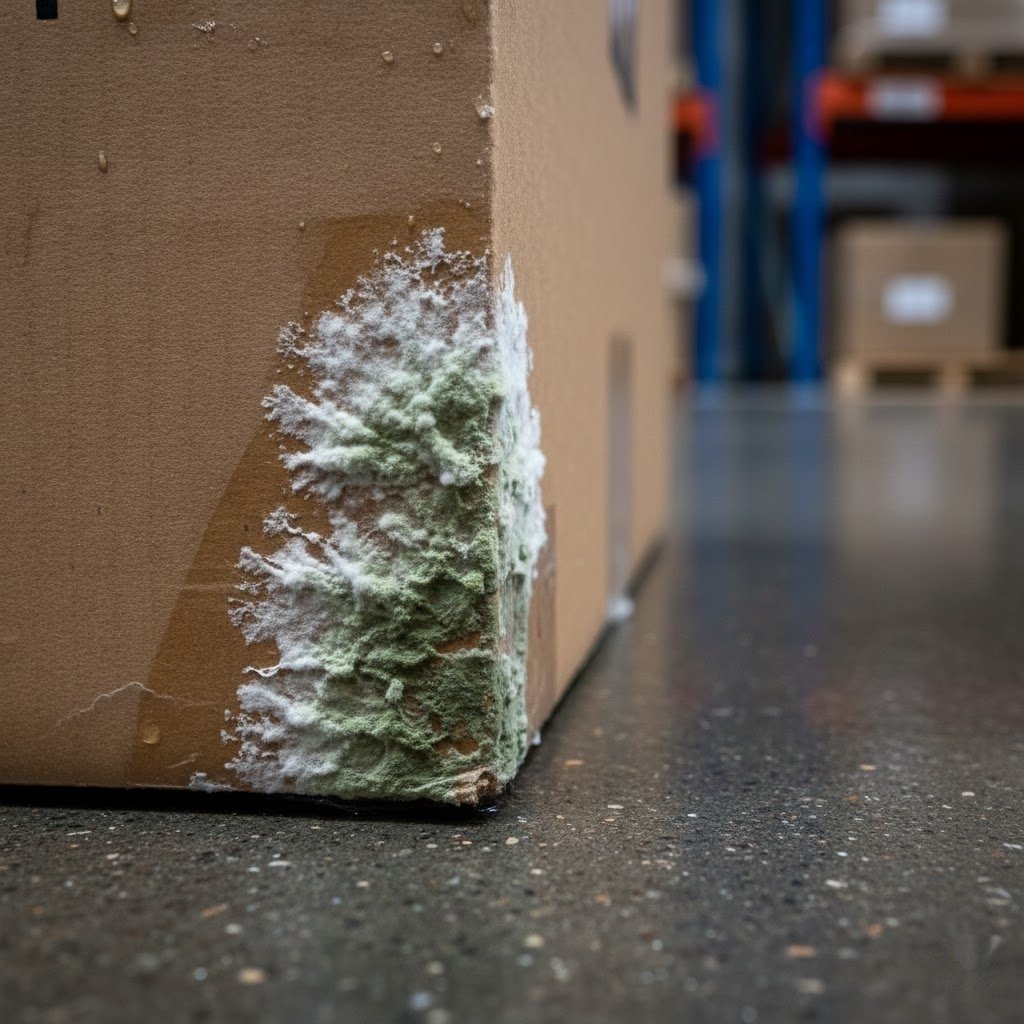
Visible mold on walls, ceiling decking, insulation, or stored materials is a more obvious signal that you need warehouse mold removal. Dark spotting on metal purlins, black or green streaks on concrete block, fuzz on cardboard boxes, or growth on wooden pallets all indicate moisture is present. This matters because mold on any visible surface suggests there may be more colonization in hidden areas like roof cavities, wall voids, or under racks. In a facility near Ventana Ranch, surface mold on a few pallets turned out to be the visible portion of a larger roof-leak problem above the storage zone. If your crew has seen any fungal growth, schedule an inspection before the problem multiplies.
Employee health and comfort provide additional clues. Workers may report headaches, congestion, throat irritation, or coughing that worsen while on shift and improve when away from the building. Hot, humid pockets in certain areas, condensation on windows or high walls, and damp spots on the slab after cleaning also matter. These symptoms signal compromised air quality and moisture imbalance, often tied to HVAC or roof issues. One facility in North Albuquerque Acres saw allergy complaints fall sharply after remediation addressed mold on wall insulation and improved dehumidification in the packing area. If HR or supervisors are hearing repeated complaints, call 505-359-5669 to protect your team and limit risk.
Our Warehouse Mold Removal Process
Professional warehouse mold removal follows a strict, certified-style process to contain, remove, and prevent mold while minimizing downtime. This matters because industrial buildings mix large open volumes, high ceilings, sensitive inventory, and tight logistics windows, so remediation must be both powerful and operationally smart. Mold Removal Albuquerque uses equipment like HEPA vacuums, negative-air machines, and industrial dehumidifiers along with EPA- and IICRC-informed procedures to help you restore control of your facility.
Full Industrial Building Assessment & Moisture Mapping
We start by inspecting the entire warehouse, not just the visibly affected area. Our team walks aisles, loading docks, office pods, restrooms, mechanical rooms, and any cold storage zones, documenting visible mold, staining, and water damage. We use moisture meters and other tools to map damp areas on concrete slabs, drywall, insulation, and roof decking. HVAC units, ducting, and vents are checked for condensation and microbial growth. This matters because mold in one corner often traces back to roof or HVAC conditions affecting multiple zones. A warehouse near Taylor Ranch, for example, had mold concentrated on one rack line but moisture readings showed a much longer roof leak pattern above. If you want the real root cause identified, call 505-359-5669 for an industrial-grade inspection.
Containment & Operational Continuity
Once we understand contamination patterns, we design containment zones to isolate affected areas without shutting down the entire facility where possible. Using plastic barriers, foam seals, and HEPA-filtered negative air machines, we prevent spores from spreading into clean zones while work proceeds. We coordinate with facility managers, EHS teams, and logistics supervisors to schedule tasks around shifts, peak loading times, and critical shipping windows. This matters because you have commitments to customers and carriers, and full shutdown is often not an option. At a distribution center in Westgate, we remediated roof-deck mold section by section while core picking and packing operations continued in protected aisles. If you need a “keep working while we fix it” strategy, we can design containment around your workflow.
Warehouse-Specific Mold Removal Techniques
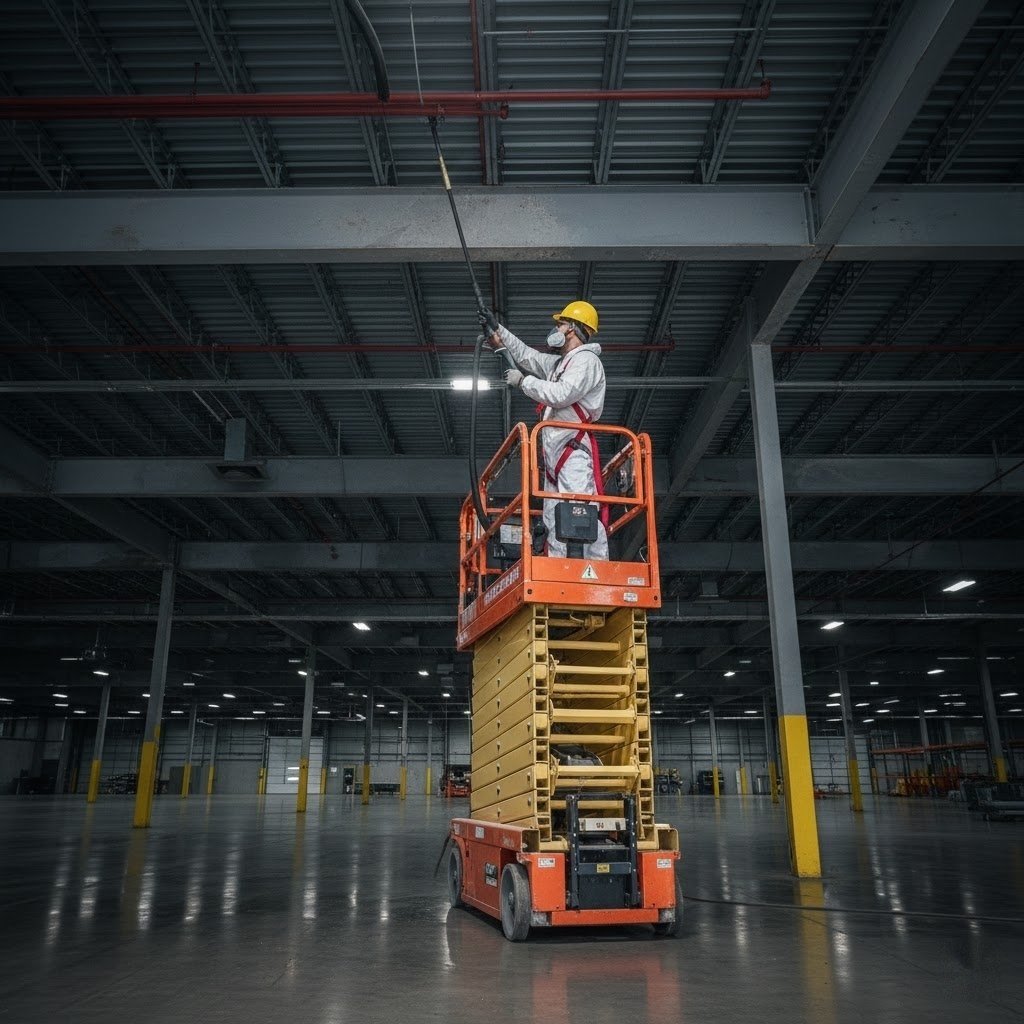
With containment in place, we remove mold using methods tailored to large, dusty industrial environments. We HEPA vacuum racks, pallet surfaces, floors, and walls to capture spores and debris, then clean contaminated surfaces with appropriate antimicrobial solutions. Moldy drywall in office areas or breakrooms is cut out and disposed of; affected insulation and ceiling tiles are removed as needed. For high-bay structures and roof beams, we may use lifts to reach affected steel, decking, or insulation, carefully treating or removing materials under controlled conditions. This matters because mold near the roof line can shower spores onto inventory and staff below if handled incorrectly. If you want a crew comfortable working at height in industrial spaces, call 505-359-5669.
Inventory Protection & Segregation
Warehouse mold removal must carefully protect inventory from contamination and damage. We work with managers to identify affected inventory zones, inspect pallets, and separate salvageable from unsalvageable items based on visible growth and packaging type. Salvageable goods may be cleaned or reboxed per your quality requirements, while compromised stock is isolated and documented for disposal or claim purposes. This matters because cross-contamination from moldy pallets or boxes can quickly affect clean inventory if not handled systematically. In a facility near Downtown, we helped a client save a majority of their product by quickly isolating only the truly compromised lots. If protecting stock value is critical, call 505-359-5669 to discuss inventory-safe remediation plans.
Moisture Source Repairs
Lasting remediation requires fixing the moisture sources that started the problem. After identifying key issues, we coordinate or recommend roof repairs, dock sealing, slab moisture mitigation, plumbing fixes, or HVAC drainage improvements. Roof repairs may include patching seams, replacing membranes, or improving drainage; dock work can involve sealing gaps, improving thresholds, and regrading to move water away from doors. This matters because any unresolved leak or condensation pattern can re-seed mold even after a thorough cleanup. In an industrial building near Southwest Mesa, reinforcement of roof drains and dock canopies dramatically cut future moisture events. If you’ve already “cleaned mold” but it keeps coming back, it’s time for a moisture-focused approach.
Restoration & Industrial-Grade Finish
Once cleanup and repairs are complete, we restore affected building elements so the warehouse can return to full service. That may include replacing drywall and ceiling tiles in office areas, installing new insulation, repainting walls with mold-resistant coatings, and refinishing or sealing concrete where appropriate. This matters because your teams need safe, functional, and presentable spaces to work in, from breakrooms to conference areas. In a facility near North Albuquerque Acres, restored offices looked cleaner and brighter than before the mold incident, boosting morale and confidence. If you want your warehouse to come out of remediation looking better, not just “good enough,” call 505-359-5669.
Final Verification & Documentation
At the end of the project, we verify that previously wet materials are dry and that treated areas are visibly clean. Moisture measurements confirm the success of drying and repairs. When requested, we can recommend or coordinate air quality tests to provide additional assurance. We deliver documentation summarizing conditions, actions taken, and recommendations to support facility records, auditors, and insurers. This matters because industrial operations often answer to corporate risk teams and regulatory bodies that expect clear evidence of proper mold management. Post-remediation verification gives you solid documentation for insurance or corporate EHS. Ask us about our reporting package during your inspection at 505-359-5669.
Warehouse vs Residential vs Commercial & Industrial Projects
Warehouse mold removal differs significantly from residential and standard commercial projects in risk, requirements, equipment, process, documentation, and speed. Homes typically involve smaller areas, lower ceilings, and fewer stakeholders, while standard commercial spaces like offices or small retail lack the vast volumes, palletized inventory, and slab moisture considerations seen in warehouses. In contrast, industrial warehouses across Albuquerque—from Downtown clusters to Mesa Del Sol—combine high-bay structures, flat roofs, heavy forklift traffic, and large HVAC systems. This matters because they demand high-capacity dehumidifiers, powerful HEPA negative-air machines, lifts for elevated work, and logistics-aware scheduling. If you want a crew prepared for industrial realities, not just residential tools, call 505-359-5669.
Warehouses also differ from other industrial sites such as manufacturing plants because inventory protection and operational continuity are usually the top priorities. Manufacturing may tolerate more segmented downtime by line or process, while distribution centers and storage facilities often run nearly 24/7 and depend on uninterrupted flow. Documentation expectations are higher too: EHS officers, corporate risk teams, and external auditors may all review how a mold incident was identified, contained, and resolved. This matters because a mismanaged response can affect customer contracts and compliance status. If your facility must balance worker safety, asset protection, and continuous operations, we design warehouse-specific remediation plans to fit.
Practical Mold Prevention Tips for Warehouses
Smart ventilation and humidity control form the first line of defense against warehouse mold. Optimizing airflow through HVAC systems, verifying that outside air intake is balanced, and using dehumidification when needed helps keep relative humidity in safe ranges even during humid monsoon periods. This matters because high humidity levels can create condensation on cold surfaces, especially on metal structures and HVAC ducting in large spaces from Nob Hill to South Valley. If you’re unsure whether your building’s humidity is under control, call 505-359-5669 to discuss mold prevention options.
Roof and dock maintenance is equally crucial. Regular inspections of flat or low-slope roofs for ponding water, membrane wear, and flashing gaps prevent leaks that lead directly to mold. Checking dock seals, bumpers, and thresholds, and ensuring proper drainage at loading areas keeps water from pooling near slab edges. This matters because a small defect at a dock door can repeatedly introduce water onto flooring, racks, and inventory. Facilities in Paradise Hills and Ventana Ranch have greatly reduced mold incidents simply by maintaining roof drains and dock gaskets more aggressively. If you suspect dock or roof vulnerabilities, schedule a warehouse inspection to get ahead of problems.
Floor moisture management and cleaning practices also influence mold risk. Using controlled amounts of water for cleaning, promptly removing standing water, and addressing slab cracks or joint gaps keeps the floor system dry. Adding fans, improving cross-ventilation, or using industrial dehumidifiers after wet cleaning helps accelerate drying. This matters because wet slabs and baseboards provide persistent moisture for mold on lower walls, boxes, and pallets. If your floors often stay damp long after cleaning, call 505-359-5669 to explore safer maintenance routines.
Why Choose Mold Removal Albuquerque for Warehouse Mold Removal
Mold Removal Albuquerque specializes in industrial and commercial environments, including warehouses, storage facilities, and distribution centers across the metro area. Our crews are trained to work safely around forklifts, racking systems, and large HVAC units while wearing appropriate PPE and following OSHA-aware practices. This matters because an industrial site demands more than basic residential skills; it requires comfort with height, heavy equipment, and safety protocols. If you need a remediation partner who understands warehouse realities, call 505-359-5669.
We combine advanced equipment—HEPA vacuums, negative-air machines, dehumidifiers, moisture meters—with local familiarity of Albuquerque’s industrial zones, from Downtown corridors and South Broadway to Mesa Del Sol and Northwest Heights. We’ve seen how flat roofs, temperature swings, and desert dust interact to create unpredictable mold patterns. That local experience helps us quickly identify likely trouble spots and tailor solutions to your building’s age, construction, and inventory mix. This matters because generic approaches often miss hidden risks in older buildings near the rail lines or in newer high-bay facilities by the interstate. If you want solutions grounded in real local experience, reach out today.
Communication and documentation are central to how we work with facility managers and EHS teams. We explain our findings clearly, outline options with cost and downtime estimates, and deliver written summaries you can share with corporate, auditors, or insurers. This matters because warehouses rarely operate in isolation; they’re part of larger logistics networks that demand accountability. If you need a mold removal team that helps you answer questions from leadership and clients, call 505-359-5669 for a consultation.
Serving Warehouses Across the Albuquerque Area
We remediate mold in warehouses and storage facilities across the Albuquerque area, from industrial corridors near Downtown and South Broadway to logistics hubs around Mesa Del Sol, Southwest Mesa, and the Westside. Facilities in Northeast Heights and Uptown may have smaller warehouse footprints attached to offices, while larger distribution centers in the South Valley, Paradise Hills, and Taylor Ranch often feature extensive flat roofs and intricate rack layouts. Albuquerque’s monsoon patterns, dust levels, and temperature swings affect each of these neighborhoods differently, but the need to protect inventory and staff remains the same. Wherever your warehouse sits in the metro area, call 505-359-5669 if you see mold, smell musty odors, or suspect slab or roof moisture.
Serving warehouses and distribution centers across the Albuquerque industrial corridors, from Downtown and South Valley hubs to Mesa Del Sol, Westside, and Northeast Heights.
FAQs About Warehouse Mold Removal
Yes, many warehouses can stay partially open using section-by-section containment, shift-based scheduling, and protected access routes.
Projects can run from a few days for small zones up to several weeks for large buildings, depending on roof repairs, inventory handling, and contamination extent.
Yes. Mold can stain, weaken, or contaminate cardboard, paper labels, textiles, and some food or pharma packaging, leading to rejected shipments and losses.
Common causes include flat-roof leaks, slab moisture, loading dock water intrusion, HVAC condensation, and poor ventilation around storage racks.
It can be. Mold may aggravate allergies, asthma, and respiratory issues, especially in dusty, high-traffic spaces where spores stay airborne.
Focus on roof maintenance, humidity control, HVAC service, dock and floor drying, and quick response to leaks or stains. Regular inspections catch small issues early.
Experience, Safety Practices & Local Accountability
Mold Removal Albuquerque has spent years remediating mold for local businesses, including warehouses, industrial plants, and commercial buildings. Our teams follow safety-conscious methods based on IICRC S520 concepts for mold remediation, EPA mold guidance principles, and OSHA-aware practices to protect workers and occupants. This matters because industrial facilities demand both technical expertise and rigorous safety culture.
Our approach emphasizes:
- Fast response times for moisture and mold emergencies
- Industrial-scale containment with HEPA negative air machines
- Detailed moisture mapping and leak-source identification
- Clear communication with facility managers and EHS officers
- Documentation that supports insurance claims and audits
Testimonials
Warehouse and logistics clients consistently tell us they value how quickly we stabilize moisture issues and how carefully we work around active operations. They appreciate walking into previously musty aisles to find fresh-smelling, clean structures and restored confidence in their storage environment. This matters because trust with employees, clients, and carriers depends on safe, reliable facilities. If you want your team and customers to feel confident about your building again, call 505-359-5669.
Warehouse Mold Remediation Case Study
A distribution warehouse near Southwest Mesa found mold on pallets beneath a roof leak, threatening a key client’s inventory. Our team mapped moisture, contained the affected zone, remediated mold on racks and walls, coordinated roof repair, and verified dryness. Operations stayed open, and all subsequent audits passed without issue.
Related Services & Internal Links
Warehouse mold problems often overlap with other facility needs. To strengthen your building’s resilience, you may also benefit from:
- Commercial Mold Removal – for offices, storefronts, and multi-tenant buildings tied to your logistics operations
- Industrial Mold Remediation – for manufacturing floors, processing lines, and mechanical rooms adjoining warehouses
- Emergency Mold Cleanup – when storms, leaks, or burst pipes demand immediate response
Visit the blog to read about Common Reasons Warehouses in Albuquerque Develop Mold and How to Build a Warehouse Moisture Response Checklist. When you’re ready to take action, use the contact page to request an inspection and check the offers page for any current savings on large-facility remediation projects.
Call Today for Warehouse Mold Removal in Albuquerque
If your warehouse has musty odors, visible mold on walls or pallets, recurring roof leaks, or worker complaints about air quality, now is the time to act. Mold Removal Albuquerque helps facility managers and industrial operators eliminate mold, protect inventory, and keep freight flowing with minimal downtime. We inspect, contain, remove, repair, and restore—backed by clear communication and practical guidance for preventing future issues.