Daycare Mold Remediation in Albuquerque, NM
Finding mold inside a daycare or preschool is frightening for owners, teachers, and parents who trust you with their youngest children. Mold spreads quickly through classrooms, nap rooms, bathrooms, and HVAC systems, and toddlers’ developing lungs are especially vulnerable to poor indoor air quality. Mold Removal Albuquerque provides licensed, professional daycare mold remediation for childcare centers and preschools throughout the Albuquerque area. We eliminate mold safely and completely using child-focused, EPA-aligned procedures that protect kids, staff, and your state licensing. Call 505-359-5669 now to schedule a daycare mold inspection.
How much does Daycare Mold Remediation cost in Albuquerque?
Daycare mold remediation in Albuquerque typically ranges from $1,200–$4,500 for a single classroom or nap room up to $6,000–$25,000+ when multiple rooms, bathrooms, or HVAC systems are involved. Costs depend on the size of the facility, ceiling tile removal, drywall replacement, moisture repairs, and after-hours scheduling in areas like Nob Hill, Northeast Heights, and the Westside. A detailed on-site inspection is required for an accurate written quote and timeline.
Why Daycare Mold Remediation Is So Important
Daycare mold remediation protects your childcare facility by removing harmful mold colonies and stopping moisture-driven regrowth before it affects infants and toddlers. Young children breathe faster than adults, spend more time on or near the floor, and put everything in their mouths, which makes them much more sensitive to contaminated air and surfaces. This matters because even “small” mold problems in playrooms or nap rooms can trigger coughing, wheezing, rashes, and repeated illnesses that worry parents. For example, a preschool in the Midtown area called us after several toddlers began coughing more in one classroom; we found mold behind baseboards where a sink had leaked for weeks. If you want to protect children’s health and calm parent concerns, call 505-359-5669 for a fast inspection.
Daycare mold remediation also protects your building and your business license by preventing moisture from quietly damaging walls, ceilings, and flooring. Once water gets into drywall, insulation, or carpet, mold can grow behind the scenes while your staff only sees occasional stains or smells. This matters because repeated complaints about odors, visible spots, or sick children can attract licensing inspectors and risk violations or temporary closures. Mold Removal Albuquerque uses moisture meters, HEPA vacuums, and negative-air machines to remove contamination according to recognized guidelines like EPA mold recommendations, IICRC S520 principles, and OSHA-aware safety practices. If you want documentation ready for inspectors and insurers, schedule professional remediation today.
Most importantly, daycare mold remediation protects your reputation and parental trust. Parents expect you to act quickly and transparently whenever a health risk appears in the building. News of mold in a classroom or nap room travels quickly among families and on social media, and slow response can lead to enrollments dropping or staff feeling unsafe. This matters because your childcare center’s income relies on stable enrollment and strong community confidence. We help you address mold quickly, communicate clearly, and show parents that you brought in qualified professionals with proper equipment like HEPA air scrubbers and PPE. If you want families to feel confident sending their children back to your center, contact Mold Removal Albuquerque at 505-359-5669.
Causes of Mold in Albuquerque Daycares
Daycare mold develops when moisture reaches porous surfaces such as drywall, ceiling tiles, carpet, rubber flooring, and nap mats—and Albuquerque’s climate and building styles create several common moisture sources. Bathroom and sink leaks are some of the biggest contributors in childcare environments. Sinks for handwashing, diaper-changing stations, and tiny toilets for little ones can leak slowly under cabinets or behind walls. This matters because constant, low-level moisture feeds mold in dark, warm spaces children never see. We’ve treated daycares in Central Albuquerque where a tiny drip beneath a classroom sink turned into widespread mold along the base of an entire wall. If you smell mustiness near handwashing or changing areas, call 505-359-5669 for moisture mapping.
Roof leaks during monsoon season are another major cause of daycare mold, especially in single-story centers with flat roofs in neighborhoods like Downtown, Westgate, and the International District. Standing water on a flat roof can seep through tiny membrane failures and drip onto ceiling tiles in playrooms, nap rooms, or hallways. This matters because wet ceiling tiles quickly grow mold and can even collapse if saturation continues. Sometimes staff only notice discoloration, not realizing mold has colonized the back of the tile and surrounding materials. We’ve replaced moldy ceiling tiles above reading corners and indoor play structures where roof drains backed up during storms. If your center has stained or sagging ceiling tiles after rain, schedule a roof-related mold inspection immediately.
HVAC condensation and swamp coolers also cause mold in many Albuquerque childcare centers. Older buildings or converted residential homes used for daycares may still rely on swamp coolers or older rooftop units that create high humidity or condensation around vents and ducts. In nap rooms with closed doors and low air circulation, cool air can condense on warm surfaces, making window sills, corners, and ceiling areas damp. This matters because repeated condensation feeds mold even without a classic “leak.” We’ve found mold around vents and windows in preschools in Nob Hill and the Northeast Heights where swamp coolers added too much moisture to the indoor air. If you see condensation on windows or vent grilles, call 505-359-5669 for an HVAC moisture evaluation.
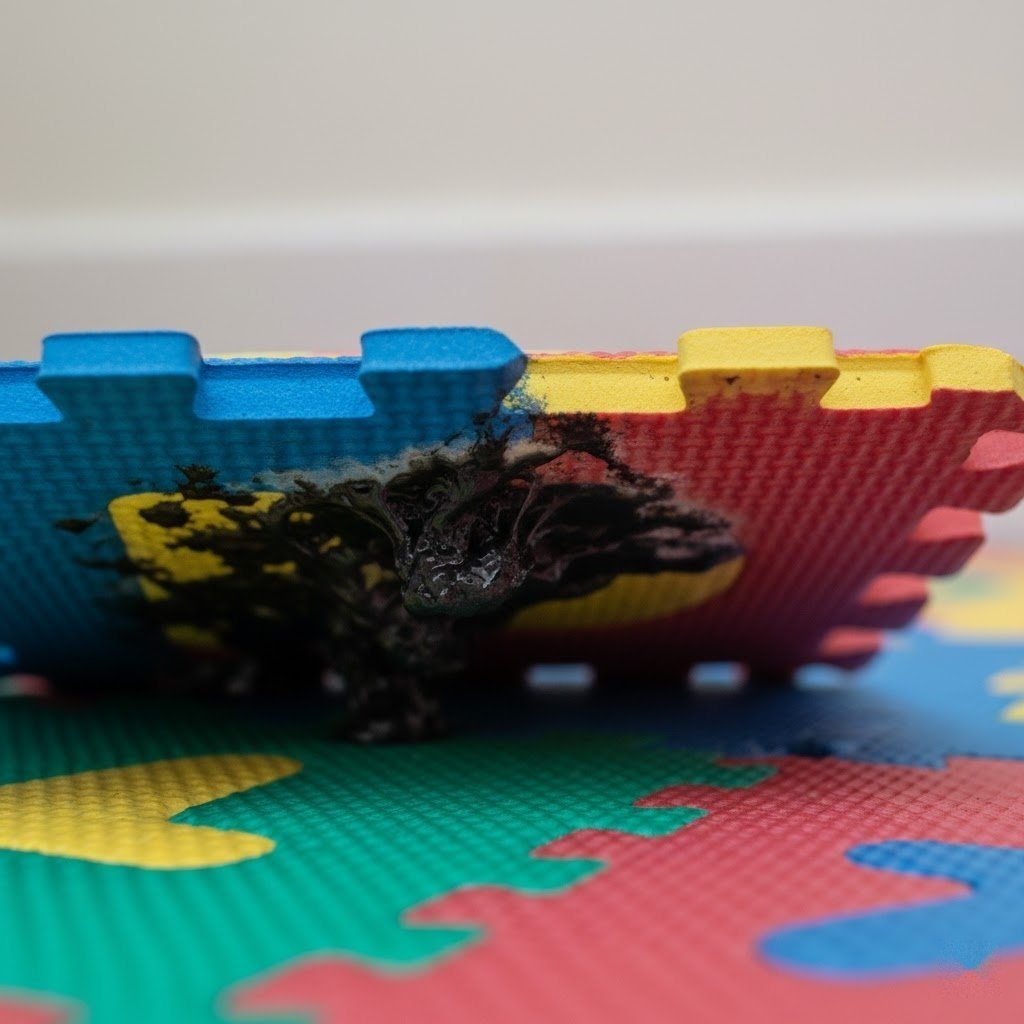
Spills and frequent cleaning practices can also lead to mold when areas are not dried completely. Daycares are full of juice cups, water bottles, art supplies, and mopping, which means floors and carpets are often damp. If absorbent carpet or rubberized flooring stays wet beneath the surface, mold can colonize below where staff can’t easily see it. This matters because toddlers spend much of their day crawling, sitting, and playing directly on these surfaces. In one preschool near Old Town, repeated juice spills on a carpeted story-time area eventually led to mold under the carpet pad. If your flooring frequently gets wet and stays damp, contact Mold Removal Albuquerque to check for hidden mold.
Signs of Mold in Daycare Centers
Most daycare mold problems reveal themselves through visible growth, odors, or health symptoms before structural damage becomes obvious, and recognizing these signs early can reduce risk and cost. Strong musty odors in classrooms, nap rooms, or hallways are often the first signal. When staff enter in the morning and notice a “damp basement” smell or a “dirty sock” odor, mold may already be active behind walls or above ceiling tiles. This matters because odors often appear before visible spots, giving you a window of time to act quickly. We’ve inspected childcare centers in the UNM and Nob Hill areas where odor was the only clue before we opened a wall and discovered widespread mold. If your team smells mustiness that never fully goes away, call 505-359-5669 for an inspection.
Spots on ceiling tiles, walls, or near vents are another obvious sign. Brown or yellow water stains on ceiling tiles above play areas or reading corners show that moisture has reached the tile. Dark spots or fuzzy growth on tiles, drywall, or caulk around sinks indicate active mold. This matters because kids are often directly below those surfaces, breathing air that passes right through the contaminated area. In one Westside daycare, we found mold growing around an AC vent above the nap area where condensation had dripped for months. If you see any spots or streaks on ceilings or walls, schedule professional assessment right away.
Children’s health symptoms can also point to mold problems even when you don’t see obvious stains. Toddlers or infants who develop unusual coughing, sneezing, runny noses, or rashes—especially when they only occur in certain rooms or improve when kids go home—may be reacting to poor indoor air quality. This matters because children under five have smaller airways and immature immune systems, making them more vulnerable to airborne spores. Teachers may notice patterns: one nap room where kids wake up congested or one playroom where sensitive kids always seem worse. We worked with a preschool near the Uptown area where parents reported that their children seemed fine on weekends but coughed more during daycare days; mold behind a nap room wall was the culprit. If you’re seeing patterns of respiratory irritation among children or staff, contact Mold Removal Albuquerque for a daycare-specific assessment.
Our Daycare Mold Remediation Process
Professional daycare mold remediation follows a strict, certified, child-safe process to contain, remove, and prevent mold, all while protecting children, staff, and licensing status. This process matters because daycares face higher health stakes, tighter regulations, and more intense parental scrutiny than many other buildings. Mold Removal Albuquerque designs every daycare project around air quality, safety, and minimal disruption. If you need a daycare-specific remediation plan, call 505-359-5669.
Safety-First Daycare Inspection & Moisture Mapping
Daycare mold remediation starts with a careful inspection of classrooms, playrooms, nap rooms, bathrooms, diaper-changing areas, kitchens, food prep spaces, indoor playgrounds, offices, storage closets, and HVAC or mechanical rooms. We inspect around sinks, under cabinets, behind changing tables, near windows, and above ceiling tiles using moisture meters and visual checks. This matters because childcare buildings often have many small plumbing fixtures and high-use areas where moisture is common. A detailed moisture map helps us find all affected areas, not just the most visible. If you want to know exactly where mold and moisture are hiding, schedule a professional inspection today.
Child-Safe Containment and HEPA Negative Air
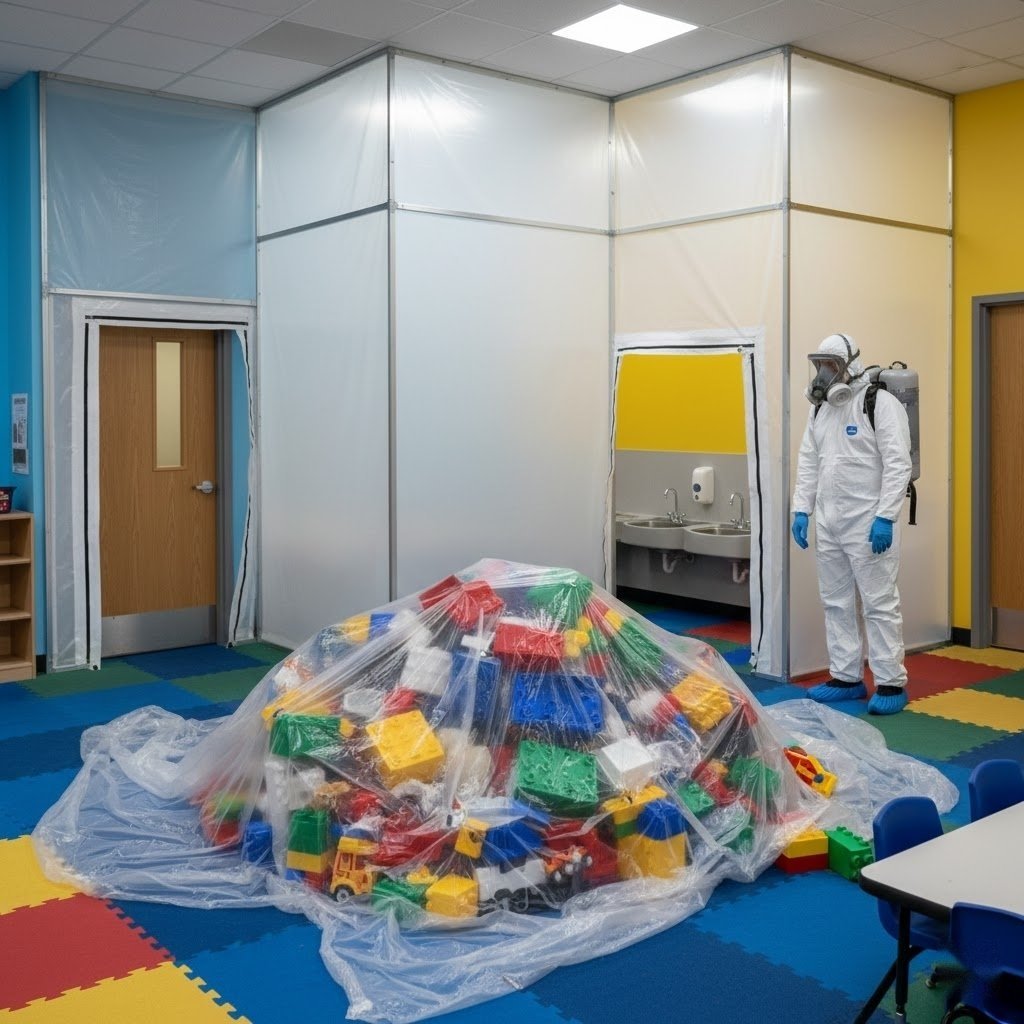
Once we understand the extent of contamination, we set up child-safe containment to prevent mold spores from spreading to clean areas. We build plastic barrier walls with zipper doors, protect floors, and install HEPA negative-air machines that pull contaminated air out of the work zone and exhaust it through filters designed to capture spores. We coordinate with daycare directors to temporarily close only the rooms that need work and keep children and staff away from active remediation zones. This matters because kids may be curious and want to look or touch; clear physical barriers and good planning keep them safe. When possible, we schedule the most disruptive work for evenings, weekends, or school breaks. If you want remediation with minimal disruption to enrollment and routines, call 505-359-5669 for carefully phased containment.
Daycare-Safe Mold Removal Techniques
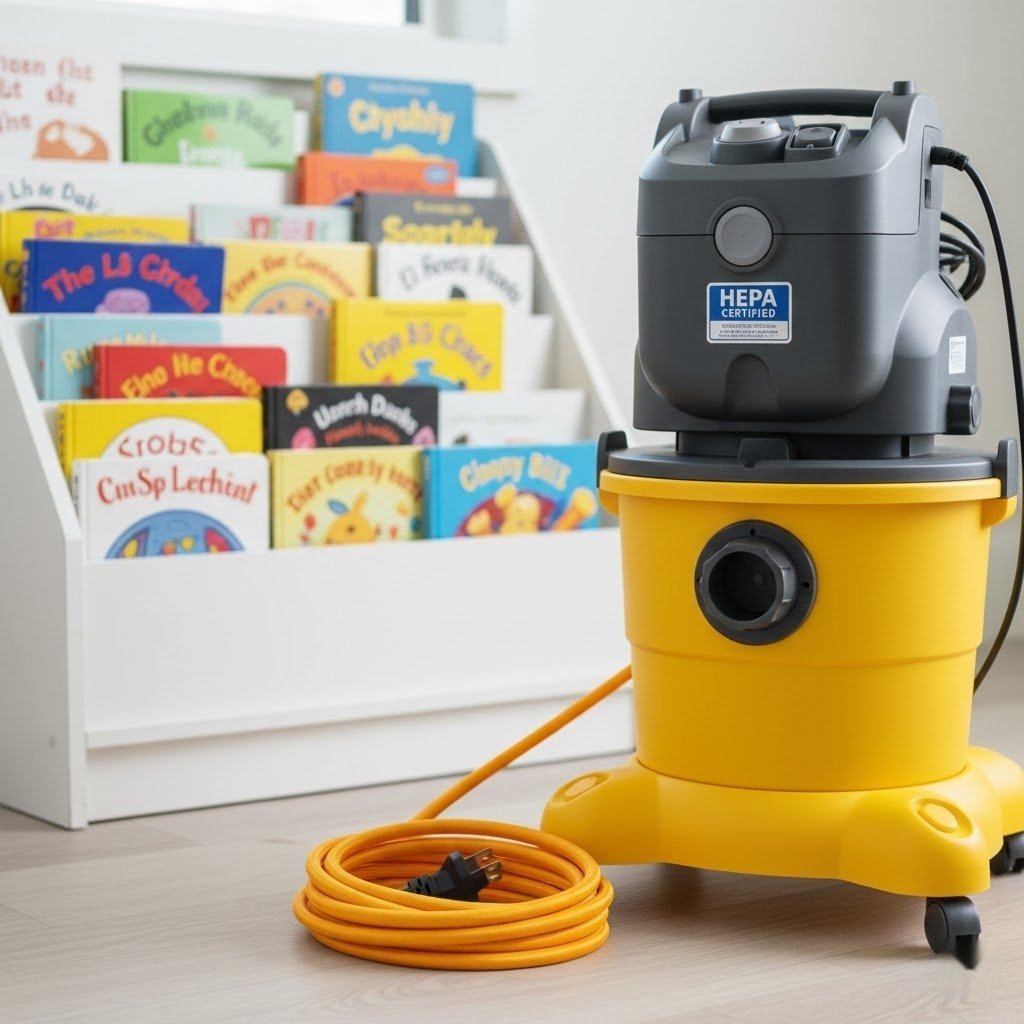
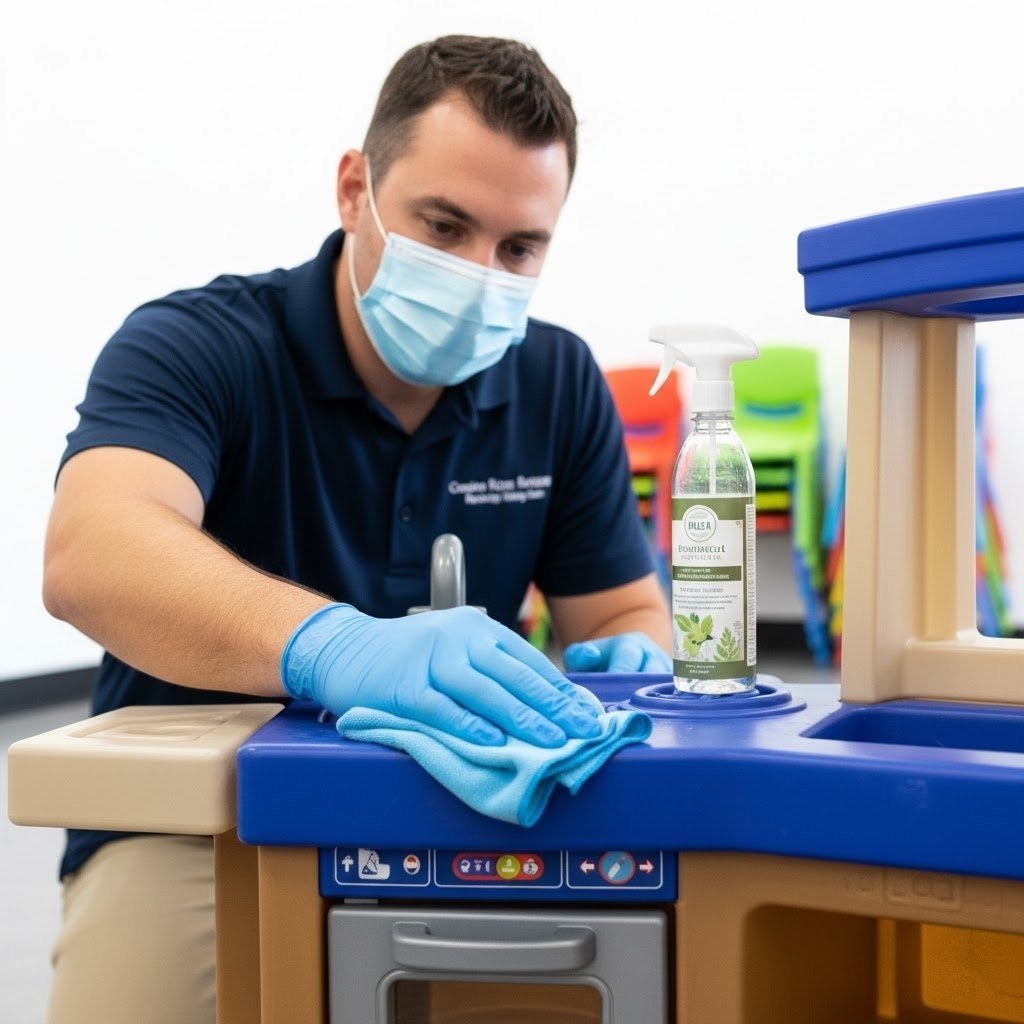
After containment is in place, we remove mold using daycare-appropriate methods and products. For surface mold on walls, baseboards, window sills, and some furniture or storage shelving, we HEPA vacuum to remove loose spores, then clean and treat surfaces with EPA-registered antimicrobial solutions suitable for indoor environments. We carefully bag and dispose of contaminated ceiling tiles, damaged drywall sections, and other porous materials in accordance with industry guidelines. This matters because simply wiping or painting over mold does not protect young children from ongoing exposure. Our use of HEPA vacuums, PPE, and controlled demolition reduces contamination risk as we work. If you want more than a “quick wipe” and need true mold removal, call 505-359-5669.
Moisture Source Repair and Ventilation Improvement
A core part of daycare mold remediation is identifying and repairing the moisture source. We help locate and coordinate repairs for leaking bathroom fixtures, supply lines, and drains; fix roof leaks contributing to ceiling mold; and correct HVAC condensate and drainage issues that cause damp vents or ceilings. We also look at ventilation in nap rooms, bathrooms, and kitchens, recommending improvements when stale, humid air lingers. This matters because without moisture correction, mold will simply return—and repeated issues can alarm licensing inspectors. Many older childcare centers near Downtown, Old Town, and the International District struggle with older roofs and swamp coolers that need adjustments. If you’re tired of mold coming back, call 505-359-5669 so we can address the moisture behind it.
Child-Safe Restoration & Final Verification
Once mold removal and moisture repairs are complete, we restore affected areas with daycare-appropriate materials. We install new drywall and ceiling tiles, repaint with mold-resistant coatings in high-risk zones, and replace flooring if needed with durable, cleanable options suitable for childcare environments. We make sure playrooms, nap rooms, and bathrooms are visually clean, odor-free, and ready for children to return. After restoration, we re-check moisture levels and visually verify that mold has been removed. If your licensing standards or internal policies require it, we can coordinate optional air quality testing with third-party professionals. We provide a written summary of affected areas, work performed, and moisture corrections so you can show state licensing, insurers, or parents that the problem has been addressed properly. If you want full peace of mind and documentation for your files, call Mold Removal Albuquerque at 505-359-5669.
Daycare Areas We Remediate
Daycare mold remediation must address every space where children learn, play, eat, and sleep, because spores can travel from one area to another quickly. Classrooms and playrooms are obvious priorities; these rooms often have sinks, craft areas, and carpeted play zones where water and moisture are frequent. This matters because blocks, toys, rugs, and low shelving can all hold dust and moisture where mold can grow unnoticed. We inspect and treat walls, ceilings, floors, and storage areas in each classroom to make sure mold is not lurking where kids sit and crawl. If your classrooms have recurring musty odors or spots, call 505-359-5669 for help.
Nap rooms and quiet rooms are especially sensitive because children spend long periods breathing the air in a resting position. Lower activity and less air movement can allow humidity and spores to hang around. If nap mats are stored against walls or in closets with poor ventilation, mold can grow on surfaces and nearby drywall. This matters because sleeping children with developing lungs are especially vulnerable to airborne contaminants. We focus on nap room ventilation, ceiling tiles, wall bases, and flooring, making sure these spaces are clean, dry, and calm. If your nap room has a “stuffier” smell than other rooms, schedule an inspection immediately.
Bathrooms and diaper-changing rooms are constant moisture sources and common mold locations. Leaky pipes, splashing during handwashing, and frequent cleaning with mops or spray bottles all add moisture that needs proper ventilation and drying. Mold may appear in bathroom corners, around caulk, under sinks, or on walls near diaper-changing tables. This matters because these rooms are used constantly throughout the day, and children and staff are in close contact with surfaces. We inspect plumbing, wall finishes, baseboards, and ceilings in every childcare bathroom and changing area. If you suspect mold around toilets, sinks, or changing stations, call 505-359-5669.
Kitchens, food prep areas, and indoor playground spaces also require attention. Kitchens and snack prep areas have sinks, dishwashers, and refrigerators that can leak or create condensation. Indoor playground zones may have rubber flooring and plastic structures that trap moisture beneath or behind them. Offices, staff rooms, storage closets, and HVAC or mechanical rooms support operations but can hide significant mold that eventually affects play areas. This matters because even if kids don’t directly spend time in some of these spaces, mold there can still affect air quality throughout the building. If you want a top-to-bottom assessment of every room in your daycare, contact Mold Removal Albuquerque today.
Minimizing Disruption & Keeping Kids Safe During Remediation
Daycare mold remediation must minimize disruption and keep children safe at every step, because closing doors or moving rooms affects families’ schedules and your revenue. Our team works with directors and owners to plan work during evenings, weekends, or school breaks whenever possible. This matters because many parents cannot easily find backup care, and you need to show that you’re handling the issue responsibly without unnecessarily shutting down. In some cases, only one classroom or wing needs to close while the rest of the center stays open. We build containment zones that clearly separate work areas from child-occupied zones, and we keep equipment, materials, and debris out of sight and reach of children. If you want to keep your center as operational as safely possible, call 505-359-5669 for a flexible remediation plan.
Strict safety pathways and signage help staff and families feel confident while work is underway. We mark off-limits doorways and routes, protect floors with coverings, and use HEPA negative-air machines to avoid spreading dust and spores into active classrooms or lobbies. This matters because visible control and cleanliness are just as important to parent trust as the actual technical work. Directors often share that parents feel reassured seeing professional PPE, clear signage, and orderly work zones rather than chaotic construction. If you want remediation that looks as safe and controlled as it truly is, schedule Mold Removal Albuquerque to manage your project.
Communication with parents and staff is another critical part of minimizing disruption. We provide daycare leaders with plain-language explanations of what we found, how we’re remediating it, and how we’re protecting children’s health. You can use this information in letters, emails, or meetings with parents and staff. This matters because silence or vague statements can erode trust, while clear, factual updates show that you are proactive and responsible. In a childcare center near the UNM area, directors used our summaries to send parents a detailed update that helped avoid panic and rumors. If you’d like a remediation partner who supports your communication efforts, call 505-359-5669.
Preventing Mold in Daycare Centers
Preventing mold in daycare centers requires consistent attention to ventilation, plumbing, roofs, cleaning practices, and HVAC systems. Improving ventilation in nap rooms, bathrooms, and craft areas helps moisture dissipate quickly instead of lingering. This might mean using properly sized exhaust fans, cracking doors between rooms when possible, or adjusting HVAC settings. This matters because many small rooms designed for quiet or privacy, like nap rooms and changing rooms, can trap humidity after cleaning or diaper changes. Better airflow means fewer conditions where mold can thrive. If certain rooms always feel humid or stuffy, call 505-359-5669 for ventilation recommendations.
Regular maintenance of sinks, toilets, and plumbing fixtures is another key to prevention. Small drips and slow leaks beneath cabinets or in bathroom walls should be treated as urgent, not “minor,” issues. Creating a checklist for staff to visually inspect under sinks, behind toilets, and around changing areas each week helps catch problems early. This matters because fixing a small leak now is far cheaper—and safer—than remediating mold behind an entire wall later. In several downtown daycares, quick repairs on early-stage leaks helped avoid mold in neighboring classrooms. If you want help building a leak-inspection checklist for your team, contact Mold Removal Albuquerque.
Roof and ceiling checks are especially important in Albuquerque, where monsoon storms and flat roofs are common. After major rain events, your maintenance staff should walk through the building to look for new stains, drips, or damp tiles. HVAC and swamp cooler systems also need regular attention to maintain proper drainage, prevent condensation, and keep humidity at safe levels. This matters because poor maintenance of these systems is one of the top drivers of recurrent mold in childcare facilities. If you’d like a partner to inspect for mold risks before they turn into bigger problems, call 505-359-5669 for a preventive consultation.
Staff training completes the prevention picture. Teachers, aides, and cleaners are the first to see small stains, smell odd odors, or notice that a room feels unusually humid. Giving them clear instructions on what to report, how quickly to report it, and who to contact protects your center from small issues escalating. A simple spill-response protocol that includes immediate cleanup plus fan-drying can prevent mold under carpets and mats. This matters because your team is your best early-warning system. If you’re interested in simple, practical training points for your childcare staff, reach out to Mold Removal Albuquerque today.
Residential vs Commercial vs Daycare Mold Remediation
Daycare mold remediation is not the same as residential or standard commercial mold work; it carries unique risks, requirements, and expectations. Traditional residential remediation focuses on families in a single home, where schedules can often be adjusted, and adults can understand and follow instructions. Commercial projects may involve offices or warehouses with adult occupants who can be relocated easily. In contrast, daycares feature infants and toddlers who cannot follow safety instructions, who put objects in their mouths, and who are still developing physically. This matters because every step—from containment setup to cleaning products—must be chosen with child safety in mind. If you want a contractor who understands these differences, call 505-359-5669.
Compared to industrial settings with large equipment and heavy PPE, daycare projects require quieter equipment, careful scheduling, and more detailed communication. Industrial jobs can often shut down operations entirely or work overnight without concern about children’s nap times or parent drop-off. Daycares must balance safety with ongoing daily routines; some classrooms may stay open while others are under remediation. Documentation expectations are different too: along with insurers, daycare owners must satisfy state childcare regulators and maintain parental trust. This matters because your mold remediation strategy must highlight child safety, licensing compliance, and minimal disruption—not just square footage and cost efficiency. If you manage both commercial buildings and childcare centers, choose a remediation partner like Mold Removal Albuquerque that tailors the process to each environment.
Why Choose Mold Removal Albuquerque for Daycare Mold Remediation
Daycare mold remediation requires experience in sensitive environments, and Mold Removal Albuquerque has worked in childcare centers, preschools, and early learning spaces across the Albuquerque area. We understand that your first priority is child safety and that your second priority is protecting your license and reputation. This matters because you can’t risk cutting corners or hiring a general contractor who doesn’t fully understand mold and indoor air quality. Our technicians use HEPA vacuums, negative-air machines, dehumidifiers, and professional PPE to contain and remove mold carefully while following EPA and IICRC-aligned guidelines. If you want a specialist trusted in sensitive spaces, call 505-359-5669.
We also understand Albuquerque’s unique building and climate conditions. Many daycares operate in converted homes near Nob Hill, mid-century buildings in central neighborhoods, or single-story structures on the Westside with flat roofs and swamp coolers. Monsoon leaks, desert dust, and temperature swings between day and night all feed mold problems when combined with moisture. This matters because a remediation plan that works in a different climate might miss these local risk factors. Our familiarity with Albuquerque neighborhoods—from Downtown to Northeast Heights, Westgate, and beyond—helps us identify the real causes of mold, not just the visible stains. If you want local expertise tailored to your building type, contact Mold Removal Albuquerque today.
We provide clear communication and thorough documentation designed for owners, licensing inspectors, and insurers. Our reports outline affected areas, moisture sources, remediation steps, and verification results so you can show that you acted responsibly and effectively. This matters because documentation can protect you in licensing reviews, insurance claims, and parent discussions. Directors who work with us often mention how much easier it is to answer questions confidently when they have our summaries in hand. If you need both technical quality and strong paperwork, call 505-359-5669 to partner with our team.
Daycare Mold Risks Across Albuquerque Neighborhoods
Daycare centers in Downtown, Old Town, and the International District often operate in older structures with flat roofs and aging windows, which are more prone to monsoon leaks and envelope failures. Facilities in Nob Hill and the UNM area may be in vintage homes converted to childcare, where original plumbing and swamp coolers can cause hidden moisture problems behind walls and under floors. Daycares in Northeast Heights and North Albuquerque Acres sometimes occupy newer buildings with complex rooflines and larger HVAC systems that can create condensation issues in certain rooms. On the Westside, including areas like Paradise Hills and Ventana Ranch, fast-growing neighborhoods have a mix of older and newer construction that can mask roof and HVAC issues until stains appear. These local patterns matter because your exact neighborhood and building style can influence where mold is likely to develop. If you operate a daycare anywhere in the Albuquerque area and see or smell signs of moisture, call 505-359-5669 for a location-informed inspection.
Serving daycares, preschools, and childcare centers across the greater Albuquerque area near landmarks like Old Town, Uptown, and the Central corridor.
FAQs About Daycare Mold Remediation
Yes. Young children have developing lungs and weaker immune systems, so mold can trigger coughing, wheezing, and other health issues more easily.
Common causes include bathroom and sink leaks, roof leaks, HVAC condensation, poor ventilation, and frequently wet carpets or flooring that never fully dry.
Sometimes only specific rooms or wings need closure. With proper containment and after-hours scheduling, many centers can stay partially open safely.
Mold in childcare facilities should be addressed immediately to protect children and avoid violations. Prompt action also keeps costs lower.
We inspect, contain, HEPA vacuum, remove contaminated materials, treat surfaces with antimicrobial products, fix moisture sources, and verify dryness before children re-enter.
Yes. Mold exposure can worsen asthma, allergies, and respiratory symptoms, especially in children under five who breathe more air per pound of body weight.

Experience, Safety Practices & Professional Credentials
Mold Removal Albuquerque has years of experience working in sensitive environments across the Albuquerque area, including childcare facilities, schools, healthcare spaces, and homes. Our technicians follow IICRC mold remediation principles, use EPA-registered cleaning products, and respect OSHA safety guidelines for worker and occupant protection. This matters because daycares require extra care in everything from chemical choice to containment design. We respond quickly, especially when licensing or parent concerns are involved, and we structure our projects to align with your schedules and state requirements.
Professional Practices & Trust Signals You Benefit From:
- Alignment with IICRC S520 mold remediation principles
- Use of HEPA vacuums and negative-air machines for containment
- EPA-registered antimicrobial solutions suitable for indoor environments
- OSHA-aware PPE and safety practices for our crews
- Detailed moisture readings and documentation for each affected area
What Parents and Daycare Owners Say
Daycare owners and directors regularly tell us they value how we prioritize child safety, protect play spaces, and help them communicate clearly with parents. They appreciate seeing organized containment, clean work zones, and respectful technicians who understand the childcare environment. Parents often share that once mold is remediated and odors disappear, their children breathe easier and seem happier coming to daycare again. Those reactions reflect exactly what we aim for: safer air, calmer families, and confident staff.
Micro Case Study
A preschool near Nob Hill noticed musty odors and increased coughing in one nap room. Our inspection found a slow leak behind a sink cabinet causing wall and baseboard mold. We contained the room, removed moldy materials, repaired the leak, restored finishes, and cleared the space—allowing children to return safely within days. Call 505-359-5669 to achieve similar results.
Helpful Internal Paths & Related Services
To fully protect your daycare from mold and moisture problems, you may also want to explore:
- School Mold Remediation – for facilities that share buildings or campuses with K–12 programs
- Ceiling Mold Removal – when you see stained or sagging tiles above classrooms and play areas
- HVAC Mold Remediation – to address mold and condensation around vents and ductwork
- Black Mold Removal – for targeted treatment of high-risk colonies
For practical guidance and prevention tips, read our blog article on Preventing Mold in Childcare & Preschool Environments and our guide to How Moisture Issues Start in Albuquerque Buildings.
When you’re ready to move forward, visit our contact page to request an inspection, and check our offers page for any current promotions on multi-room or multi-facility remediation projects.
Protect the Kids, Protect Your License
If you’re seeing stains, smelling musty odors, or hearing about coughing and allergies in your daycare, the safest choice is to address potential mold now—before it grows, spreads, and attracts inspectors or negative attention. Mold Removal Albuquerque specializes in daycare mold remediation that puts children’s health, licensing requirements, and parent trust first. We identify the moisture problem, contain and remove mold, restore clean finishes, and document everything for your records. Call 505-359-5669 today or reach out through the contact page to schedule professional daycare mold remediation anywhere in the Albuquerque area.