Government Building Mold Removal in Albuquerque, NM
Finding mold inside a government building is stressful because it threatens staff safety, public trust, and daily operations all at once. Mold spreads quickly through drywall, ceiling tiles, and HVAC systems, degrading indoor air quality and damaging walls, carpets, and structural materials. Mold Removal Albuquerque provides secure, vetted, and compliant mold removal for city, county, state, and federal facilities across the Albuquerque area. We eliminate mold safely and thoroughly using EPA- and IICRC-aligned procedures designed for high-security, public-sector environments so you can protect people and keep essential services running.
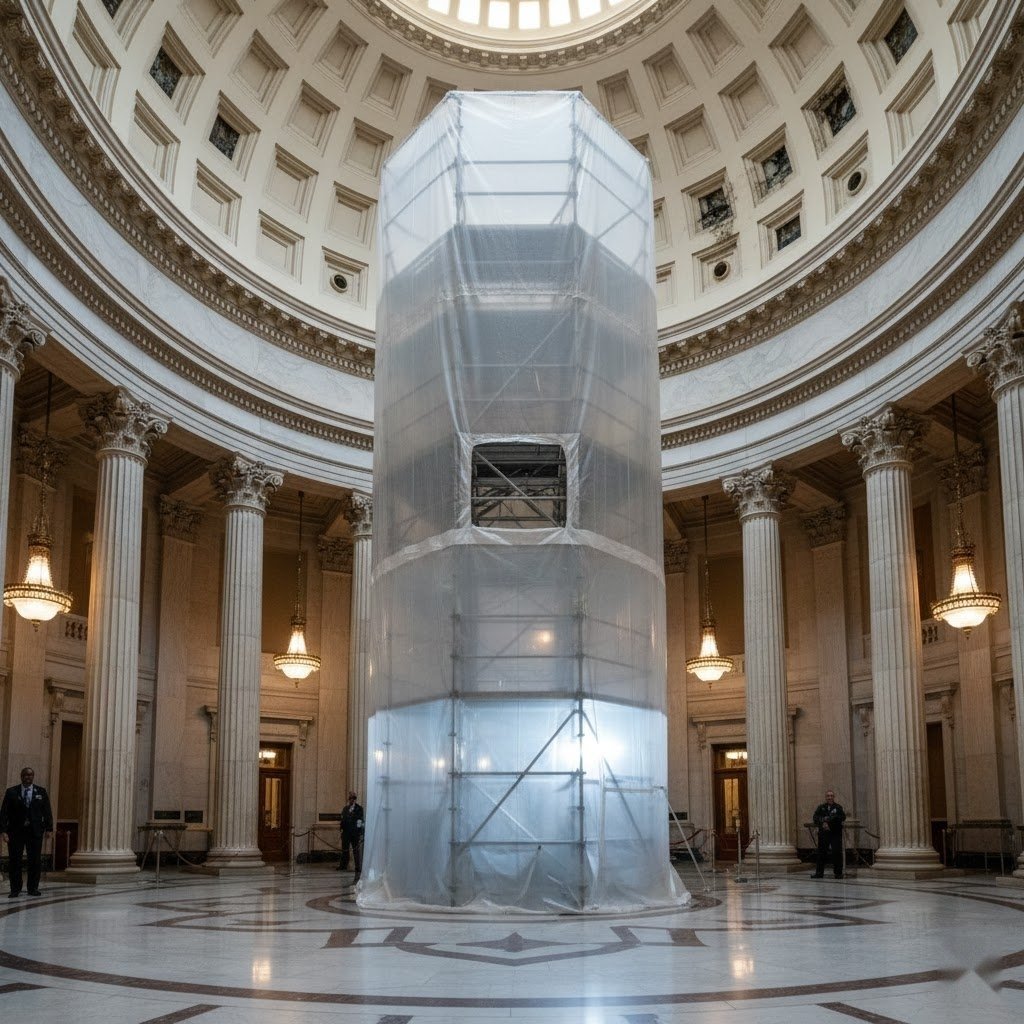
How much does Government Building Mold Removal cost in Albuquerque?
Government building mold removal in Albuquerque typically ranges from $1,800 to $35,000+, depending on square footage, contamination level, access/security requirements, HVAC involvement, and documentation needs. Multi-floor municipal and state offices near Downtown or Uptown can be higher. On-site inspections are always required before final pricing is approved.
Why Government Building Mold Removal Is Critical
Government building mold removal protects your facility by eliminating harmful mold colonies and stabilizing moisture levels before they escalate into health and liability issues. Mold spores circulate through HVAC systems, settle on desks and files, and impact air quality for employees and citizens waiting at service counters. This matters because staff with asthma, allergies, or other respiratory conditions are especially vulnerable in older public buildings with aging ventilation and dust buildup.
Acting quickly delivers the micro-benefit of keeping more workstations open, limiting the size of the containment zone, and protecting sensitive equipment and records. For example, a small roof leak over a council meeting room in a central Albuquerque municipal building can turn into stained ceiling tiles and mold inside the plenum space in just a few days. If your team has noticed musty odors or visible staining, schedule a professional inspection with Mold Removal Albuquerque today at 505-359-5669.
Causes of Mold in Albuquerque Government Buildings
Government building mold removal becomes necessary when moisture reaches porous surfaces such as drywall, ceiling tiles, insulation, or wood framing inside public facilities. Aging roof systems on flat-roof city and county buildings often develop leaks during Albuquerque’s monsoon season, allowing water to soak ceiling tiles and metal grid systems above offices and public counters. Over time, this moisture raises contamination risk and allows spores to take hold.
Older plumbing in restrooms, breakrooms, and basement mechanical rooms can also leak slowly behind walls, raising moisture levels where staff never see liquid water. This matters because hidden moisture behind block walls or drywall can fuel mold growth for months while employees only notice a faint musty odor and increased allergy complaints. The micro-benefit of early detection is that repairs can focus on targeted sections instead of entire floors. If your municipal, state, or federal building has a history of roof or plumbing issues, book a moisture-mapping inspection with our IICRC-trained team for a clear plan.
Signs & Symptoms of Mold in Government Facilities
Government building mold removal usually starts after administrators recognize a pattern of visible and invisible warning signs across hallways, offices, and public service areas. Most mold problems reveal themselves through stained or sagging ceiling tiles, musty odors in conference rooms, or visible spots near HVAC vents before structural damage is obvious. When spores circulate through air handlers and ductwork, staff may report increased coughing, headaches, or throat irritation, especially in older government offices around Downtown and the International District.
Condensation around windows, cold surfaces, or supply grilles indicates humidity and temperature imbalances that raise moisture levels and contamination risk. This matters because complaints from employees or the public can quickly become HR, union, or media issues if mold is not addressed promptly and professionally with OSHA-compliant PPE, HEPA vacuums, and negative-air machines. The micro-benefit of acting on early signs is fewer sick days, fewer public complaints, and better indoor air quality scores. If your team has noticed recurring musty smells or stained tiles, contact Mold Removal Albuquerque for a detailed government facility inspection.
- Musty odors in offices, stairwells, or courtrooms
- Water stains or yellow/brown rings on ceiling tiles
- Visible mold near vents, windows, or baseboards
- Condensation around HVAC diffusers or window frames
- Employees reporting respiratory irritation in specific rooms
Our Government Building Mold Removal Process
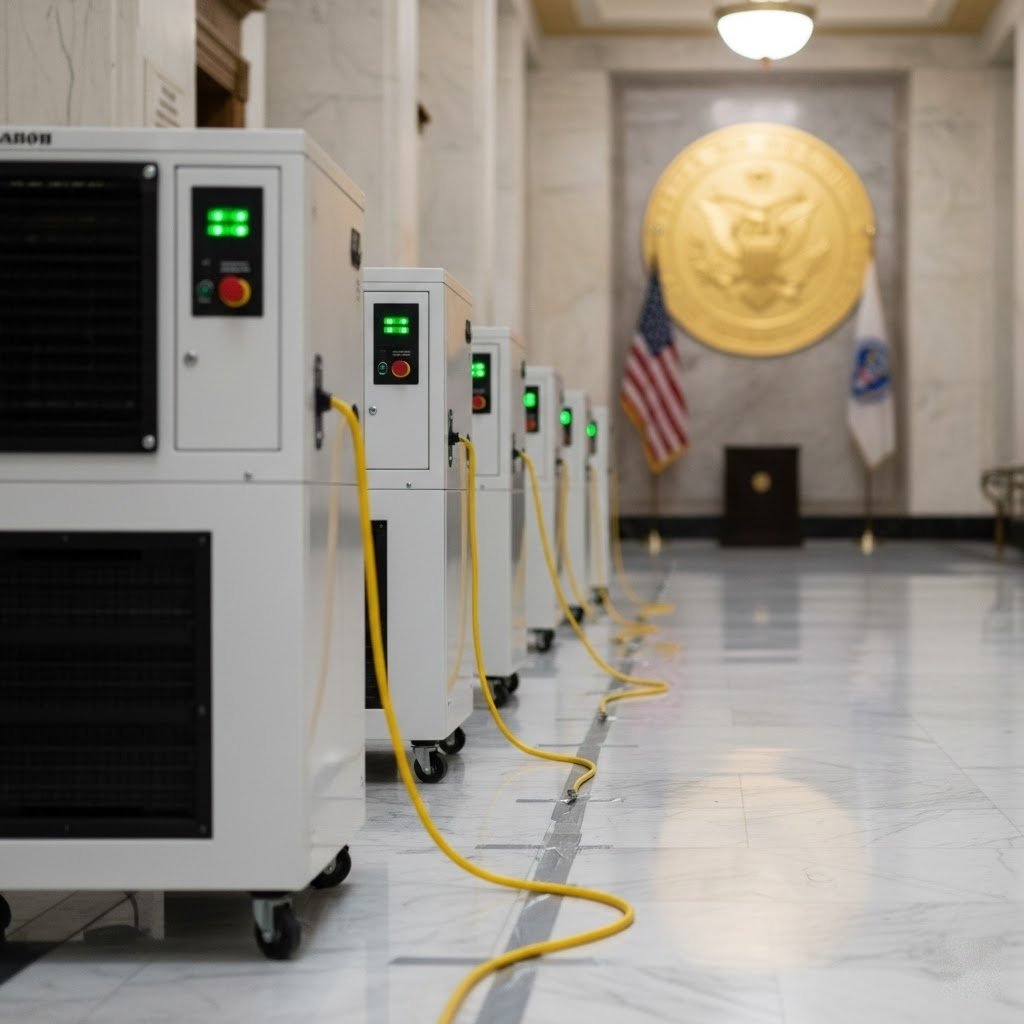
Professional government building mold removal follows a strict, certified process to contain, remove, and prevent mold while respecting security and operational requirements. We use specialized equipment like HEPA-filtered negative air machines, commercial dehumidifiers, moisture meters, and borescopes to inspect, clean, and verify results in Albuquerque’s government infrastructure.
Government Facility Inspection & Moisture Mapping
Government building mold removal begins with a secure, escorted inspection that identifies contaminated areas, moisture sources, and HVAC zones. Our technicians inspect offices, public counters, courtrooms, basements, file rooms, and mechanical spaces using thermal imaging cameras and calibrated moisture meters. This matters because large public buildings often have multi-floor HVAC systems and plenum spaces that spread spores far from the original leak. The micro-benefit of thorough moisture mapping is a remediation plan that targets only affected areas, limiting disruption. Call 505-359-5669 to schedule a secure facility inspection.
Secure Containment & Public Safety Controls
We use containment to protect staff and visitors while work is performed behind controlled barriers. We install poly sheeting walls, zipper doors, and negative air machines with HEPA filters to create negative pressure zones in hallways, office clusters, or courtroom galleries. This matters because negative pressure keeps contaminated air from moving into active public areas. We coordinate with facility managers and security teams to maintain controlled access and keep egress routes compliant. Partner with us to design containment that respects your security protocols.
Certified Mold Removal & Cleaning
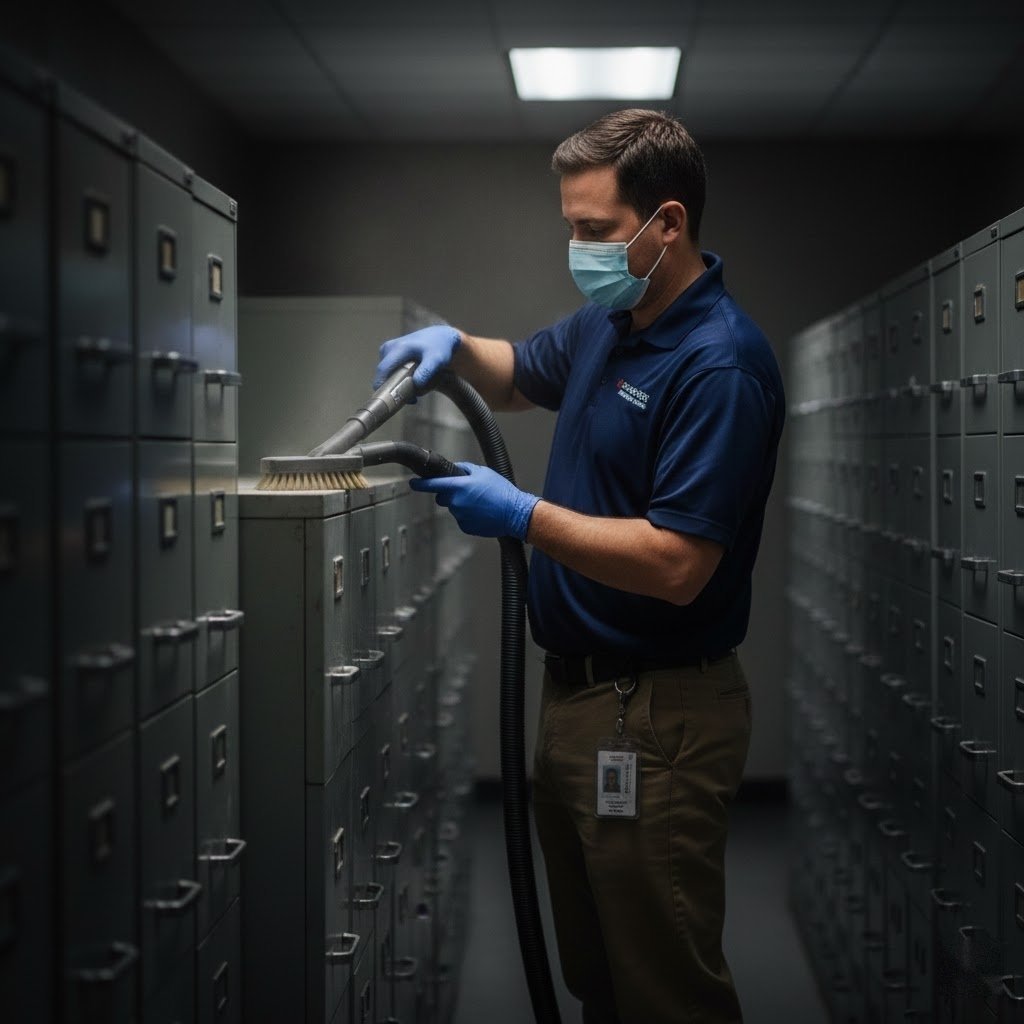
Government building mold removal involves hands-on removal of contaminated materials and detailed cleaning using IICRC-guided methods. Our teams wear OSHA-approved PPE and use HEPA vacuums to remove spores from walls, ceilings, workstations, and flooring. We carefully remove saturated ceiling tiles, treat metal grid systems, and clean vents. This matters because proper containment and HEPA filtration reduce airborne contamination risk and improve air quality for employees returning to the area. Request a proposal today for compliant mold removal.
Structural Remediation & HVAC Decontamination
We selectively cut and remove damaged drywall, insulation, and sometimes carpet in basements, stairwells, and mechanical rooms, then clean exposed studs using antimicrobial agents aligned with EPA guidance. Because HVAC systems in government buildings can serve large zones, we may recommend duct cleaning and plenum cleaning when contamination is present. This matters because unaddressed mold in mechanical rooms or ductwork can re-contaminate freshly cleaned spaces. If you suspect mold in your mechanical rooms, include HVAC evaluation in your next inspection.
Moisture Source Repair
Government building mold removal is only successful long-term if the moisture source is identified and corrected. We coordinate with your maintenance or preferred trades to repair roof leaks, aging plumbing, flashing failures, and HVAC condensation problems. This matters because unresolved leaks will allow mold to return, undermining your remediation investment. The micro-benefit of addressing moisture is longer life for finishes and fewer emergency work orders. Include moisture-source repair as a required part of your RFP or PO when you engage Mold Removal Albuquerque.
Restoration & Return-to-Service
We conclude with restoration that brings affected areas back to a professional, public-ready condition. We replace drywall, install new ceiling tiles, refinish or replace damaged flooring, and recommend mold-resistant coatings where appropriate. This matters because restored spaces must not only be clean but also visually reassuring for employees, visitors, and inspectors. The micro-benefit is a visually refreshed area that can support future inspections and audits. Ask our team about bundled remediation-and-restoration options.
Clearance Testing & Formal Documentation
Government building mold removal ends with verification that satisfies internal risk teams, HR, and public health guidance. We perform visual inspections, verify moisture levels, and coordinate independent mold testing or air-sampling when requested. This matters because agencies often require a written record that remediation was completed following EPA considerations, OSHA safety practices, and IICRC mold standards. The micro-benefit is clear, organized documentation that supports audits and insurance claims. When you choose Mold Removal Albuquerque, you receive a complete documentation package.
Types of Mold Commonly Found in Government & Public Buildings
Government building mold removal frequently addresses several types of mold that thrive in high-traffic, mixed-use facilities. Black mold, often associated with Stachybotrys chartarum, can develop in consistently wet areas like basements and mechanical rooms where roof or plumbing leaks persist. Allergenic molds such as Aspergillus and Penicillium often appear on ceiling tiles and drywall where humidity and moisture levels are elevated by HVAC issues.
This matters because different mold types may affect staff differently, especially those with asthma, compromised immunity, or sensitivity to indoor air quality. The micro-benefit of professional identification is better risk communication to employees and unions and more targeted cleaning strategies. For example, discovering Penicillium in ceiling tiles above an administrative wing helped prioritize replacing tiles and balancing humidity. If you’ve seen black mold or green spots on surfaces, schedule a professional assessment to understand what you’re dealing with.
Government vs Residential vs Industrial Mold Projects
Government building mold removal differs significantly from residential and industrial projects in terms of risks, documentation, and logistics. Public facilities must protect employees and visitors while maintaining essential services, so containment designs and work sequences are planned to allow continued operation wherever safely possible. In contrast, residential projects often allow full vacate, and industrial plants may schedule plant-wide shutdowns during remediation.
Documentation and liability expectations are also higher in government buildings, where OSHA, EPA, and IICRC references, plus internal safety policies, must be integrated into the plan. This matters because procurement officers and contracting teams require written scopes, safety plans, and communication protocols before work begins. The micro-benefit of working with a contractor experienced in public-sector projects is smoother approval and less back-and-forth during review. When you need a partner who understands multi-stakeholder oversight, put Mold Removal Albuquerque on your vendor list.
- Response Time: Government facilities often require rapid response but phased work to match budgets.
- Containment Scale: Large office floors and public lobbies need extensive HEPA-based negative air and signage.
- Equipment: Larger dehumidifiers and air scrubbers are required for multi-floor projects.
- Documentation: More detailed reports for agencies and risk managers.
Prevention Tips for Mold in Government Buildings
Government building mold removal is most cost-effective when paired with strong prevention strategies that keep moisture and contamination risk low. Mold develops when moisture reaches porous surfaces such as ceiling tiles, drywall, and carpeting, so proactive maintenance on roofs, windows, and HVAC condensate lines is crucial in Albuquerque’s climate. Regular inspections of flat roofs after monsoon storms help catch ponding and seam failures early.
Ventilation and humidity control also matter, particularly in basements, stairwells, and restrooms where moisture levels can rise unnoticed. The micro-benefit of preventative maintenance is fewer surprise closures and more stable indoor air quality across offices and public areas. For example, implementing quarterly roof and drain inspections at a county building significantly reduced emergency leak calls during storm season. Ask Mold Removal Albuquerque to help build a mold-prevention checklist tailored to your government facility.
- Schedule routine roof and flashing inspections
- Inspect ceiling tiles for stains quarterly
- Service HVAC systems and condensate drains regularly
- Address window and envelope leaks immediately
- Log and respond quickly to staff moisture or odor reports
Why Choose Mold Removal Albuquerque for Government Facilities
Government building mold removal requires a contractor who is experienced, secure, and comfortable operating under public-sector standards, and Mold Removal Albuquerque delivers on all three. Our teams are trained in IICRC mold remediation principles, OSHA safety practices, and EPA-aligned cleaning methods that protect air quality in large public buildings. We understand access control, escort requirements, and the need to coordinate with facility managers, public works departments, and risk teams.
This matters because mistakes in sensitive public environments can lead to downtime, negative media, and public complaints. The micro-benefit of choosing a specialized local provider is faster response, better communication, and solutions that fit Albuquerque’s building stock and climate. From Downtown state offices to facilities in Northeast Heights and the Westside, we tailor equipment, scheduling, and documentation to your needs. Call 505-359-5669 today to discuss your government facility’s mold concerns with a local specialist.
Government Building Mold Removal Across Albuquerque Neighborhoods
Government building mold removal for the Albuquerque area must reflect the unique layouts and ages of public facilities in different neighborhoods. Downtown buildings often feature older flat roofs and multi-story administrative offices that are vulnerable to monsoon-driven leaks and condensation in central HVAC systems. Northeast Heights may host newer administrative and public safety facilities where envelope leaks around windows and utility penetrations can still create moisture pockets.
On the Westside and in areas like Taylor Ranch or Paradise Hills, government and utility buildings may mix older swamp coolers with newer rooftop units, increasing the importance of condensate drainage and air balance. South Valley and Southeast Heights facilities can face dust-heavy conditions that provide organic material for mold growth when water intrusion occurs. The micro-benefit of working with a local company is that we already understand these patterns and can recommend neighborhood-specific prevention strategies. Wherever your facility is located in the metro area, Mold Removal Albuquerque is ready to help.
Serving government and public buildings throughout the Albuquerque metro, from Downtown civic centers to regional offices near Uptown, Westside, South Valley, and surrounding communities.
Government Building Mold Removal FAQs
We remove mold in government buildings by inspecting, containing, HEPA-cleaning, removing contaminated materials, repairing moisture sources, and documenting results under OSHA, EPA, and IICRC-informed guidelines, while coordinating with facility and security teams.
Not always. We often phase work, isolate affected zones with negative air, and maintain safe access routes so critical departments can stay open while remediation is performed after-hours or section by section.
Mold in municipal and state buildings is usually caused by roof leaks, aging plumbing, window and envelope failures, HVAC condensation, and long-term moisture in basements or mechanical rooms, especially in older Albuquerque facilities.
Mold can aggravate asthma, allergies, and respiratory conditions, causing coughing, eye irritation, and headaches. Sensitive staff or visitors may experience stronger reactions, which can lead to health complaints and liability concerns if not handled promptly.
Yes. HVAC systems can distribute spores from one contaminated area to multiple offices or floors via return and supply ductwork, especially when filters, coils, and drain pans are not maintained or when leaks exist in the system.
Most projects range from a couple of days for a small office zone to several weeks for multi-floor contamination, depending on affected area size, security access, moisture repairs, and documentation and testing requirements.
Yes. We provide written scopes, insurance documentation, references, and detailed invoices to align with public-sector procurement requirements, and we coordinate closely with contracting officers and facility managers.
Our Experience, Safety Standards & Credentials
Our government building mold removal service is built on years of experience serving commercial and institutional properties across the Albuquerque area. We study building plans, coordinate with public works, and respect security and chain-of-command requirements to deliver safe, well-documented results. Our teams are trained to use professional PPE, HEPA filtration, dehumidifiers, and moisture meters to protect indoor air quality.
This matters because public facilities face scrutiny from employees, unions, oversight agencies, and the community, so safety and transparency are non-negotiable. The micro-benefit of working with a trained team is fewer surprises and smoother communication from first inspection through final clearance. Partner with Mold Removal Albuquerque when you need a trusted, documented approach to mold in public-sector buildings.
- IICRC-informed mold remediation procedures
- OSHA-focused worker safety and PPE use
- EPA-aligned cleaning and moisture-control principles
- Secure access and escort protocols
- Detailed photo and moisture documentation
Client Feedback from Public-Sector Projects
Government building mold removal must not only be technically correct but also respectful of staff and public needs, and our clients notice the difference. One facilities supervisor praised how our team kept public counters functioning while we worked behind sealed containment in back offices. Another administrator appreciated that all documentation was ready for risk management and insurance without additional requests.
This matters because word-of-mouth among agencies and departments often shapes future contract and vendor selections. The micro-benefit for your team is confidence that your remediation partner understands the expectations of public service. Join other Albuquerque-area agencies that trust Mold Removal Albuquerque when mold threatens their buildings.
Micro Case Study – Government Building Mold Removal
A downtown administrative building discovered mold-stained ceiling tiles and musty odors after repeated monsoon storms. We inspected, built HEPA negative-air containment, removed moldy drywall and tiles, repaired roof-related moisture issues, and restored finishes. The outcome: improved air quality, no further leaks, and fully documented clearance, supporting future inspections.
Related Services & Helpful Resources
Government building mold removal often connects to other services and education that help keep your facilities safe long-term. Using a single trusted provider for multiple related needs simplifies procurement and reduces downtime between inspection, remediation, and prevention efforts. This matters because consistent standards and documentation across services make audits and future projects easier to manage.
The micro-benefit is fewer vendors to coordinate and clearer responsibility for results. Explore additional services from Mold Removal Albuquerque to build a complete environmental health strategy for your facilities.
Schedule Your Government Building Mold Assessment Today
Government building mold removal is most effective—and most affordable—when it begins at the first signs of water damage, musty odors, or employee complaints. Waiting allows moisture to spread, spores to migrate through HVAC systems, and ceiling tiles or drywall to deteriorate, increasing cost and risk. A professional assessment from Mold Removal Albuquerque gives you clear moisture readings, photos, and a step-by-step action plan.
This matters because procurement, risk management, and leadership all need solid information before approving work, and we provide that in an organized, decision-ready format. The micro-benefit is faster approvals and less stress when you present solutions instead of just problems. Call 505-359-5669 or visit our website to request a secure, no-obligation government facility mold inspection today.